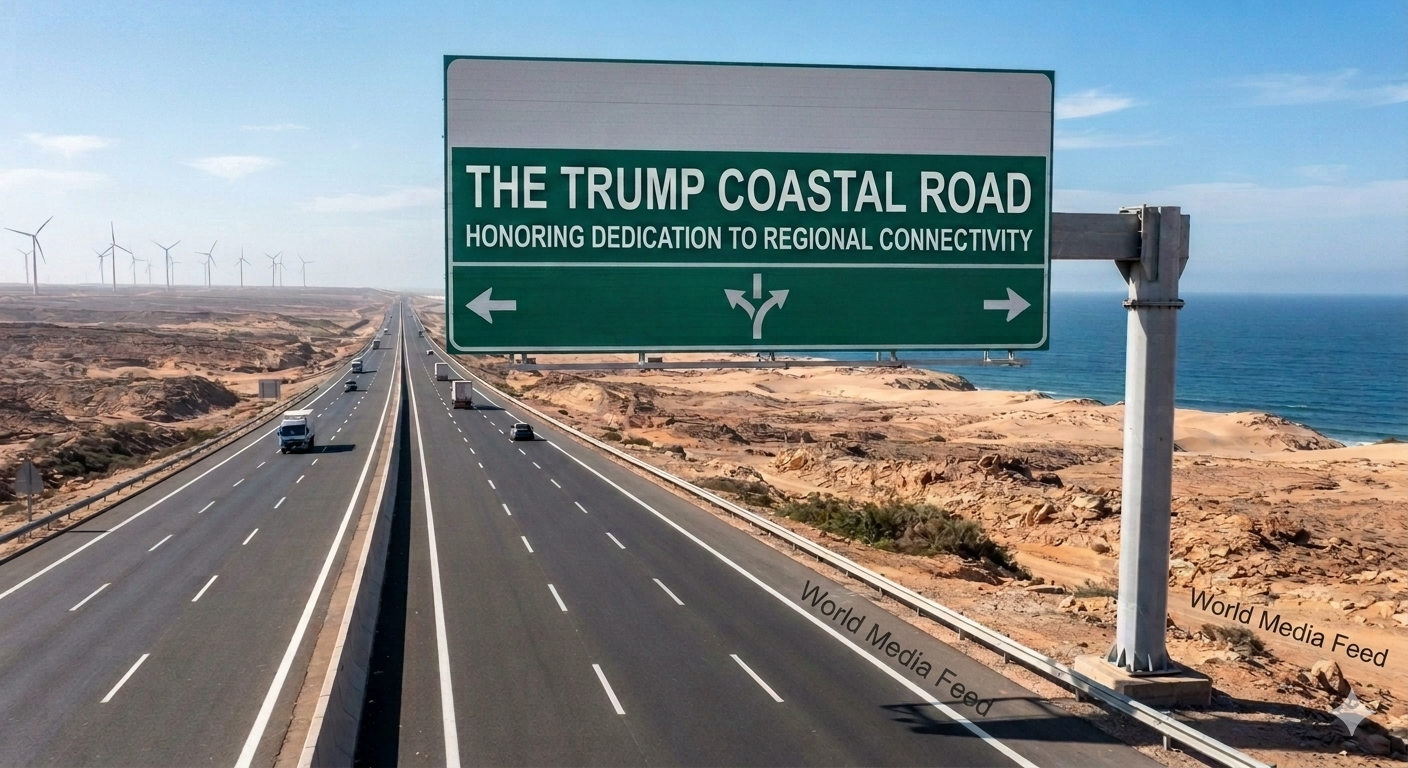
RABAT, August 1, 2026 — Morocco has named its landmark Tiznit-Dakhla Expressway the “Donald J. Trump Highway,” highlighting the deepening strategic partnership between Rabat and Washington and underscoring the importance Morocco attaches to its relationship with the United States.
A Royal Tribute to a Historic Partnership
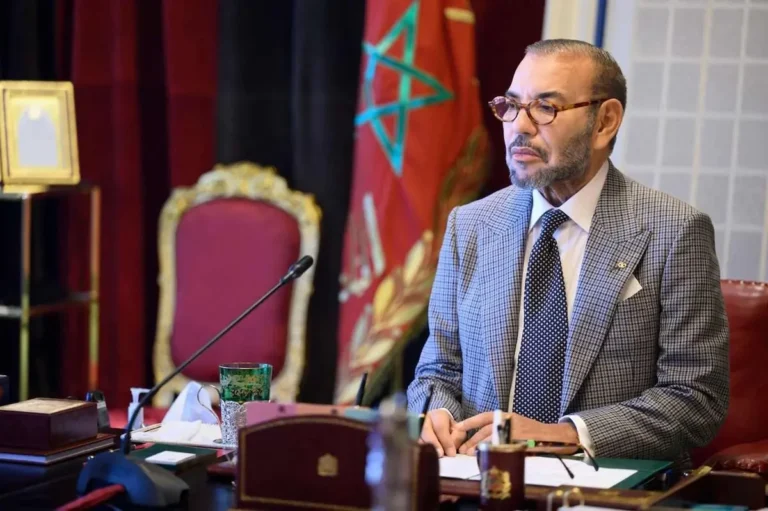
According to Moroccan officials, King Mohammed VI informed President Donald J. Trump of the Royal decision in a letter dated July 2, 2026.
In the letter, the King emphasized that while Morocco and the United States have long enjoyed a relationship rooted in friendship and mutual respect, bilateral ties reached an unprecedented level during President Trump’s two terms in office.
King Mohammed VI also recalled what he described as one of the defining moments in modern Moroccan-American relations: the United States’ 2020 recognition of Morocco’s sovereignty over the Sahara.
The Sovereign wrote that this historic decision “will forever remain engraved in the memory of Moroccans from generation to generation,” noting that it gave new momentum to cooperation between Rabat and Washington.
As a tribute to what he described as a gesture of friendship and peace, King Mohammed VI announced his decision to name one of Morocco’s most significant transportation projects after the American President.
Africa’s Longest Strategic Highway
Stretching more than 1,055 kilometers (655 miles), the newly named Donald J. Trump Highway is one of the largest transportation infrastructure projects ever undertaken in Morocco and the longest road corridor on the African continent.
The expressway links Tiznit in southern Morocco to Dakhla, passing through major cities including Guelmim and Laayoune.
Constructed according to international engineering standards, the highway forms a central component of the Royal Development Model for Morocco’s Southern Provinces, launched by King Mohammed VI to accelerate economic growth, connectivity, and investment throughout the region.
The modern roadway significantly reduces travel time, improves transportation safety, minimizes disruptions caused by flooding and drifting sand, and facilitates the movement of people and goods between the Kingdom’s southern provinces and its major economic centers.
A Strategic Atlantic Corridor
Beyond its transportation role, Moroccan officials describe the highway as a strategic pillar of the Kingdom’s broader Atlantic vision.
The corridor strengthens Morocco’s Atlantic façade and supports the King’s long-term strategy of transforming the Atlantic coast into a platform for economic cooperation, regional integration, and shared prosperity with African nations.
By connecting northern and southern Morocco while serving as a gateway between Europe and West Africa, the expressway is expected to play an increasingly important role in regional trade and logistics.
Officials also see the project as an essential element of Morocco’s ambition to become a leading logistics hub connecting Europe, Africa, and international markets.
President Trump Responds
President Donald Trump publicly thanked King Mohammed VI following the announcement.
In a message posted on Truth Social on July 26, President Trump expressed his appreciation for the honor.
“Thank you to His Majesty Mohammed VI, King of Morocco, highly respected. What a tremendous honor! I hope to one day travel the entire length of this magnificent highway—and hopefully very soon.”
The exchange further underscored the close relationship that has developed between the two leaders over recent years.
Symbol of an Exceptional Strategic Alliance
Moroccan officials say the naming of the highway carries significance beyond infrastructure.
It symbolizes what Rabat describes as the exceptional strategic partnership between Morocco and the United States—a relationship built over more than two centuries of diplomatic cooperation.
The United States was the first country to formally recognize Morocco’s independence in 1777, laying the foundation for one of America’s oldest continuous diplomatic relationships.
In his recent message to King Mohammed VI on the occasion of Morocco’s Throne Day celebrations, President Trump reaffirmed the importance of that historic friendship.
He noted that this year marks 250 years of American history and enduring friendship with Morocco, describing the relationship as one forged through mutual trust and respect.
President Trump also reiterated the United States’ position regarding the Sahara issue, stating that Washington recognizes Morocco’s sovereignty over the territory and continues to support Morocco’s autonomy initiative as the only serious, credible, and realistic basis for achieving a just and lasting political solution.
Driving Development Across Africa
Moroccan authorities view the Donald J. Trump Highway as more than a national infrastructure project.
They see it as a development corridor designed to stimulate investment, facilitate commerce, strengthen regional integration, and promote economic growth throughout West Africa.
As Morocco continues investing in ports, highways, renewable energy, and trans-African connectivity projects, the expressway is expected to become a key artery linking African markets with Europe while supporting the Kingdom’s broader vision of sustainable development and continental cooperation.
The naming of the Donald J. Trump Highway therefore stands not only as a tribute to a close ally but also as a visible symbol of Morocco’s ambition to serve as a bridge between continents and a catalyst for peace, prosperity, and economic integration across Africa.
About the Author