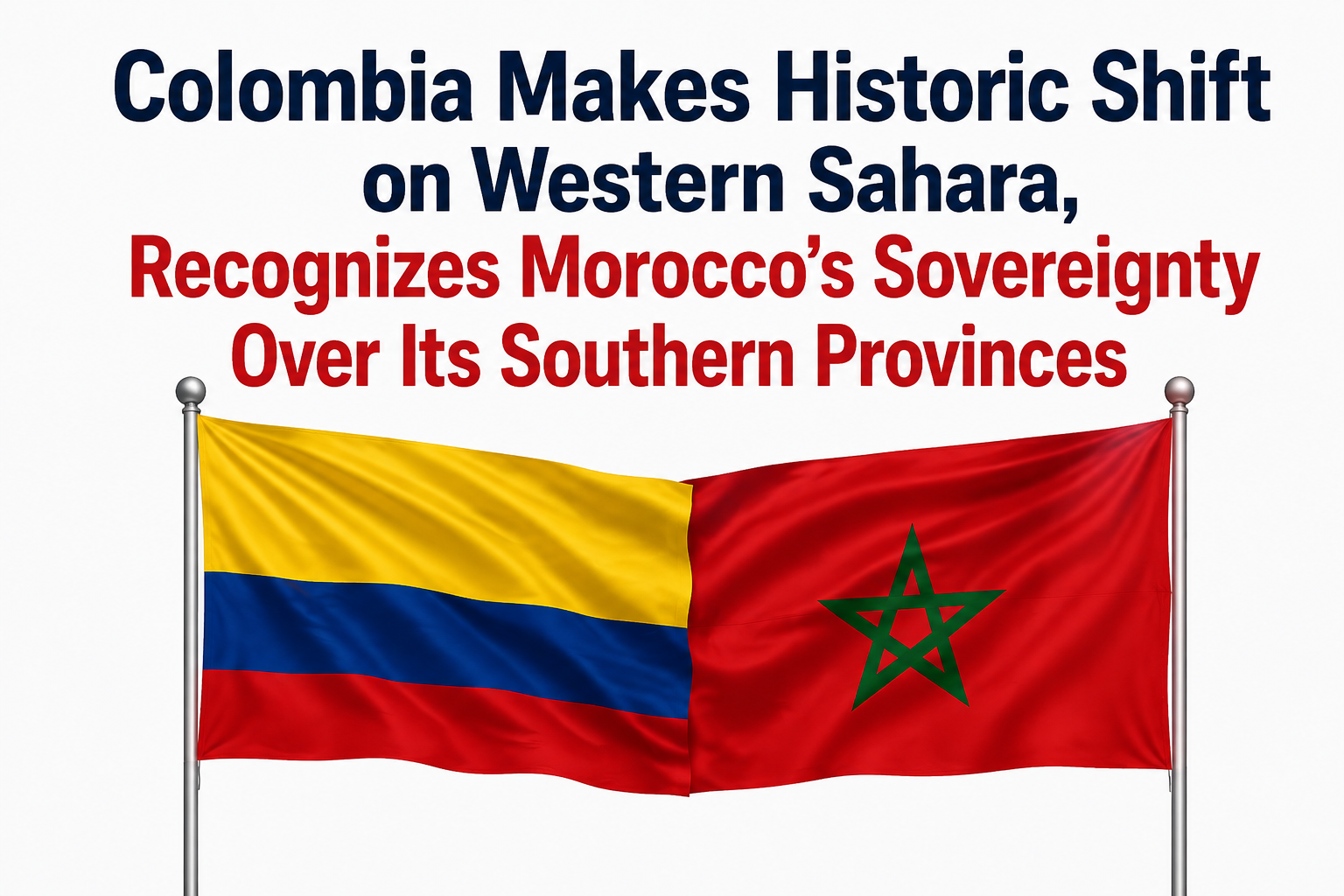
CALI, Colombia — August 8, 2026 — Colombia has announced a major change in its position on the Western Sahara issue, recognizing Morocco’s sovereignty over its Southern Provinces and signaling a new chapter in relations between Bogota and Rabat.
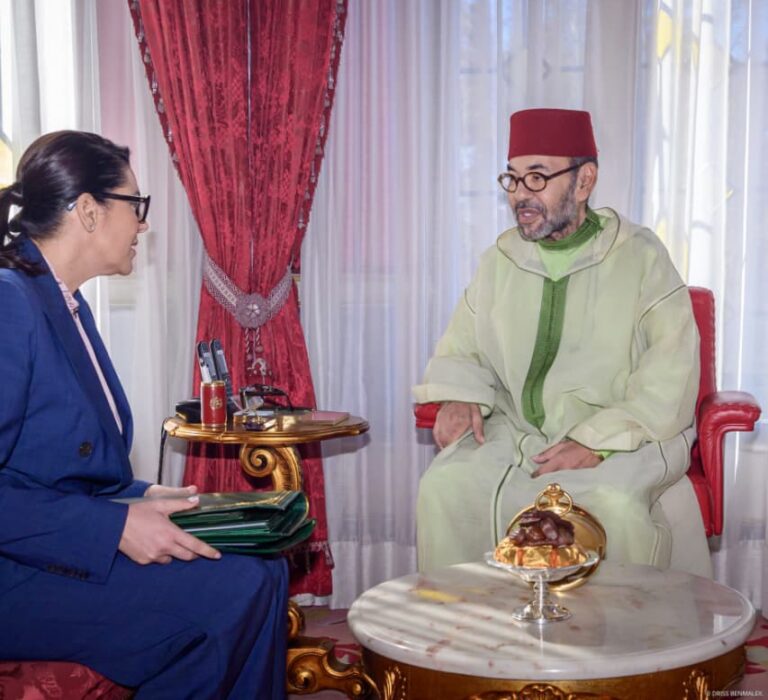
The announcement was made Friday during a high-level meeting in Cali between Moroccan Minister of Foreign Affairs, African Cooperation and Moroccans Abroad Nasser Bourita and Colombian Vice President José Manuel Restrepo, in the presence of Colombian Foreign Minister Omar Bula Escobar.
The decision represents a significant diplomatic development in Latin America and marks a notable shift in Colombia’s previous position on the disputed territory.
Colombia Announces a New Position
During the meeting, Foreign Minister Omar Bula Escobar explicitly stated that Colombia “recognizes Morocco’s sovereignty over its Sahara,” formally confirming the new direction of Colombian policy.
The announcement also includes Colombia’s withdrawal of its previous recognition of the separatist entity known as the “Sahrawi Arab Democratic Republic” (SADR), according to the Moroccan side.
The move places Colombia among a growing number of countries that have increasingly aligned themselves with Morocco’s position that the autonomy initiative under Moroccan sovereignty represents the basis for resolving the regional dispute.
Bogota Calls It a “New Beginning”
Colombian Vice President José Manuel Restrepo described the decision as “a new beginning” in relations between Colombia and Morocco.
He emphasized Morocco’s growing importance to Colombia, describing the Kingdom as “Colombia’s first ally in Africa.”
Restrepo also expressed his country’s determination to establish a strategic partnership with Morocco, suggesting that the diplomatic breakthrough could quickly translate into deeper economic, political, and commercial cooperation.
The Colombian government’s new approach could open the door to expanded cooperation in areas ranging from trade and investment to agriculture, energy, infrastructure, logistics, and security.
Bourita Hails an “Historic” Decision
Moroccan Foreign Minister Nasser Bourita welcomed Colombia’s announcement as an “historic” decision.
He emphasized that Colombia’s withdrawal of recognition of the separatist entity and its recognition of Moroccan sovereignty over the Sahara could provide “a major boost” to bilateral relations.
For Rabat, the announcement represents more than a diplomatic adjustment. It reinforces Morocco’s broader strategy of expanding support for its position on the Sahara issue across Latin America, Africa, the Arab world, Europe, and other regions.
Bourita also stressed that Morocco and Colombia have the potential to become economic platforms for one another by taking advantage of their respective strategic positions in Africa and Latin America.
Morocco Seeks Stronger Economic Ties With Latin America
The diplomatic breakthrough comes as Morocco seeks to deepen its engagement with Latin America and strengthen South-South cooperation.
Morocco’s geographic position gives it access to African and European markets, while Colombia occupies a strategic position in Latin America and has access to major regional markets.
Greater cooperation between the two countries could therefore create new opportunities for businesses, investors, and exporters on both sides of the Atlantic.
The two countries could potentially develop joint initiatives in agriculture, food security, renewable energy, mining, tourism, logistics, infrastructure, and technology.
Bourita in Cali at Royal Instructions
Bourita’s presence in Cali also carried a broader diplomatic message.
The Moroccan minister traveled to Colombia on the Very High Instructions of King Mohammed VI to represent the Sovereign at the inauguration ceremony of Colombia’s new president, Abelardo de la Espriella.
Morocco says the decision to send Bourita reflects the Kingdom’s determination to accompany the emerging momentum in bilateral relations and elevate the partnership between Rabat and Bogota to a new level.
The timing of the visit provided an opportunity for both sides to transform the diplomatic breakthrough into a broader strategic framework.
A Significant Development for Morocco’s Sahara Diplomacy
The Colombian announcement comes against the backdrop of Morocco’s sustained diplomatic efforts to build international support for its autonomy initiative for the Sahara.
Rabat has increasingly focused on strengthening partnerships with countries across the Global South, particularly in Africa and Latin America, while presenting its autonomy proposal as a realistic and lasting political solution.
Colombia’s new position is particularly significant because of its geographic and political importance in Latin America.
By recognizing Morocco’s sovereignty over its Sahara and abandoning its previous recognition of the separatist entity, Bogota is signaling a fundamental recalibration of its approach.
A New Chapter for Morocco-Colombia Relations
The announcement could ultimately prove to be a turning point not only for the Sahara issue but also for Morocco-Colombia relations.
What began as a diplomatic relationship between two countries separated by the Atlantic could now evolve into a strategic partnership linking North Africa and Latin America.
For Rabat, Colombia’s decision represents another diplomatic gain in its campaign to consolidate international support for Morocco’s position on the Sahara.
For Bogota, closer ties with Morocco offer an opportunity to strengthen its presence in Africa and establish new economic and diplomatic bridges with the continent.
As Bourita emphasized, the two countries have the potential to serve as platforms for one another in their respective regions.
The message emerging from Cali is therefore clear: Morocco and Colombia are preparing to enter a new era of strategic cooperation, with the Sahara issue at the center of a broader diplomatic realignment.
About the Author