For years, Mauritius sat this one out. A small island nation in the Indian Ocean, thousands of miles from the dunes of the Sahara, had little obvious reason to plant a flag in one of Africa’s longest-running territorial disputes — so it didn’t. That changed this week, and the shift didn’t happen quietly.
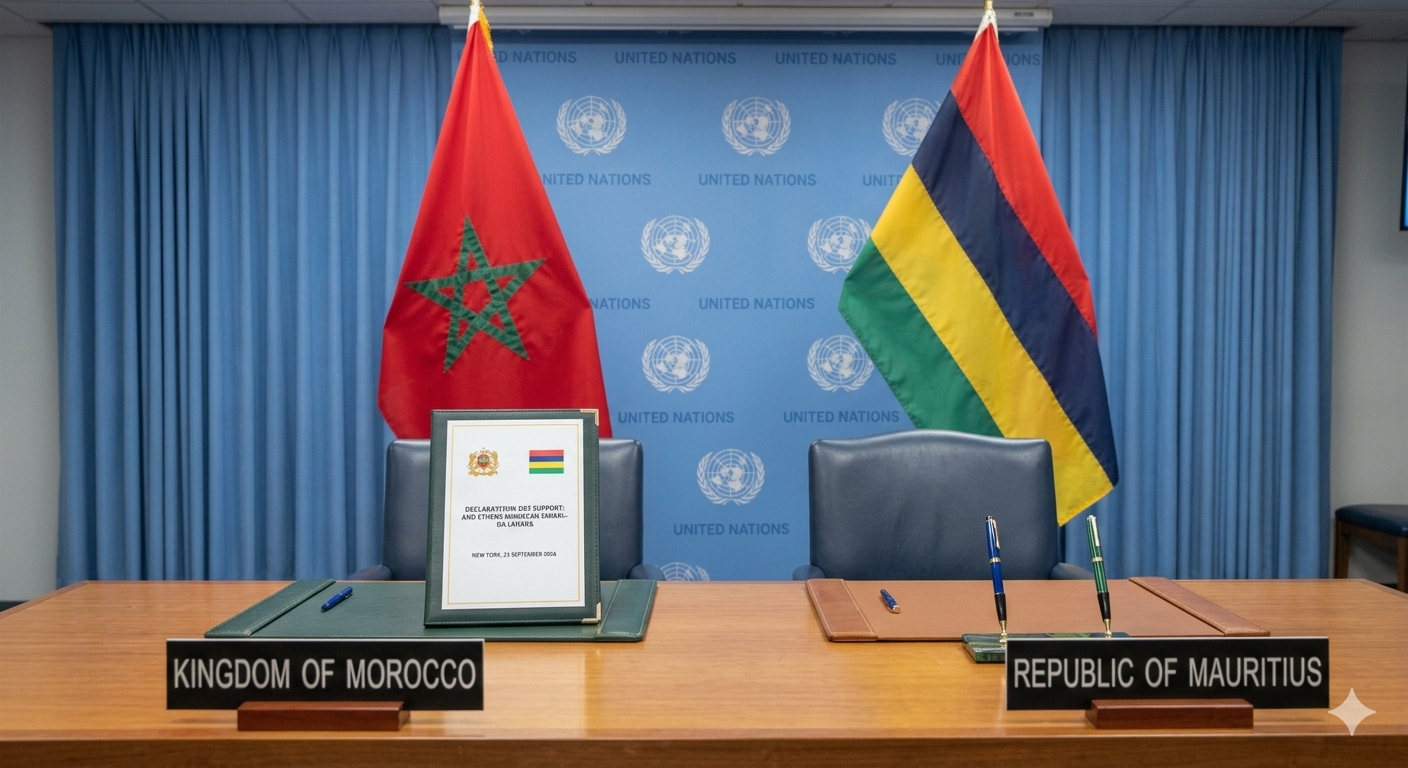
Speaking to reporters in New York on Wednesday, Mauritian Foreign Minister Dhananjay Ramful said his government now views autonomy under Moroccan sovereignty as the most credible way to finally resolve the conflict. He made the announcement in person, standing alongside Morocco’s Foreign Minister Nasser Bourita during bilateral talks held on the sidelines of the UN General Assembly’s 81st session.
Not a Snap Decision
Ramful was careful to frame the shift as deliberate rather than reactive. According to him, Mauritius’s cabinet formally reconsidered the country’s position during a recent meeting, spurred directly by the UN Security Council’s adoption of Resolution 2797 back in October. In Port Louis’s assessment, that resolution wasn’t procedural background noise — it reflected a genuinely pragmatic turn in how the international community is approaching the dispute, one serious enough to justify reversing a long-held neutral stance.
The conclusion Mauritius reached from that reassessment was blunt: autonomy under Moroccan sovereignty, in the government’s own words, represents the most realistic, fairest, and most durable solution available after nearly five decades of stalemate.
Development as the Other Half of the Argument
Bourita didn’t let the meeting stay purely rhetorical. He walked Ramful through what Morocco describes as tangible progress in the southern provinces — new infrastructure, universities, hospitals, airports — positioning the autonomy proposal as an extension of development already underway rather than a purely political promise. He also raised Sahrawi turnout in Morocco’s recent legislative elections as proof, in his telling, of real local representation already functioning on the ground.
It’s become a familiar two-track pitch from Rabat in recent months: pair the sovereignty argument with visible evidence of investment and civic participation, rather than resting the case on historical claims alone. Mauritius’s announcement suggests that pitch is landing with governments that, until recently, had no reason to weigh in either way.
One Signature in a Much Larger Wave
Mauritius isn’t acting alone, and it isn’t first. Its announcement lands amid a rapid succession of similar statements from governments across Africa, Latin America, and the Caribbean over the past several weeks — a diplomatic sprint that accelerated sharply once Resolution 2797 formally established Morocco’s autonomy plan as the foundation for future negotiations, displacing the independence-referendum framework that had anchored the process for decades.
What any of this changes for people actually living in the disputed territory is a separate, harder question. But diplomatically, the pattern is becoming difficult to ignore: country after country, many with no direct stake in the outcome, are choosing to formalize a position — and increasingly, it’s the same one.
About the Author