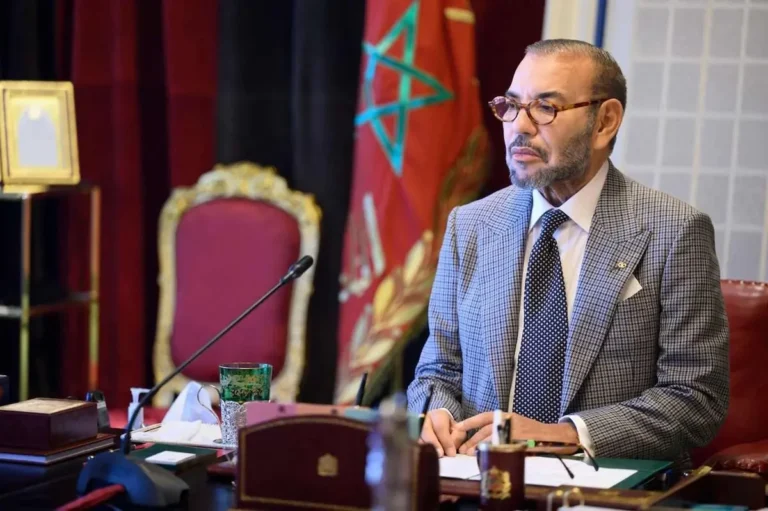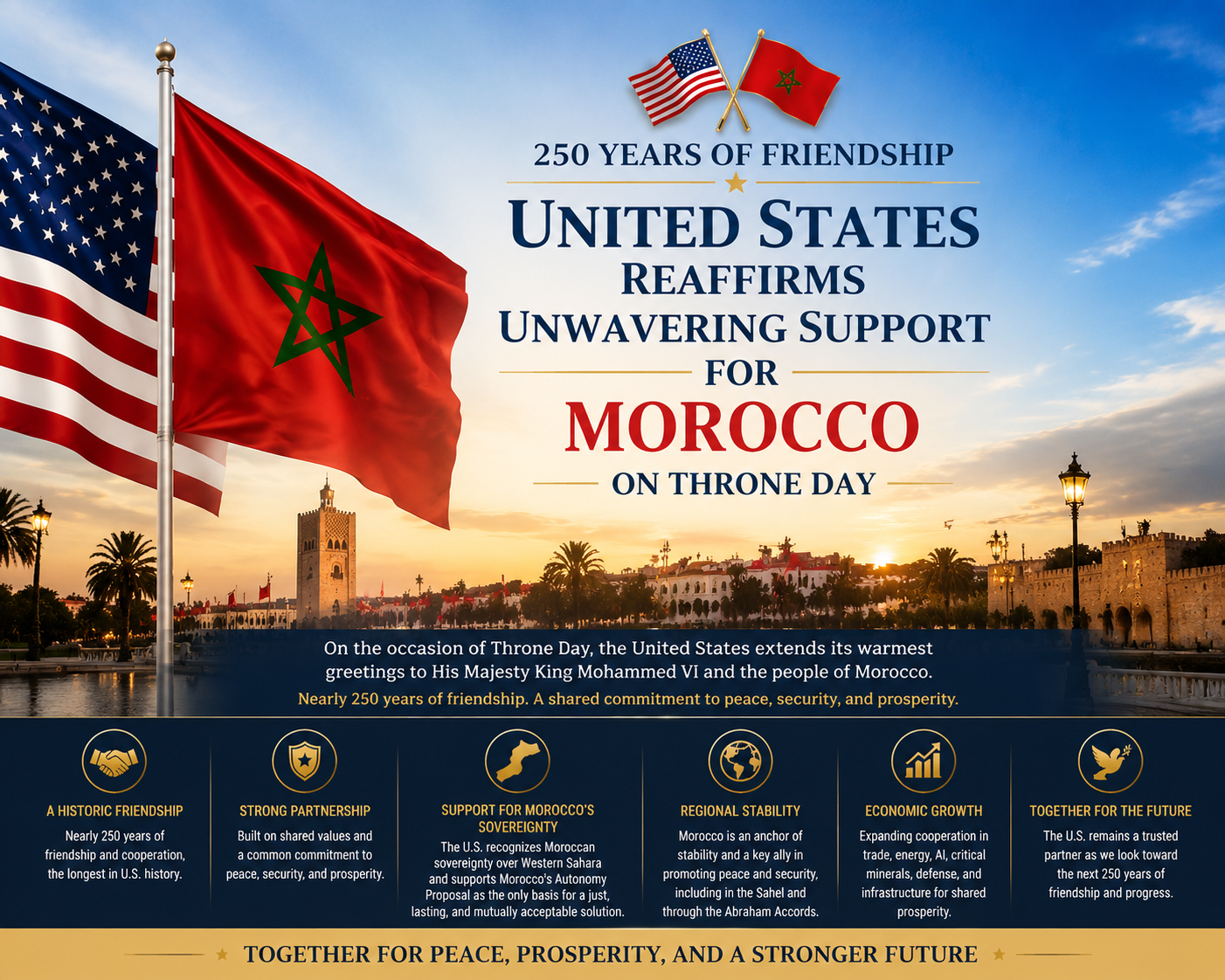
RABAT — As Morocco celebrates the 27th anniversary of King Mohammed VI’s accession to the throne, the United States has reaffirmed one of its oldest and strongest international partnerships, highlighting nearly two and a half centuries of friendship while pledging to deepen cooperation in security, trade, technology, and regional stability.
In an official Throne Day statement released on July 30, U.S. Secretary of State Marco Rubio extended warm congratulations to King Mohammed VI and the Moroccan people, describing the relationship between the two nations as “the longest friendship in American history.”
The message underscored that the alliance between Washington and Rabat remains stronger than ever, built on shared interests, mutual respect, and a common commitment to peace and prosperity.
A Historic Partnership That Continues to Grow
The United States and Morocco share a unique place in diplomatic history. Morocco became the first country to recognize the independence of the United States in 1777, laying the foundation for a relationship that has endured through centuries of political change, global conflicts, and shifting international alliances.
Today, that historic friendship has evolved into a strategic partnership spanning defense, intelligence cooperation, counterterrorism, trade, renewable energy, and emerging technologies.
Secretary Rubio emphasized that both countries are preparing not only to celebrate nearly 250 years of friendship but also to build the next chapter of cooperation in areas that will define the global economy, including artificial intelligence, critical minerals, energy, and advanced defense capabilities.
Washington Reaffirms Its Position on the Moroccan Sahara
One of the most significant elements of the statement was the United States’ renewed support for Morocco’s sovereignty over the Moroccan Sahara.
Rubio reaffirmed that under President Donald Trump’s leadership, the United States recognizes Moroccan sovereignty over the territory and supports Morocco’s Autonomy Proposal as “the only basis for a just, lasting, and mutually acceptable solution.”
The statement also stressed that prolonging the decades-old dispute serves no one’s interests and called for an end to the political stalemate that has persisted for nearly half a century.
According to Washington, genuine autonomy under Moroccan sovereignty offers the best opportunity for long-term peace, regional development, and stability for the people of the region.
The statement further noted that American diplomacy will continue working toward a mutually beneficial solution while encouraging economic and social development throughout the Western Sahara.
Morocco: A Pillar of Regional Stability
The United States also praised Morocco’s growing role as one of the Middle East and Africa’s most reliable partners for regional security.
Under King Mohammed VI’s leadership, Morocco has become a key ally in combating terrorism, promoting religious tolerance, strengthening security cooperation across Africa, and supporting peace initiatives.
Washington specifically recognized Morocco’s important role in advancing the Abraham Accords and its broader efforts to promote dialogue and stability throughout the region.
As instability continues to affect parts of the Sahel, the United States views Morocco as an indispensable partner in addressing shared security challenges while promoting sustainable economic development.
Expanding Economic Cooperation
Beyond diplomacy and security, the United States sees enormous economic potential in expanding cooperation with Morocco.
Rubio’s statement highlighted American interest in strengthening collaboration in:
- Artificial intelligence
- Renewable and conventional energy
- Critical minerals
- Defense industries
- Infrastructure development
- Investment and technology
These sectors align closely with Morocco’s long-term modernization strategy, which aims to position the Kingdom as a regional hub connecting Africa, Europe, and the Americas.
American investment, combined with Morocco’s strategic geographic location and expanding industrial base, offers opportunities for greater economic integration between the two nations.
Looking Toward the Next 250 Years
As Morocco marks another Throne Day under King Mohammed VI, the message from Washington reflects more than ceremonial congratulations—it signals continued confidence in one of America’s oldest diplomatic relationships.
The United States made clear that Morocco remains a trusted strategic ally whose leadership contributes to regional peace, economic opportunity, and international security.
With both countries committed to expanding cooperation across traditional and emerging sectors, the U.S.-Morocco partnership appears poised to enter a new era defined by innovation, shared prosperity, and common strategic interests.
Nearly 250 years after Morocco first recognized the United States, the alliance continues to demonstrate that enduring friendships built on mutual respect and shared goals can remain relevant in an increasingly complex world.
About the Author