Rabat — Guinea-Bissau has once again reinforced its strong diplomatic support for Morocco’s sovereignty over the Sahara, signaling continued alignment with Rabat’s position on one of the region’s longest-running geopolitical disputes.
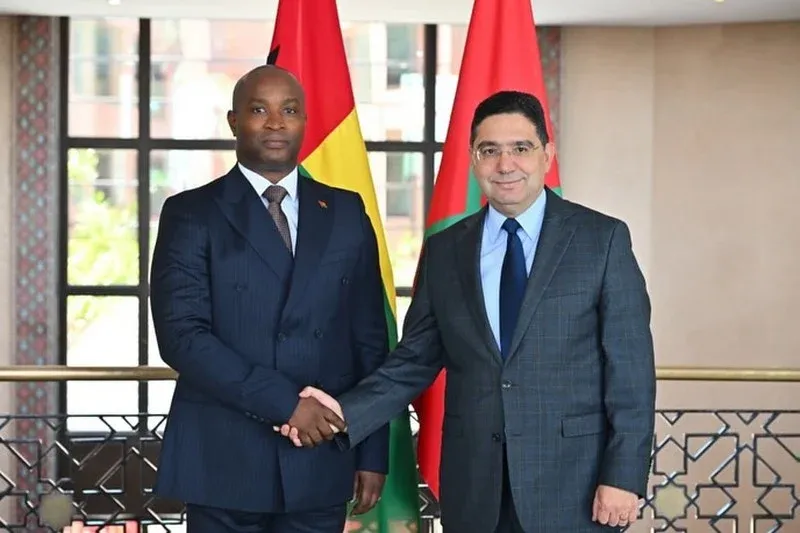
The renewed stance was announced Tuesday during an official visit to Morocco by Guinea-Bissau’s Minister of Foreign Affairs, International Cooperation and Communities, João Bernardo Vieira, who held high-level discussions in Rabat with Moroccan Foreign Minister Nasser Bourita.
Speaking during a joint press briefing following the talks, Vieira emphasized that Guinea-Bissau remains fully committed to supporting Morocco’s territorial integrity and national sovereignty, including over the Sahara region.
The statement marks another example of growing African support for Morocco’s autonomy initiative, which Rabat continues to promote internationally as the most practical and realistic framework for resolving the decades-old conflict.
Strong Diplomatic Alignment
During the meeting, the Bissau-Guinean foreign minister described his country’s position as “firm and constant,” underscoring that Guinea-Bissau has consistently backed Morocco on the issue in regional and international forums.
Vieira reiterated that his government considers Morocco’s autonomy proposal to be the only serious and credible basis capable of producing a lasting political solution to the dispute.
The autonomy initiative, first introduced by Morocco in 2007, proposes expanded self-governance for the Sahara under Moroccan sovereignty. Rabat argues the plan offers a balanced compromise that preserves territorial unity while granting local populations broader administrative authority.
Over the past several years, the proposal has gained increasing support from a growing number of African, Arab and Western nations, many of which now describe the initiative as a realistic pathway toward stability in North Africa and the Sahel region.
Praise for UN Resolution 2797
Vieira also welcomed the adoption of United Nations Security Council Resolution 2797, approved on October 31, 2025, calling it a major diplomatic development in support of the political process surrounding the Sahara issue.
According to the Bissau-Guinean diplomat, the resolution strengthened international recognition of Morocco’s autonomy plan by identifying it as the only serious, credible and durable foundation for a political settlement under Moroccan sovereignty.
The resolution has been viewed by Moroccan officials as a diplomatic milestone, particularly as international support continues shifting toward proposals centered on autonomy rather than independence.
Morocco has repeatedly stressed that the UN-led political process must remain realistic, pragmatic and based on compromise, while rejecting proposals it says are no longer feasible under current geopolitical conditions.
Expanding Morocco-Africa Relations
Tuesday’s talks in Rabat also reflected the broader strengthening of relations between Morocco and Guinea-Bissau, especially within the framework of African cooperation and economic partnership initiatives led by King Mohammed VI.
In recent years, Morocco has significantly expanded its diplomatic and economic presence across Africa through investments in infrastructure, banking, agriculture, renewable energy and religious cooperation programs.
Analysts say Rabat’s growing engagement with African nations has played a major role in consolidating support for Morocco’s position on the Sahara issue across the continent.
Guinea-Bissau has remained among the African countries openly backing Morocco’s territorial claims, maintaining close political relations with Rabat through bilateral cooperation agreements and regional diplomacy.
Increasing International Momentum
The latest declaration from Guinea-Bissau adds to what Moroccan officials describe as a widening international consensus in favor of the autonomy initiative.
Several countries have recently reaffirmed support for Morocco’s sovereignty over the Sahara or opened diplomatic missions in the southern provinces, moves Rabat considers evidence of growing international recognition of its position.
Observers note that support from African nations carries particular diplomatic significance for Morocco, especially within the African Union and broader continental institutions.
While the Sahara dispute remains unresolved at the United Nations level, Morocco continues to push for broader international backing of its autonomy framework as the centerpiece of future negotiations.
About the Author