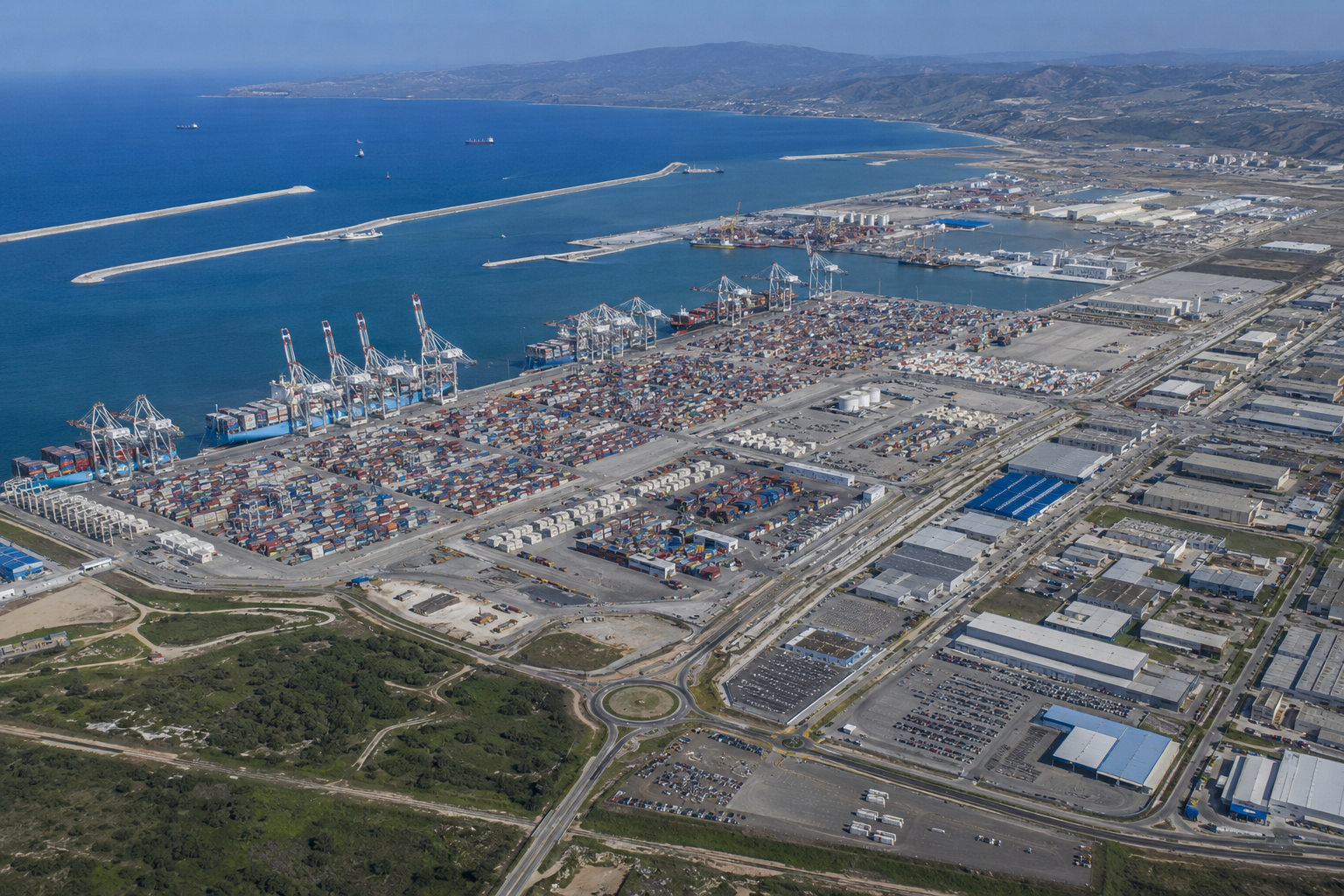
For the first time in modern African economic history, Morocco is set to become the continent’s most industrialized country in 2025, overtaking South Africa. The prediction comes from a recent report by the African Development Bank (AfDB), which highlights the remarkable transformation of the North African kingdom into a major industrial and manufacturing hub.
The achievement reflects not only South Africa’s industrial slowdown but also the success of Morocco’s long-term economic strategy. Over the past two decades, Rabat has pursued an ambitious pro-industry agenda focused on infrastructure development, foreign investment, export-oriented manufacturing, and industrial diversification.
A Twenty-Year Industrial Strategy
According to the AfDB, Morocco’s rise has been fueled by a combination of increased public investment, strong foreign direct investment, and the rapid expansion of industrial zones across the country. Modern infrastructure has played a decisive role in this transformation, particularly the development of Tangier Med, now the largest port in Africa and a key gateway between Europe, Africa, and the Americas.
Morocco’s industrial base has also become increasingly diversified. While phosphates and automotive manufacturing remain pillars of the economy, new sectors such as aeronautics, renewable energy, and advanced manufacturing are rapidly expanding.
“Every aircraft in the sky today produced after 2005 contains at least one essential component manufactured in Morocco,” explains Abdelmalek Alaoui, president of the Moroccan Institute of Strategic Intelligence and author of Morocco, the Challenge of Power. “One of King Mohammed VI’s major bets was to invest heavily in both aeronautics and the automotive industry.”
Today, Morocco hosts manufacturing facilities and suppliers linked to some of the world’s largest aerospace and automotive companies, reinforcing its position as a strategic industrial platform for Europe and Africa.
Infrastructure as the Foundation of Growth
Experts point to Morocco’s sustained investment in high-quality infrastructure as one of the key drivers behind its industrial success. Over the years, the kingdom has expanded highways, rail networks, telecommunications systems, and logistics platforms to attract global investors.
“When a country invests massively in quality infrastructure — ports, connectivity, telecommunications — international investors follow,” says Alaoui. “And once foreign investors arrive, national investors also begin to scale up. That is when a country changes category economically.”
The strategy has enabled Morocco to integrate itself into global supply chains while positioning itself as one of Africa’s leading export-oriented economies.
Persistent Social and Regional Inequalities
Despite these economic achievements, Morocco still faces significant structural challenges. Industrial growth has not benefited all regions equally, and social disparities remain pronounced.
“There is a Morocco that wins — the Morocco close to ports and globalization,” Alaoui notes. “But there is also another Morocco, one made up of peripheral territories and marginalized populations. Rapid industrialization has widened the gap between the wealthy and those lower on the social ladder.”
The AfDB echoed these concerns in another recent report, warning that although Morocco has succeeded in creating industries and attracting investment, it still struggles to generate enough jobs for its growing population. Youth unemployment and regional inequality continue to weigh heavily on the country’s social landscape.
A New Economic Power in Africa
Morocco’s emergence as Africa’s leading industrial economy marks a major geopolitical and economic shift on the continent. Long dominated by South Africa, Africa’s industrial leadership is now moving northward as Morocco strengthens its role as a manufacturing, logistics, and export powerhouse.
The kingdom’s challenge in the coming years will be to ensure that industrial success translates into broader social inclusion and economic opportunities for all citizens. If Morocco can combine industrial growth with stronger job creation and reduced inequality, it may not only become Africa’s industrial leader but also one of its most influential economic models.
About the Author