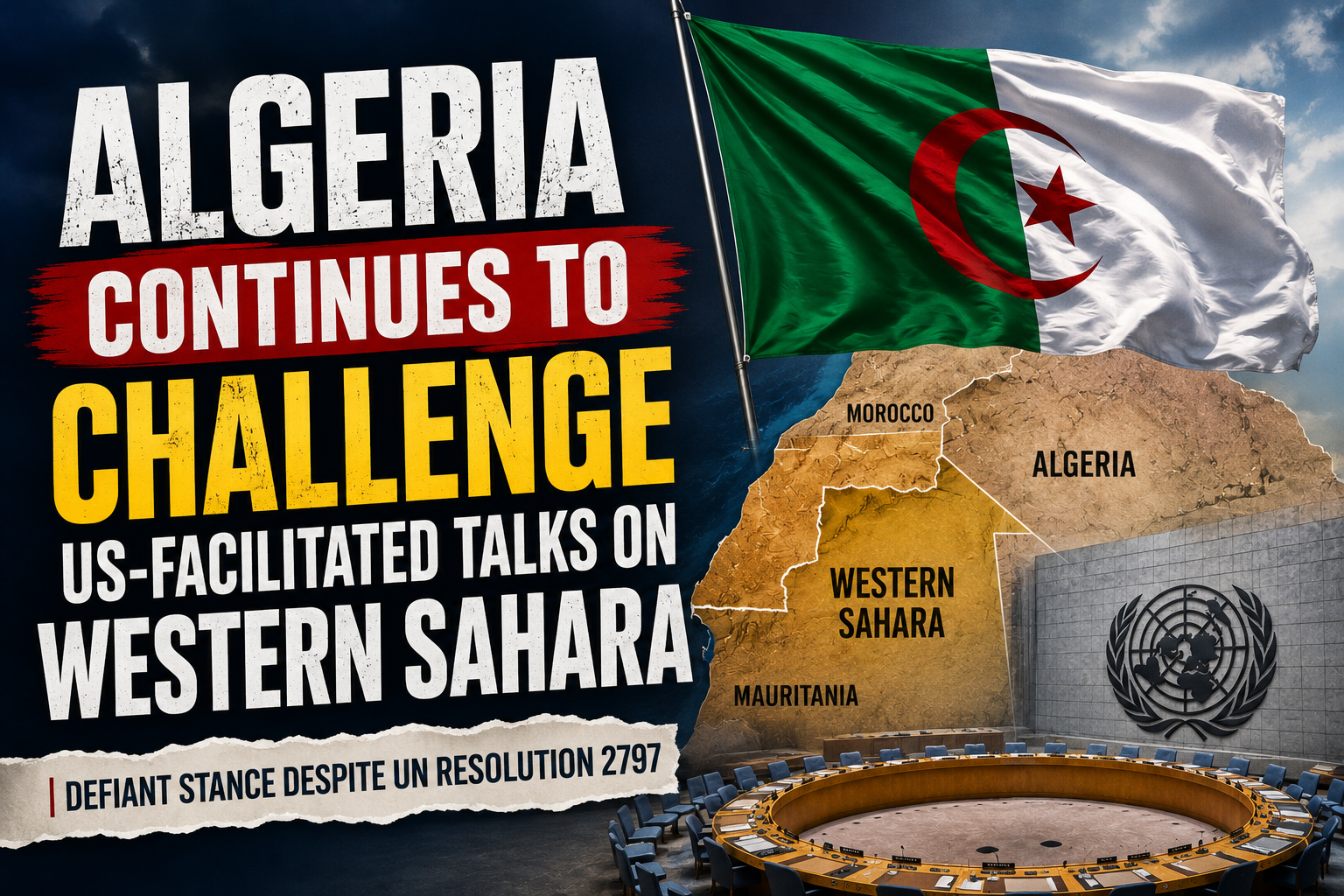
Fresh diplomatic tensions surrounding the Western Sahara dispute have once again highlighted Algeria’s continued resistance to the evolving international momentum backing Morocco’s autonomy initiative, despite recent speculation that Algiers had softened its position following the adoption of UN Security Council Resolution 2797.
During a United Nations regional seminar held in Managua from May 25 to 27, an Algerian delegation led by Deputy Permanent Representative to the UN Toufik Koudri reaffirmed Algeria’s long-standing stance on the dispute. The delegation rejected what it described as “false allegations” and “misleading interpretations” promoted by Morocco regarding recent developments tied to the Sahara issue.
Koudri insisted that Algeria supports the resumption of direct negotiations between Morocco and the Polisario Front, while again attempting to distance Algeria from direct responsibility in the conflict by portraying the country as merely an observer rather than a principal stakeholder.
“Algeria has always advocated for direct negotiations between the two sides,” Koudri said, repeating Algiers’ longstanding narrative centered on self-determination.
His remarks echoed statements recently made by Algerian Foreign Minister Ahmed Attaf, whose comments sparked debate over whether Algeria was beginning to acknowledge the diplomatic implications of Resolution 2797.
Adopted by the UN Security Council in October last year, Resolution 2797 marked a significant diplomatic development by reinforcing Morocco’s autonomy proposal under Moroccan sovereignty as the main political framework for resolving the dispute. The resolution also clearly identified the four parties involved in the political process: Morocco, Algeria, Mauritania, and the Polisario Front.
Despite this, Algeria continues to reject its designation as a direct party to the conflict, maintaining that it is simply a neighboring country. Critics argue that this position contradicts decades of Algerian political, financial, and logistical support for the Polisario Front.
Observers say Algeria’s renewed rhetoric reflects mounting pressure as Morocco gains broader international backing for its autonomy plan. Several countries have increasingly endorsed the initiative as the most realistic and credible basis for achieving a lasting political settlement.
Analysts also note that the diplomatic climate surrounding the Sahara issue has shifted significantly following growing international concerns over regional security threats linked to Polisario activities. Attention intensified after the recent attack in Es-Smara, which drew strong international condemnation and renewed calls for stability in the region.
U.S. Ambassador Duke Buchan III recently reiterated Washington’s support for Morocco’s autonomy proposal and condemned the Polisario-linked attack, describing the situation as another reminder that the decades-old conflict must finally be resolved.
The U.S. Mission to the United Nations similarly stressed that “the time to end this 50-year-old dispute is now,” signaling continued American support for efforts aimed at advancing the UN-led political process.
Meanwhile, Morocco’s ambassador to the UN, Omar Hilale, strongly criticized Algeria’s continued political maneuvering during the same UN Committee of 24 meeting in Managua. Hilale argued that outdated ideological narratives no longer reflect the geopolitical realities surrounding the conflict.
He emphasized that Resolution 2797 firmly established Morocco’s autonomy initiative as the “only serious and credible basis” for reaching a final political solution under Moroccan sovereignty, while reaffirming the responsibility of all four parties to actively engage in the negotiation process.
As diplomatic momentum increasingly tilts toward Morocco’s position, observers believe Algeria faces growing international pressure to adopt a more direct and constructive role in efforts to bring one of Africa’s longest-running regional disputes to a close.
About the Author