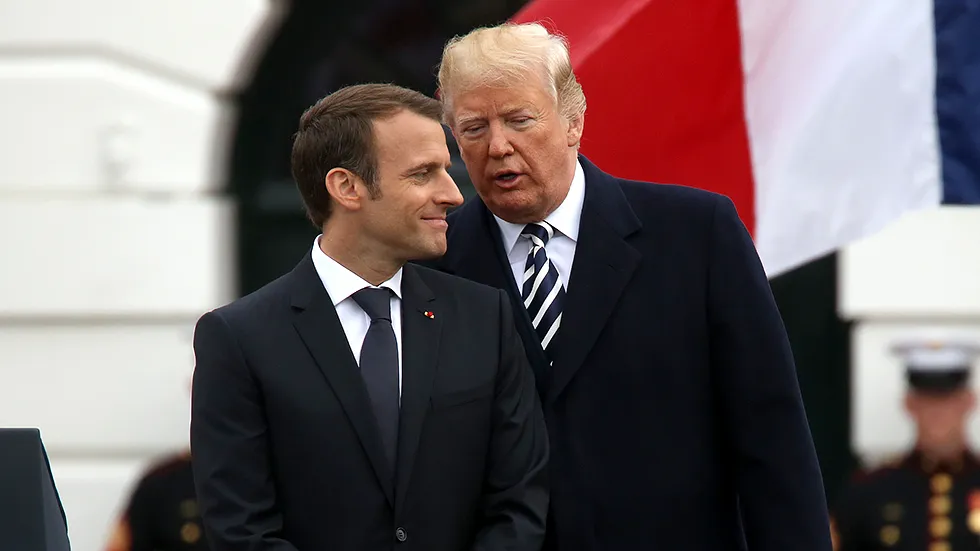
A sharp ideological divide surfaced this week on the international stage as former U.S. President Donald Trump’s renewed “America First” message collided head-on with French President Emmanuel Macron’s increasingly assertive call for a “Europe First” strategy. The two leaders, both influential voices on the global geopolitical landscape, offered competing visions for the future of Western power — highlighting the growing tension between national interests and collective leadership.
Speaking at separate events just days apart, Trump doubled down on his stance that the United States must reclaim what he described as its diminishing global leverage. He emphasized that America should no longer shoulder what he considers an unfair burden for European defense, trade, and global stability. “The United States will always protect its own people first,” Trump declared, promising a return to policies that prioritize American resources, industries, and security commitments.
Across the Atlantic, Macron delivered his own message — equally bold and unmistakably pointed. He argued that Europe must rely less on Washington and more on its own strategic autonomy, warning that Western influence could weaken if Europe does not step into a leadership vacuum. “Europe can no longer depend on others for its security,” Macron said, reaffirming his long-standing belief that Europe must develop greater military and economic independence to remain competitive.
While the two visions differ in tone and direction, they converge on a single reality: the West is entering a period of transition, and global dominance can no longer be taken for granted. Analysts warn that the widening leadership gap risks creating fractures within longstanding alliances, including NATO, where unity has historically been critical for managing global threats.
European officials have expressed concern that Trump’s approach could weaken collective defense commitments, especially in an era of rising competition from China and Russia. Macron, meanwhile, has faced criticism from some EU members who fear his push for strategic autonomy could alienate Washington at a crucial time.
Diplomats on both sides say the divide reflects broader geopolitical shifts. With emerging powers challenging Western influence, the U.S. and Europe are wrestling with how — and whether — to maintain their traditional global roles. What was once a coordinated transatlantic strategy now increasingly resembles a tug-of-war between diverging priorities.
Despite the tensions, experts note that both leaders ultimately seek the same outcome: securing the long-term strength of Western democracies. The difference lies in how they believe that future should be shaped — through American dominance, European self-reliance, or a recalibrated partnership that satisfies both.
As the world watches these competing visions unfold, one question remains unanswered: Will the West emerge divided or reinvented?
For now, the face-off between “America First” and “Europe First” underscores a pivotal moment in global politics — one that could determine the balance of power for decades to come.
About the Author