A newly revealed internal communication within the Pentagon has sparked diplomatic debate after suggesting the United States might consider punitive steps against certain NATO allies—including Spain—over disagreements related to the ongoing conflict with Iran.
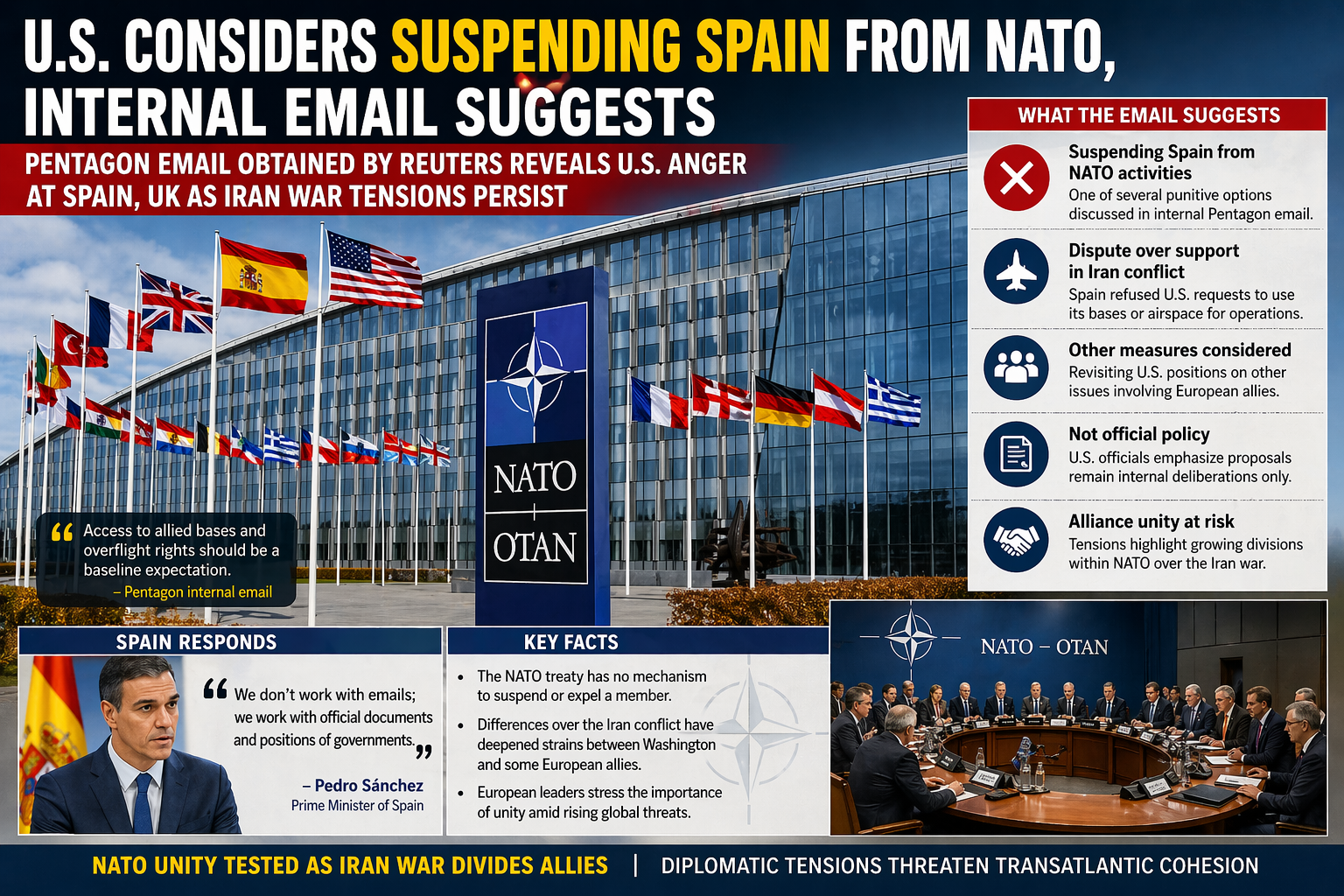
According to reports based on a document obtained by Reuters, the internal email circulated among senior defense officials outlines several possible actions Washington could take against allies it believes did not sufficiently support U.S. military operations during the war with Iran. Among the options mentioned is the symbolic step of suspending Spain from activities within the NATO.
Dispute Over Military Support
The tensions reportedly stem from Spain’s refusal to allow the United States to use Spanish bases or airspace for operations linked to the conflict. U.S. officials reportedly argued that access to allied bases and overflight rights should be a “baseline expectation” for NATO partners during military operations.
The internal message also explored broader diplomatic responses, including reconsidering Washington’s stance on other geopolitical issues involving European allies. However, officials stressed that the proposals were part of internal deliberations rather than formal policy decisions.
Spain Responds
Spain’s Prime Minister Pedro Sánchez dismissed the reports, emphasizing that Madrid remains a committed member of NATO and continues to meet its obligations within the alliance.
“We don’t work with emails; we work with official documents and positions of governments,” Sánchez said during a European summit, insisting that Spain’s cooperation with allies remains strong while adhering to international law.
Questions Over NATO Rules
Experts note that the NATO treaty does not include a clear mechanism to suspend or expel a member state, making such a move legally and politically complicated. Even so, the debate highlights growing tensions within the alliance as Western governments remain divided over the scope of military involvement in the Iran conflict.
Broader Alliance Strains
The situation reflects wider friction between Washington and some European capitals amid the escalating crisis in the Middle East. While the United States has pushed allies for stronger support, several European countries have taken a more cautious approach, warning that deeper involvement could further destabilize the region.
Despite the controversy, NATO officials and European leaders have repeatedly stressed the importance of maintaining unity within the alliance as geopolitical tensions continue to rise.
About the Author