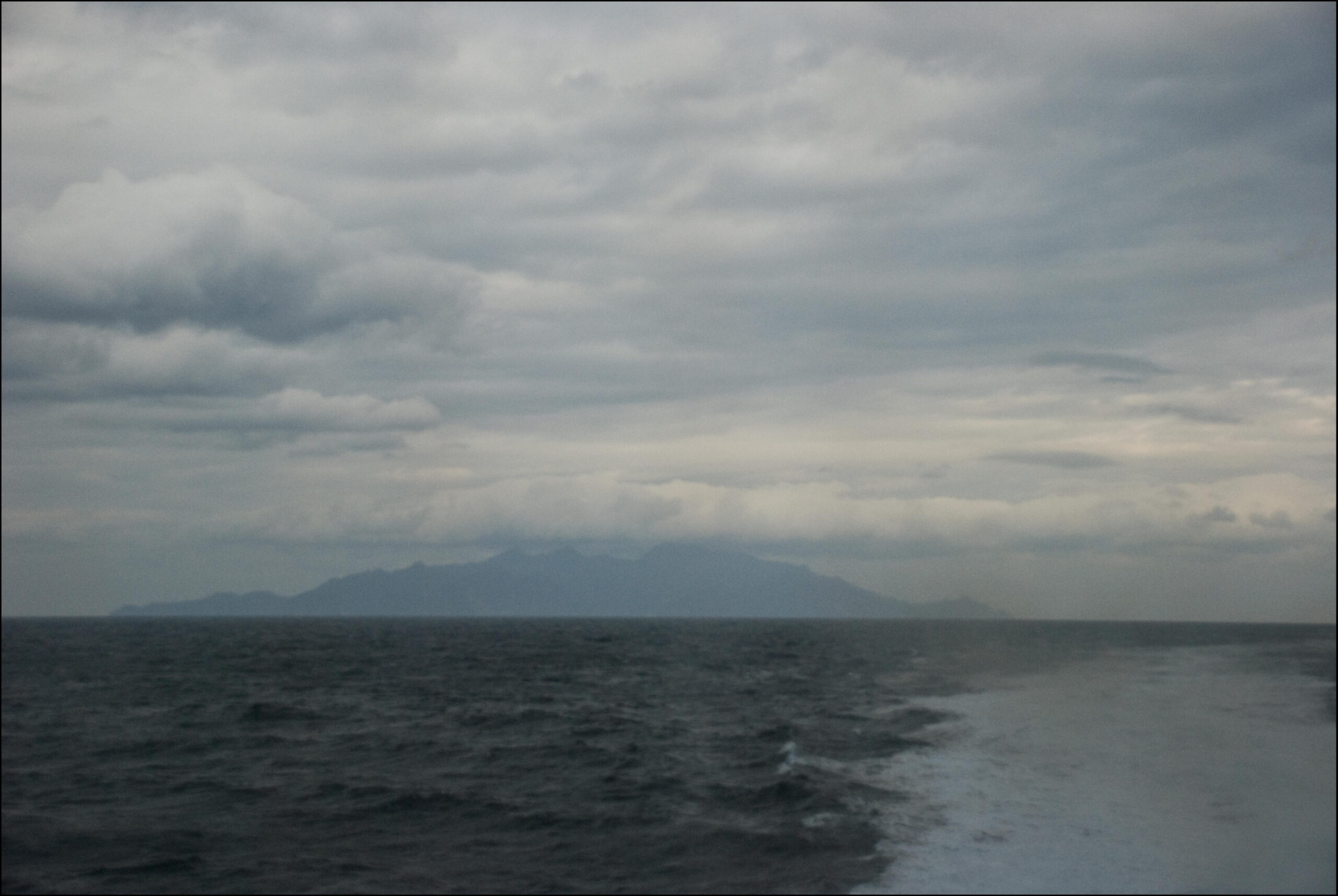
Ulleung Island, photographed in 2013. Photo: Ulleungdont, Wikimedia Commons, CC BY-SA 3.0. Illustrative location photograph; not an image of the military incident.
South Korea scrambled fighter jets and briefly warned residents of Ulleung Island to take shelter on Tuesday after Russian military aircraft entered the country’s air defense identification zone and approached close to its territorial airspace. Seoul said no violation of sovereign airspace occurred.
The Joint Chiefs of Staff said about five Russian warplanes entered the Korea Air Defense Identification Zone (KADIZ) over the East Sea early on November 24. The aircraft approached Ulleung Island before leaving the zone after South Korean forces deployed fighter jets, according to the military.
The episode triggered a short-lived civil defense alert and diplomatic protests, while conflicting emergency messages initially caused confusion among island residents about whether the aircraft were Russian or North Korean.
Three-minute shelter warning after aircraft approach
South Korea’s interior ministry issued an emergency message at about 7:52 a.m. urging residents of Ulleung County to move to underground shelters or sturdy buildings. The warning was lifted roughly three minutes later after officials determined that the aircraft had left the immediate danger area.
A separate message from North Gyeongsang Province mistakenly described the aircraft as suspected North Korean planes. Local officials later corrected the notice. The Joint Chiefs clarified that the aircraft were Russian and had not crossed into South Korean territorial airspace.
South Korean military officials said fighter jets were dispatched after the aircraft were detected, and carried out tactical maneuvers in preparation for contingencies. The aircraft eventually turned away toward the East Sea and exited the identification zone.
Seoul protests as Moscow disputes the zone’s authority
South Korea’s Defense Ministry summoned a Russian military attaché to lodge a formal protest. The Foreign Ministry also conveyed its concern through diplomatic channels and called on Moscow to prevent similar incidents from recurring.
Russia’s Embassy in Seoul, in a statement reported by the state news agency TASS, said the aircraft had operated in accordance with international law. Moscow has argued that the KADIZ was established unilaterally by South Korea and does not create legal obligations for foreign aircraft.
An air defense zone is not the same as sovereign airspace
The distinction is important. An air defense identification zone is an area in which a state seeks advance identification of aircraft approaching its territory. It can extend beyond a country’s sovereign airspace. Entering such a zone is not, by itself, the same as violating national airspace or automatically establishing an unlawful act.
South Korean officials said the Russian aircraft came unusually close to the edge of territorial airspace near Ulleung Island, prompting the pre-emptive warning. The military did not report that the aircraft crossed that boundary.
Repeated encounters add to regional tension
Yonhap reported that Russian military aircraft had entered the KADIZ several times this year, including another incident a week earlier. South Korea has also protested previous entries involving Russian and Chinese aircraft. Such encounters carry the risk of miscalculation when military aircraft operate near national airspace and opposing forces respond.
Tuesday’s alert exposed a separate challenge: emergency communication must be fast and accurate during a potentially dangerous military incident. The mistaken references to North Korean aircraft added confusion to an already tense situation, and authorities said they would review the circumstances behind the messaging.
The immediate episode ended without a reported airspace violation or casualties. But the exchange of diplomatic protests and the repeated presence of Russian aircraft in the zone underline the continuing security sensitivities in the waters between the Korean Peninsula and Japan.
Sources
- Yonhap News Agency — detailed account of the aircraft approach, military response, emergency alert and Russian Embassy statement.
- The Associated Press — independent reporting on the alert, fighter response and clarification that territorial airspace was not violated.
- Reuters — reporting on South Korea’s response and planned diplomatic protest.
- Yonhap News Agency — South Korea’s Foreign Ministry response and diplomatic protest.
By World Media Feed Editorial Team
About the Author