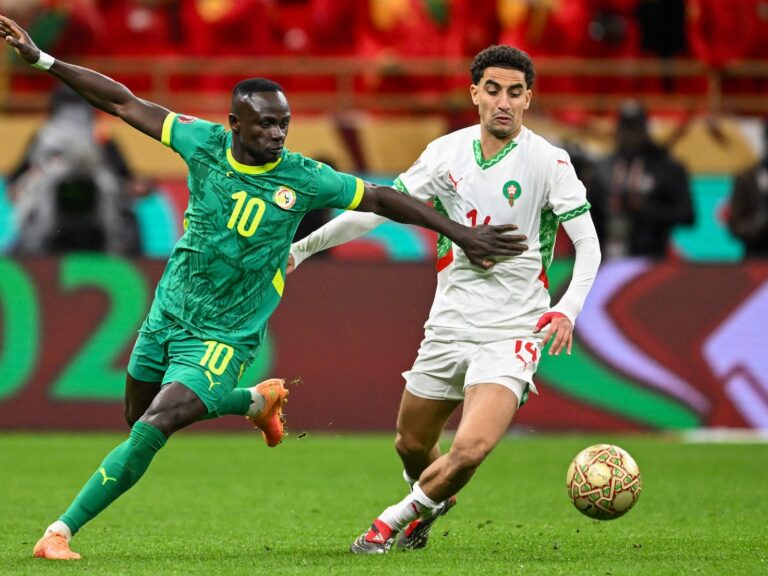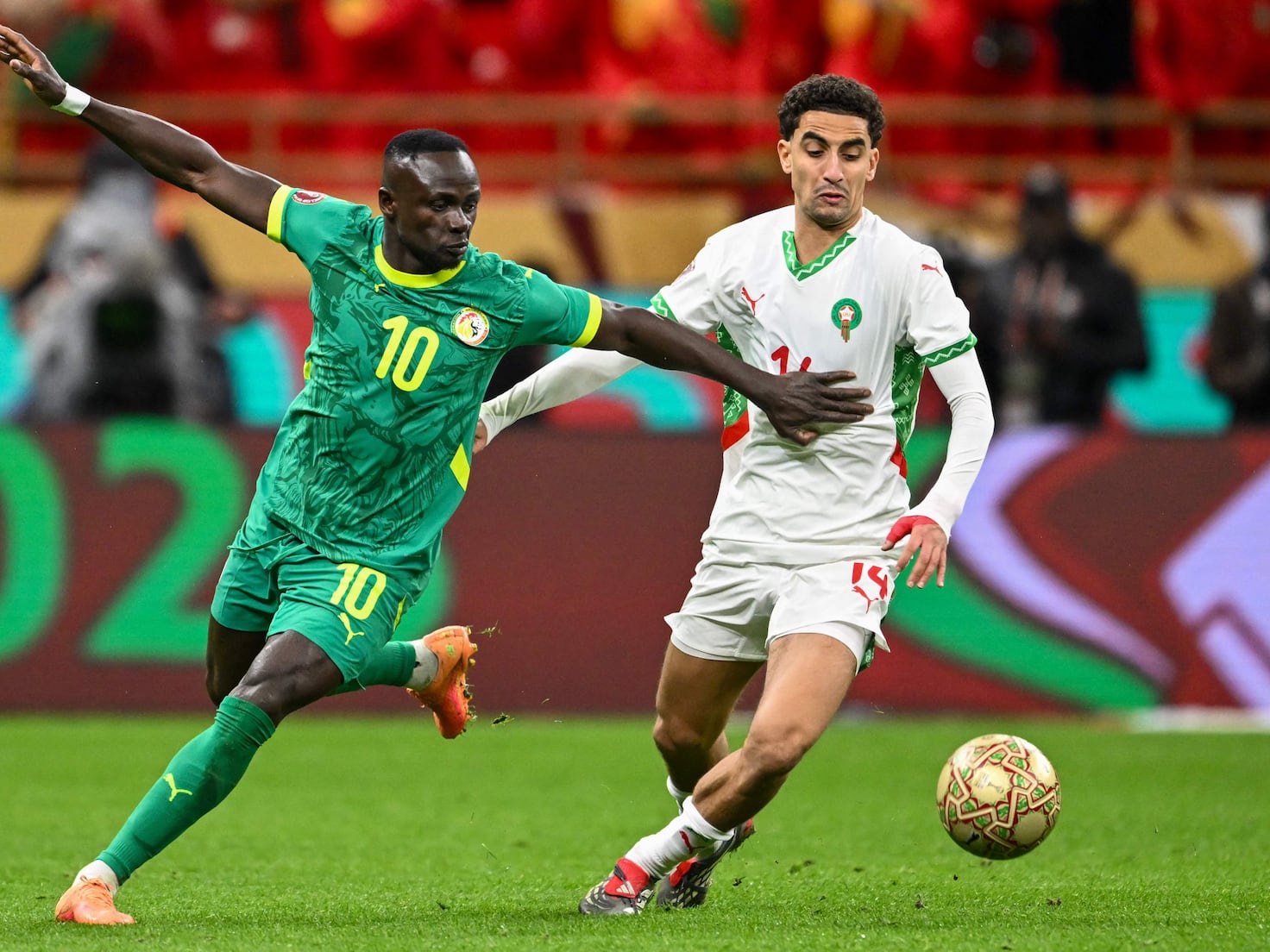
Morocco and Senegal during the AFCON 2025 final in Rabat. File photo.
World Media Feed Editorial Team | November 24, 2026
A confident prediction about the outcome of a major football ruling has placed Spanish sports newspaper MARCA under scrutiny after the Court of Arbitration for Sport (CAS) ruled the opposite way and restored Senegal’s 1–0 victory in the 2025 Africa Cup of Nations final.
The issue is not that a newspaper made a prediction and got it wrong. Journalists routinely report informed expectations before decisions are announced. The questions are how the prediction was sourced, how its certainty was presented to readers, and whether the publication clearly explained any subsequent change to its reporting.
What MARCA told readers before the ruling
On November 23, the day before CAS announced its decision, MARCA published a report headlined in Spanish: “Confianza total en Marruecos: el TAS le ratificará mañana como campeón de África” — “Total confidence in Morocco: CAS will confirm it tomorrow as African champions.” The article remains available on MARCA’s website.
A contemporaneous account by Moroccan news outlet Hespress said MARCA’s report cited sources consulted by its journalists and described a favorable outcome as the prevailing view among Moroccan federation officials. That distinction matters: reporting what people close to one side expect is not the same as independently establishing what a court will decide.
Le360 subsequently reported that MARCA’s headline had initially been more categorical — “CAS will confirm Morocco as African champions” — and was changed shortly after publication to the “total confidence” formulation. WMF has reviewed Le360’s published account and the currently indexed MARCA headline, but has not independently obtained MARCA’s revision history or an archived capture proving the precise timing and sequence of the change. We therefore attribute the headline-change account to Le360 rather than presenting it as independently established by WMF.
What CAS actually decided
On November 24, CAS admitted the Senegalese Football Federation’s appeal, annulled the CAF Appeal Board decision that had awarded Morocco a 3–0 victory by forfeit, and reinstated the CAF Disciplinary Board decision. The tribunal confirmed the result achieved on the pitch: Senegal 1, Morocco 0.
In its official communication, CAS said the referee’s decision to resume the match or stop it permanently fell within his authority. Because the match resumed and reached a sporting conclusion, the panel found that the relevant tournament provisions concerning a match permanently abandoned did not apply in the way argued by Morocco. Reuters independently reported the unanimous decision and its principal reasoning.
The ruling does not, by itself, establish that MARCA knowingly published false information, had access to a leaked judgment, or acted with improper motives. WMF has found no independently verified evidence proving any of those allegations. A prediction can be sincerely held and still be wrong; the journalistic question is whether the evidence and wording justified the confidence conveyed to readers.
The questions that deserve answers
MARCA’s report raises several questions that are relevant beyond this particular football dispute:
- What was the basis for predicting the outcome of a pending CAS proceeding so confidently?
- Were the sources describing their own expectations, or claiming knowledge of the tribunal’s deliberations?
- Did MARCA make clear to readers that the prediction reflected the expectations of people on the Moroccan side rather than a confirmed or independently verified outcome?
- Was the headline changed after publication, as Le360 reported, and if so, why was the change made?
- Did MARCA later publish an explanation, correction or clarification after CAS issued the opposite ruling?
A right of reply — and a wider lesson for sports media
WMF welcomes MARCA’s response to these questions and will update this report if the newspaper provides an explanation, supporting information or a correction. The publication’s perspective is important, particularly on the sourcing and headline history. This report does not presume that an inaccurate prediction proves misconduct.
The episode is also a reminder that high-stakes sports disputes require the same discipline as political and legal reporting. A source’s confidence is not a court judgment. A prediction is not a result. And a headline should communicate the strength of the evidence, not simply the strength of someone’s expectations.
For readers in Morocco, Senegal and across African football, the central issue is bigger than which team lifted the trophy. It is whether influential media outlets clearly distinguish verified facts, attributed expectations and speculation — especially when the final decision rests with an independent tribunal.
Sources and documents
- MARCA: “Confianza total en Marruecos…” (November 23, 2026)
- Hespress: MARCA report and its account of the sources cited (November 23, 2026)
- Le360: Report on MARCA’s headline change and a source’s denial of a leak (November 23, 2026)
- Court of Arbitration for Sport: Official decision communication (November 24, 2026)
- Reuters: Senegal reinstated as 2025 AFCON champions (November 24, 2026)
Editorial standard: World Media Feed distinguishes independently confirmed facts from claims attributed to other publications or unnamed sources. MARCA’s response will be included if received.
About the Author