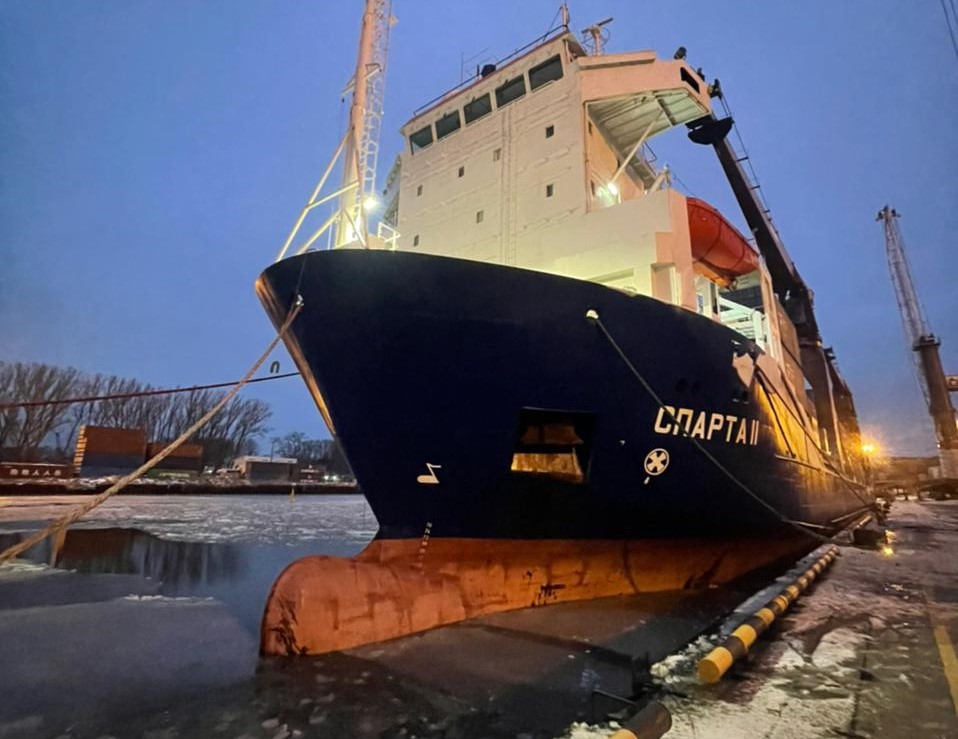
Archival photograph of the Sparta II at port, published by its operator Oboronlogistika. This is not a photograph of the November 21 drone strike or the subsequent fire.
By World Media Feed Editorial Team
A Russian cargo ship linked to Moscow’s military logistics caught fire after a drone strike in the Gulf of Finland on Saturday, then drifted into Finnish territorial waters, drawing Finnish, Estonian and Swedish involvement in a maritime rescue operation near NATO’s northeastern frontier.
All 16 crew members aboard the Sparta II were evacuated in lifeboats and transferred to another Russian vessel, Finnish authorities told Reuters. The fire remained active as Finland coordinated rescue and firefighting efforts, while officials assessed the risk of environmental damage and the possibility that the damaged ship could sink.
What happened in the Gulf of Finland
Finnish Defence Forces detected a drone attack on the Sparta II in international waters west of Gogland, also known as Suursaari, according to Finland’s Defence Ministry. The ship was sailing from St. Petersburg toward Baltiysk, in Russia’s Kaliningrad exclave, when it was hit and caught fire.
After sustaining damage, the vessel drifted north into Finnish territorial waters near Loviisa. Finland’s Border Guard took the lead in maritime rescue and environmental-protection operations and established a restricted area around the ship. Authorities said the incident did not pose an immediate danger to other maritime traffic.
Finnish and Estonian authorities reported that explosions and fire damaged parts of the vessel, including its bridge and cargo area. The crew’s evacuation was completed without any publicly reported fatalities. Firefighting and efforts to secure the vessel continued after the evacuation.
Finland says Ukraine was likely responsible
A Finnish armed forces spokesperson told Reuters that Ukraine was likely behind the attack, but said the reason the ship was targeted was unclear. Ukraine had not claimed responsibility in the reporting available at publication, and the attribution has not been independently established by World Media Feed.
Finnish Prime Minister Petteri Orpo said the war was spilling into neighbouring areas and stated that Ukraine had the right to fight against the aggressor. His remarks reflected Finland’s assessment of the wider security implications, but did not constitute independent proof of who carried out the strike.
The ship’s Russian regional governor had earlier said two drones struck the vessel. That account and the Finnish assessment are reported separately here; responsibility remains an attribution by Finnish officials rather than a confirmed claim by the alleged attacker.
A vessel with links to Russian military logistics
The Sparta II is owned by Oboronlogistika, a Russian company that provides logistics services to the country’s Defence Ministry. The vessel is subject to U.S. sanctions, and Ukrainian authorities have also sanctioned it. Finnish officials said its cargo had not been confirmed, although they could not rule out the presence of military material.
The distinction is important: the ship’s ownership and sanctions status are documented, but they do not establish what it was carrying on this voyage. Finnish Border Guard officials said there was no confirmed cargo information available during the rescue operation.
Suspected Russian helicopter airspace violation
Finland also investigated a suspected violation of its airspace by a Russian helicopter near the damaged ship. The Finnish Defence Ministry said the aircraft may have entered Finnish airspace by up to 4.1 kilometres. Defence officials said the incident could have been connected to rescue or monitoring activity around the vessel, but the circumstances remained under investigation.
Estonia sent a patrol vessel to assist with rescue, firefighting and pollution-response preparations. Sweden also contributed to safeguarding Finnish and NATO territorial integrity, according to statements reported by Reuters. Finland imposed temporary restrictions on air and maritime traffic in the eastern Gulf of Finland during the response.
Why the incident matters for Baltic security
The Gulf of Finland is a strategic maritime corridor linking the Baltic Sea with St. Petersburg. It borders Finland and Estonia, both NATO members, and carries commercial traffic serving Russian ports. The incident illustrates how attacks connected to the war in Ukraine can create immediate rescue, environmental and security demands for neighbouring states even when the initial strike occurs outside their territorial waters.
For Finland, the immediate priorities are controlling the fire, preventing pollution and ensuring the damaged vessel can be moved safely. For NATO’s Baltic members, the episode adds to concerns about drones, airspace incursions and the risk that military activity near busy shipping routes could trigger unintended escalation.
At publication, the ship’s cargo remained unconfirmed, Ukraine had not publicly claimed the attack, and Finnish authorities were still dealing with the vessel and investigating the suspected helicopter airspace violation. Those unanswered questions will shape the next assessment of the incident.
Sources and editorial note
This report draws on Reuters reporting dated November 21, statements from the Finnish Defence Ministry and Border Guard as reported by Estonian Public Broadcasting (ERR), and reporting by Agence France-Presse. Attribution of the strike to Ukraine is presented as the assessment of Finnish officials, not as an independently established fact. The vessel’s cargo at the time of the incident had not been confirmed.
Photo: Archival photograph of the Sparta II at port, published by its operator Oboronlogistika. This is not a photograph of the November 21 drone strike or the subsequent fire.
About the Author