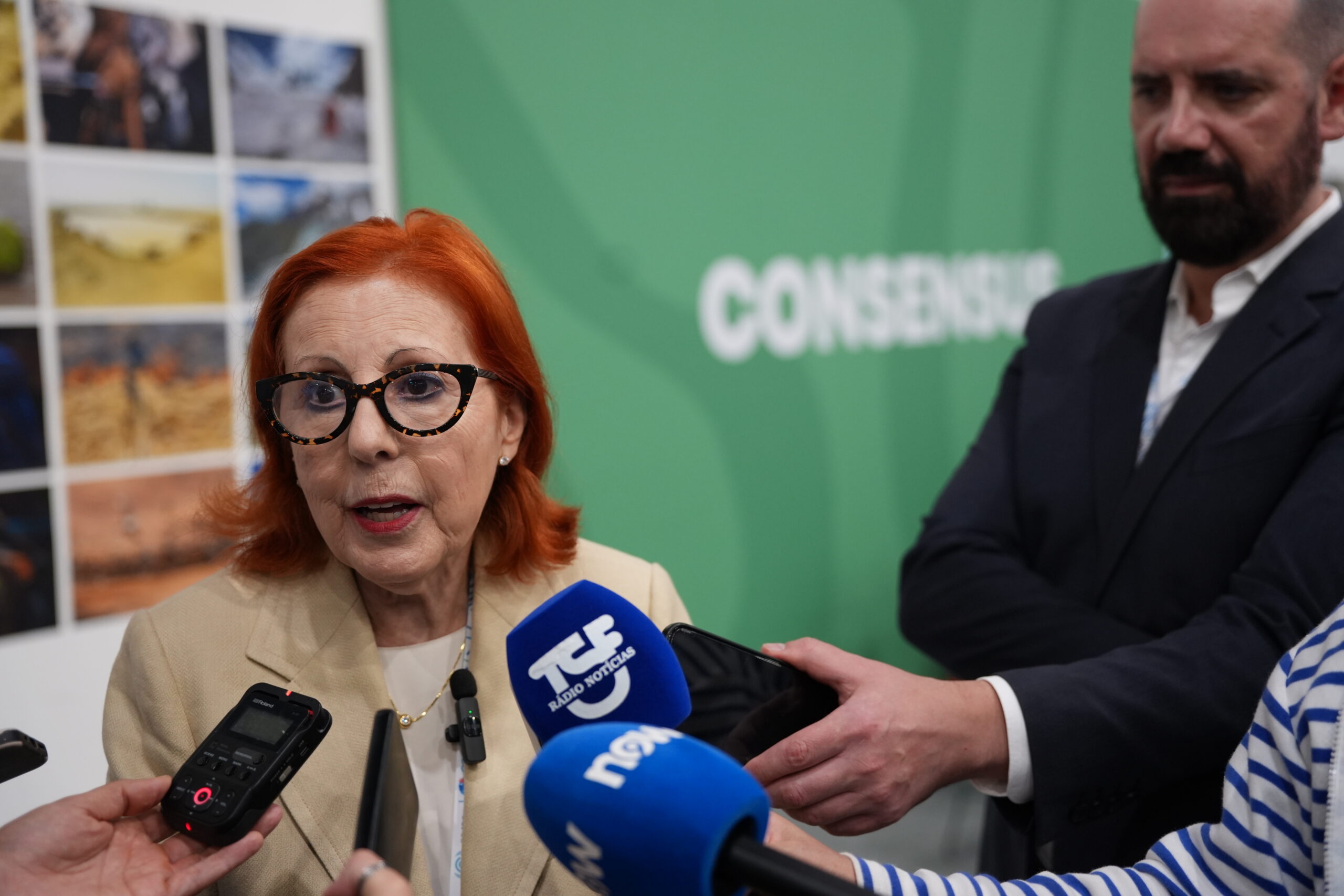
Maria da Graça Carvalho at COP31 in Antalya, Turkey, November 18, 2026. Photo by Xuthoria via Wikimedia Commons, CC BY-SA 4.0. Used as an illustrative image for the COP31 negotiations.
By World Media Feed Editorial Team
UN climate negotiations in Antalya ended without a consensus agreement after the European Union and other countries rejected a final draft on Sunday, bringing COP31 to a dramatic close after more than two weeks of negotiations and two days of overtime.
COP31 President Murat Kurum said the proposed text had not secured the consensus required for adoption. No revised version would be issued, leaving the summit without the broad political agreement its organizers had hoped to deliver.
Fossil fuels became the central fault line
The disagreement centered heavily on fossil fuels. European countries and other governments argued that the proposed agreement did not go far enough because it failed to explicitly address the transition away from coal, oil and gas.
Ireland’s environment minister, Darragh O’Brien, said the European Union could not support a climate agreement that made no reference to fossil fuels, which scientists identify as the principal driver of human-caused global warming.
Saudi Arabia and other major oil-producing countries had opposed language that would have placed fossil fuels more directly at the center of the agreement, according to reporting from the summit.
Climate finance also divided countries
Developing countries raised separate concerns over climate finance. The draft called for a tripling of adaptation finance but did not establish a clear baseline for measuring that increase.
For vulnerable countries already facing stronger heat, floods, storms and other climate impacts, the dispute was not simply about wording. Governments wanted clearer commitments on how additional financing would reach countries struggling to adapt to a warmer climate.
The failed package also included language supporting faster development of carbon-removal technologies. Supporters presented the technology as one tool for dealing with rising atmospheric carbon, while critics warned that relying too heavily on carbon removal could allow continued fossil-fuel production rather than accelerate emissions cuts.
A warning about the 1.5°C target
The breakdown came at a particularly difficult moment for international climate policy. The UN’s environmental body has confirmed that global temperatures are projected to exceed the 1.5°C threshold that countries adopted as a central goal under the Paris Agreement.
The COP31 draft acknowledged the projected overshoot and proposed expanding efforts to reduce its consequences. But the failure to agree on the main political text exposed the widening gap between countries that want stronger language on fossil fuels and those that emphasize energy security, development and technological solutions.
What the failure means
The collapse does not erase the climate commitments already adopted through previous UN negotiations. Existing agreements and legal frameworks remain in force, and technical work on emissions, adaptation and climate finance can continue.
But the failure is politically significant. Reuters reported that the last time UN climate talks failed to produce an agreed political outcome was at Copenhagen in 2009.
It also highlights the difficulty of reaching consensus among nearly 200 governments at a time when wars, economic pressures and energy-security concerns are competing with the climate agenda.
Australia and Turkey face a difficult ending
Australia led the negotiations while Turkey hosted the summit. Australia’s COP31 president of negotiations, Chris Bowen, described the result as very disappointing and identified fossil fuels and climate finance among the main unresolved issues.
For the summit’s organizers, the immediate challenge was to preserve cooperation on the technical decisions that could still move forward even though the main cover decision failed.
The next UN climate summit is scheduled for 2027 in Addis Ababa, Ethiopia, where governments will again face pressure to demonstrate that multilateral climate diplomacy can produce concrete action.
Sources and editorial note
This report draws on Reuters and Associated Press reporting from COP31 published November 22, 2026. World Media Feed has not independently verified statements made by individual delegations. The article distinguishes the proposed text from decisions that were actually adopted.
Photo: Maria da Graça Carvalho at COP31 in Antalya, Turkey, November 18, 2026. Photo by Xuthoria via Wikimedia Commons, CC BY-SA 4.0. The image is illustrative and does not depict the final plenary session.
About the Author