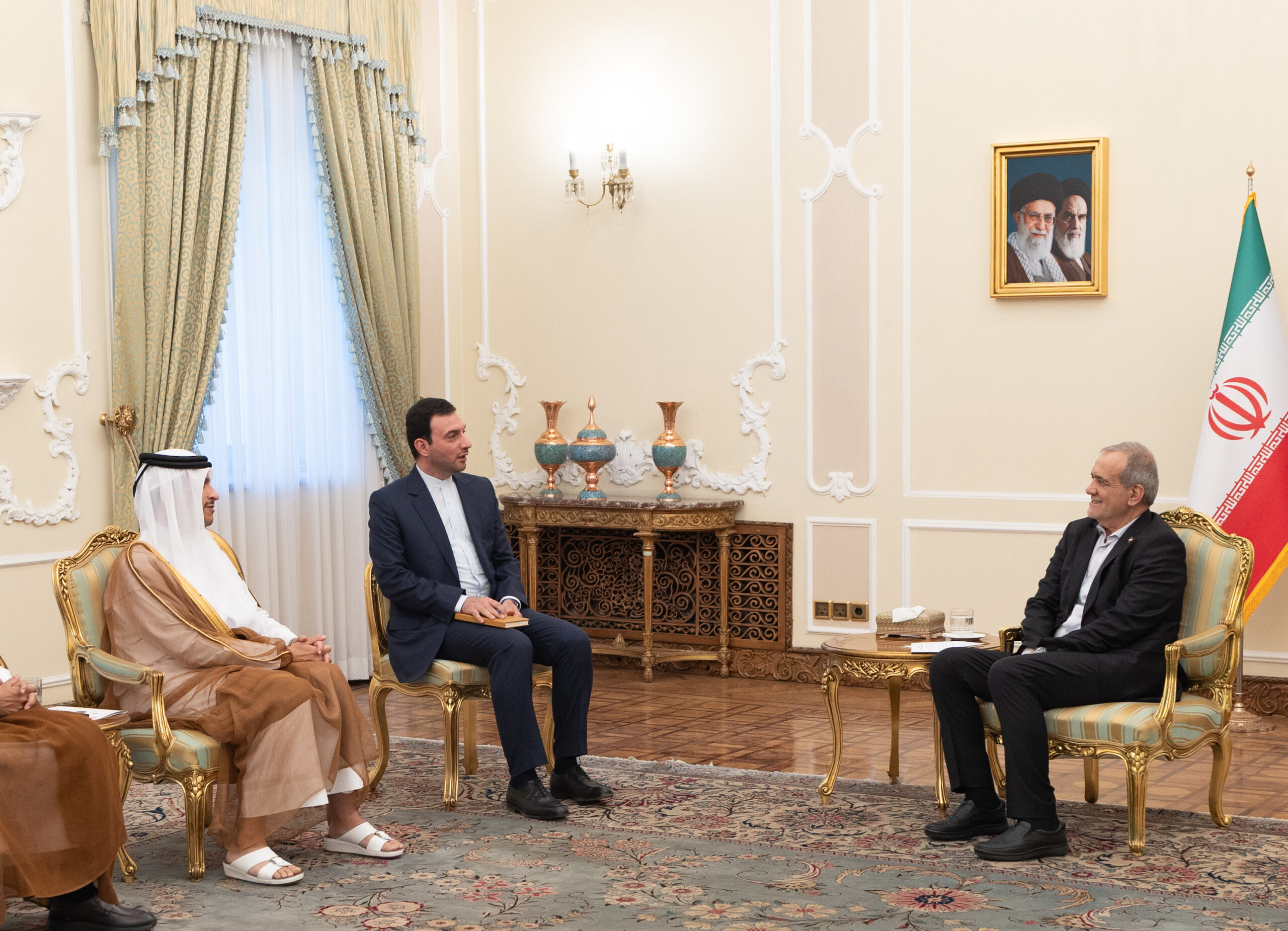
Archive photograph of a Qatar–Iran diplomatic meeting in Tehran on August 27, 2026. The image does not depict the Qatari delegation's November 20 visit. Photo: Qatar Ministry of Foreign Affairs.
By World Media Feed Editorial Team
A Qatari delegation held talks in Tehran on Friday night as Doha sought to keep a diplomatic channel open between Iran and the United States, according to an Iranian deputy foreign minister. The reported visit comes amid renewed efforts by regional intermediaries to revive negotiations, even as attacks on commercial shipping and military tensions continue across the Gulf.
Iranian Deputy Foreign Minister Kazem Gharibabadi said on Saturday that Tehran remained in contact with mediators, including Qatar, through in-person and virtual discussions. He said the contacts were aimed at determining whether diplomacy could be given another opportunity. His account was reported by Reuters, citing Iran’s semi-official Tasnim news agency.
The account of the Tehran meeting has so far come from the Iranian side. The public reporting reviewed by World Media Feed did not include a separate Qatari confirmation or details of any proposals exchanged during the visit.
Qatar works to reopen a stalled channel
Qatar has maintained working relationships with both Washington and Tehran and has repeatedly served as an intermediary in regional disputes. Its position gives Doha a channel to communicate with parties that are not directly negotiating with one another.
The Tehran visit followed a separate diplomatic effort in Europe. Axios reported that U.S. President Donald Trump’s envoys Steve Witkoff and Jared Kushner met senior Qatari officials in Berlin on Thursday to discuss mediation between Washington and Tehran. The report, based on people familiar with the discussions, described efforts to restore a ceasefire and restart negotiations.
Those contacts suggest that Qatar’s role is not limited to carrying messages between the two capitals. Doha is also engaging with U.S. officials and other intermediaries as governments search for a framework that could reduce the risk of renewed escalation.
The gap between Washington and Tehran remains wide
Despite the renewed diplomatic activity, neither side has publicly signalled that it is ready to accept the other’s central demands.
U.S. President Donald Trump has said Iran wants an agreement but that the terms it has sought are unacceptable to him. Washington has continued to insist that any settlement must prevent Iran from acquiring a nuclear weapon.
Iranian Foreign Minister Abbas Araqchi, in comments reported by Reuters, has said Tehran still hopes diplomacy can end the war. Gharibabadi’s remarks indicate that Iranian officials are continuing to test whether mediators can create conditions for another round of talks.
There is an important distinction between keeping communication open and reaching an agreement. The reported Qatari visit confirms, according to the Iranian account, that discussions took place. It does not establish that the sides have agreed on a negotiating agenda, a ceasefire formula or a timetable.
Shipping disruption raises the stakes
The diplomatic effort is unfolding as the security situation around the Strait of Hormuz remains volatile. The waterway is a critical route for global energy shipments, and recent attacks have increased risks for commercial vessels and their crews.
The Associated Press reported on Saturday that at least three oil tankers had been hit or damaged in the wider region. The incidents included projectile strikes reported by the United Kingdom Maritime Trade Operations agency and a separate Iranian state-media claim that a tanker had struck a naval mine. Those accounts should be kept distinct: public reporting does not establish that every reported incident involved the same vessel or the same cause.
Any prolonged disruption to shipping can raise insurance and freight costs, complicate energy exports and increase pressure on governments that depend on reliable maritime trade. The consequences extend well beyond the countries directly involved in the conflict.
Regional governments have reasons to press for restraint
Qatar is not the only regional actor concerned about the risks. A joint declaration issued by Germany and Qatar on November 20 stressed the importance of open maritime trade routes and called for diplomacy to remain the foremost response to conflict. The statement also condemned attacks and threats affecting Qatar, other regional states and commercial vessels.
That position reflects a broader concern among governments whose economies and security depend on stable Gulf shipping. A return to negotiations could offer a way to reduce immediate risks, but mediators face the challenge of bridging major disagreements over security guarantees, sanctions, maritime access and Iran’s nuclear programme.
A diplomatic opening, not a breakthrough
For now, the Qatari delegation’s reported visit is best understood as evidence that a channel remains active, not proof that a breakthrough is near. The next indications to watch are whether Doha confirms the meeting, whether either government outlines the substance of the discussions, and whether the contacts lead to a formal negotiating process.
With military incidents continuing around the Gulf and the Strait of Hormuz, the cost of a diplomatic failure could be felt well beyond the region. Qatar’s mediation may offer an opening, but turning that opening into an agreement will require decisions from Washington and Tehran that have not yet been made public.
World Media Feed will continue to monitor official statements from Qatar, Iran and the United States, alongside verified maritime security updates.
Sources and reporting
- Reuters — Qatari delegation visits Tehran for talks, Iranian official says, November 21, 2026.
- Axios — U.S. envoys meet Qatari mediators to discuss Iran negotiations, November 20, 2026.
- Associated Press — Iran strikes tankers as regional tensions continue, November 21, 2026.
- German Federal Government — Joint Declaration of Germany and Qatar, November 20, 2026.
Reporting note: The Tehran meeting is attributed to Iranian Deputy Foreign Minister Kazem Gharibabadi as reported by Reuters. No independent Qatari confirmation or public account of the meeting’s substance was identified in the sources cited above.
Featured image: Archive photograph of a Qatar–Iran diplomatic meeting in Tehran on August 27, 2026. It does not depict the November 20 visit. Photo: Qatar Ministry of Foreign Affairs.
About the Author