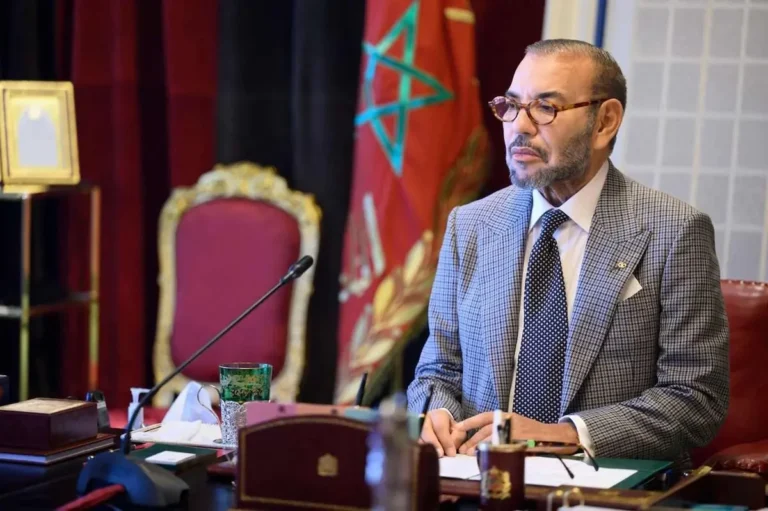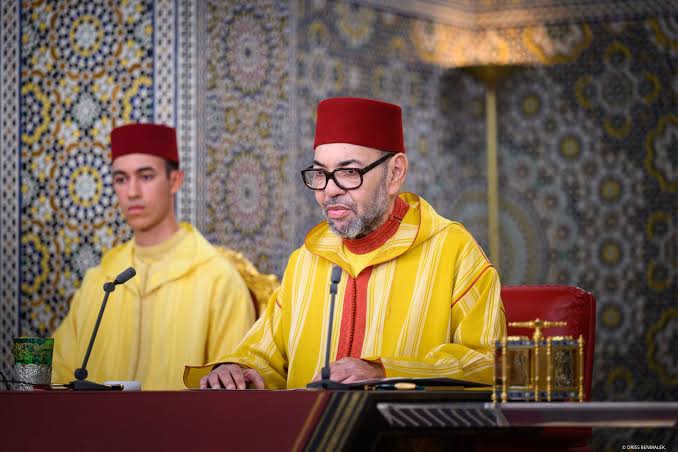
RABAT, October 9, 2026 — King Mohammed VI of Morocco delivered a speech to Parliament on Friday, marking the opening of the first session of the first legislative year of the 12th Legislature. Accompanied by Crown Prince Moulay El Hassan, Prince Moulay Rachid and Prince Moulay Ahmed, the King outlined his vision for Morocco’s next phase of economic, social and institutional development.
The royal address called for a new legislative and governmental mandate capable of accelerating Morocco’s transformation into an emerging economic power while ensuring that the benefits of growth are distributed more fairly across society and the country’s regions.
Economic transformation and strategic priorities
The King emphasized the need to launch a new generation of major national strategies focused on water, energy and food security, industrial development, the digital economy and artificial intelligence.
He also called for faster progress in establishing strategic reserves and securing supplies of essential goods, while urging the private sector to increase investment, strengthen exports and create more employment opportunities.
Youth development was identified as a central priority. The King stressed the importance of an integrated approach to education, professional training and economic inclusion, with the objective of expanding opportunities, improving social mobility and strengthening young people’s confidence in national institutions.
Stronger regional governance and public services
A significant part of the speech focused on regional development and the need to address the specific challenges facing communities throughout Morocco.
King Mohammed VI called for the removal of administrative obstacles delaying decentralization and the transfer of decision-making powers and resources from central authorities to regional and provincial institutions.
He stressed that further delays in implementing the Charter on Administrative Deconcentration would no longer be acceptable, arguing that effective regional governance is essential to improving public services, attracting productive investment and responding to citizens’ needs.
The King also called for clearer divisions of responsibility between the state and regional authorities, supported by stronger human and financial resources and more effective coordination mechanisms.
Morocco’s international partnerships and migration policy
Addressing international relations, the King reaffirmed Morocco’s position as a reliable partner committed to honoring its international obligations. He highlighted the country’s balanced approach to migration but warned that the existing model of cooperation had reached its limits amid recurring crises.
Relations with Spain received particular attention. While acknowledging progress in bilateral cooperation, including efforts to combat irregular migration, the King raised concerns about legal and judicial obstacles affecting the return of minors and individuals accused of improperly claiming refugee status.
He also rejected the use of political pressure or threats in bilateral partnerships, describing cooperation as a sovereign choice that must be based on mutual respect.
As part of a proposed new approach, Morocco intends to present its partners with a strategic document aimed at promoting co-development, economic competitiveness and regional stability.
A call for political accountability
Concluding his address, King Mohammed VI reminded members of Parliament that their mandate represents both a political commitment and a moral responsibility toward the citizens they represent.
He urged lawmakers to live up to their national duties and remain accountable to the public, emphasizing that their actions will be judged by citizens and by history.
The speech sets out an ambitious agenda for the new legislative term, placing economic modernization, social justice, youth opportunities, regional empowerment and balanced international cooperation at the center of Morocco’s development priorities.
About the Author