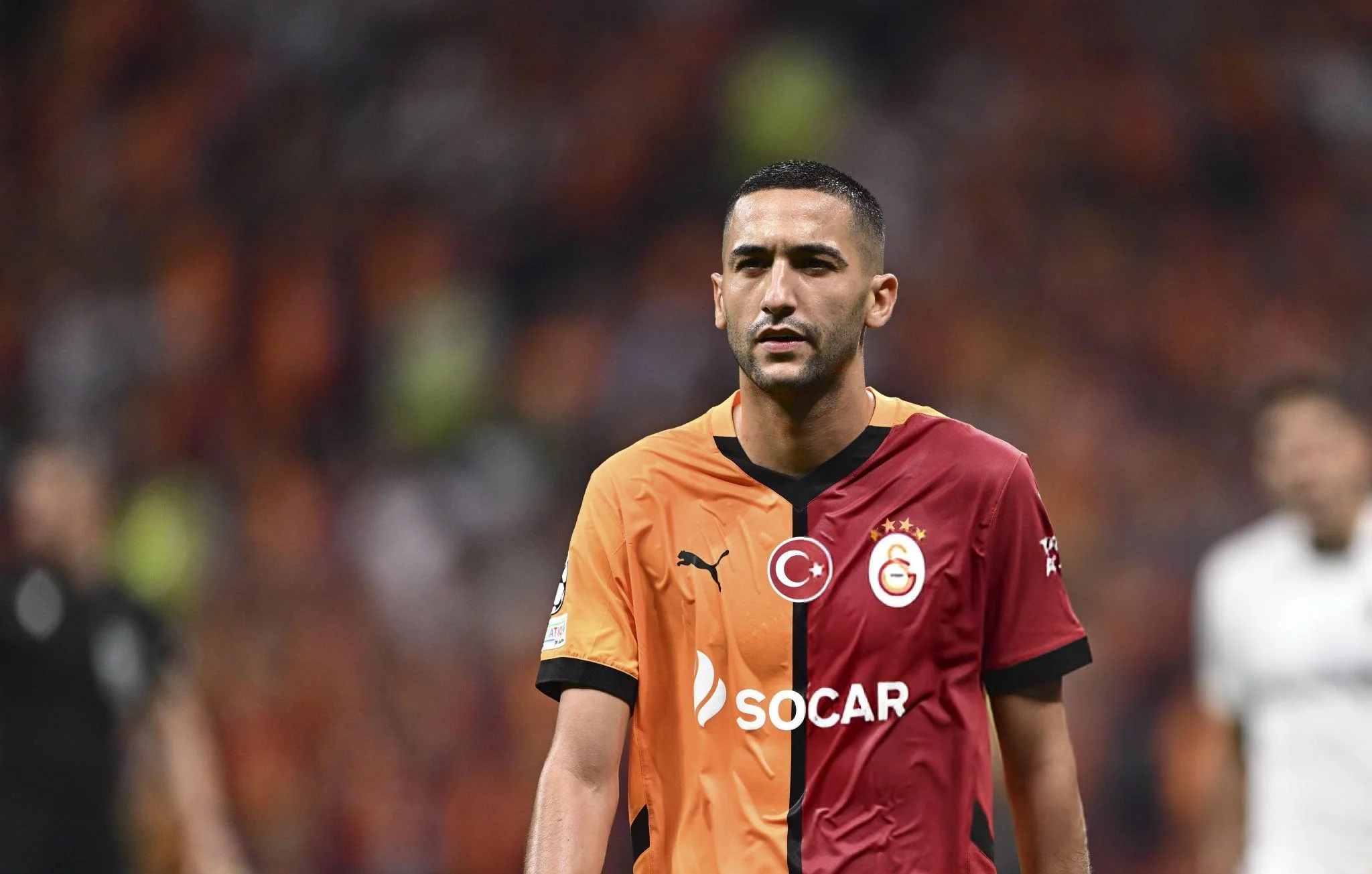
In the age of social media, athletes who choose to voice support for humanitarian causes often face intense scrutiny, and Hakim Ziyech is the latest star caught in this whirlwind. The Moroccan footballer, known for his exceptional talent on the field and outspoken support for the Palestinian people, has recently come under fire on social media, particularly from fans of Maccabi Tel Aviv. While Ziyech’s stance is clear—a firm opposition to violence against Palestinians—some fans are now trying to blame him and others for the tensions that erupted in Amsterdam. However, Ziyech’s supporters argue that his right to speak out should be protected and that the criticism directed at him is unwarranted.
Ziyech’s advocacy for Palestinians is not new. Like many athletes with ties to the Arab world, he has been vocal in his support for Palestinians facing hardship and has used his platform to shed light on the situation in Gaza and the West Bank. In a time when athletes are encouraged to use their influence to stand up for justice and humanitarian causes, Ziyech’s stance aligns with this call for social responsibility. He is not engaging in hate speech or targeting individuals but rather advocating for the rights and dignity of the Palestinian people, a stance that many worldwide share.
The recent backlash seems to stem from incidents involving Maccabi Tel Aviv fans in Amsterdam, who reportedly sparked tensions during a recent event. Yet, instead of taking responsibility for their actions, some fans have shifted blame to others, including Ziyech, accusing him of provoking hostilities. This situation has led to a social media campaign against the player, with critics targeting his heritage and questioning his loyalty, framing his stance as a political provocation rather than an expression of compassion.
Fans and advocates for Ziyech argue that his stance is a matter of personal belief and should not be politicized. They contend that Ziyech, like anyone, has the right to stand up for those he believes are being wronged. In today’s world, where athletes are increasingly expected to champion causes for justice, Ziyech’s support for Palestinians aligns with these values. His critics, however, seem unwilling to see his message for what it is—an expression of empathy for marginalized people, not an attack on any nation or its people.
Supporters also highlight that Ziyech’s message is consistent with principles of free speech. As a global citizen, he has the right to express his views on human rights issues without facing character attacks or being blamed for situations beyond his control. In the same way that athletes have stood for causes like Black Lives Matter or advocated for mental health awareness, Ziyech’s stand for Palestine should be seen as an extension of his personal beliefs and his right to advocate for peace and justice.
The response to Ziyech’s support for Palestine underscores a larger issue faced by many public figures who choose to speak out for marginalized communities. Despite the backlash, Ziyech’s supporters maintain that he should not be deterred from using his platform to bring awareness to humanitarian issues. His stance is a testament to the power and importance of athletes using their voices for good, even when facing criticism.
In the end, Hakim Ziyech’s advocacy for Palestine reflects his compassion and commitment to justice. The social media storm around him should serve as a reminder that freedom of speech is a fundamental right, one that enables athletes and public figures to stand up for causes that matter to them and to the world. Ziyech, like so many before him, is exercising this right not to divide but to foster empathy, understanding, and a call for peace.
About the Author