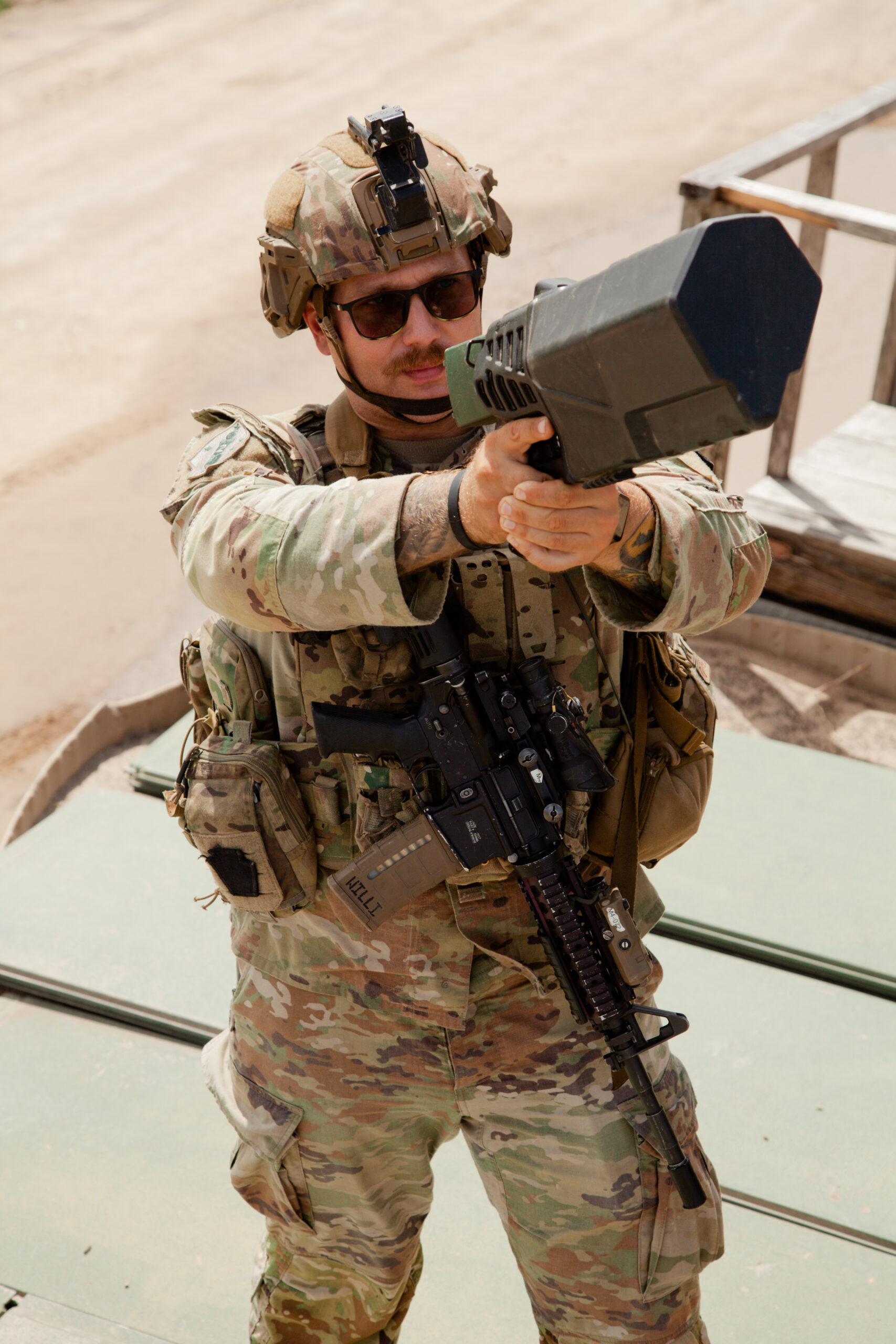
Archival photograph: U.S. Army soldiers assigned to the Combined Joint Task Force–Horn of Africa conduct anti-drone operations during a base-defence exercise in Djibouti, August 28, 2024. Photo: U.S. Army / Capt. Owen Dietrich, public domain. Illustrative image; not a photograph of Sahel insurgent operations.
Low-cost commercial drones are changing the balance of power in conflicts across the Sahel, giving armed groups in Mali, Burkina Faso and Niger new ways to threaten military bases, aircraft and critical infrastructure once protected by government air superiority, according to a Reuters investigation published this week.
The shift is significant because many of the systems are inexpensive, widely available quadcopters that can be adapted for reconnaissance or attacks. Their use is forcing governments and their security partners to confront a battlefield threat that can be difficult to detect and costly to counter.
Drone attacks are becoming part of Sahel conflicts
Reuters reported that the al-Qaeda-linked Group for the Support of Islam and Muslims, known by its French acronym JNIM, carried out 187 drone attacks from 2023 through mid-November 2026, citing previously unpublished data from conflict monitor ACLED. Including attacks by Mali’s Azawad Liberation Front and its predecessors, the reported total rises to 235 across four West African countries.
The figures illustrate how unmanned aircraft are being used for more than propaganda footage. Armed groups have deployed drones to monitor troop movements, coordinate operations, drop explosives and conduct one-way attacks against military positions.
Reuters described a March attack in Gao, Mali, in which the Azawad Liberation Front used about 25 drones in two waves against an air-defence system. The investigation characterised it as the first reported drone-swarm attack of that scale by a non-state armed group in the Sahel.
Ukraine connection remains disputed in important respects
A spokesman for the Azawad Liberation Front told Reuters that members of the group received a 30-day drone training course from Ukrainians in 2023, outside Mali. Reuters said its reporting indicated that Ukrainians had trained the separatists, but it could not establish who specifically provided the training.
Ukraine has denied supporting armed groups in Mali. The FLA also said Ukrainians were not directly involved in its operations. Reuters said it could not determine where the groups obtained their drones, which experts described as commercially available models that could be smuggled into the region and modified.
Governments face a costly defence challenge
The economics of the threat are difficult for state forces. A drone that costs a few hundred dollars can endanger aircraft, fuel depots, military vehicles and other assets worth millions. Jamming equipment and air-defence systems can help, but they require investment, trained personnel and reliable intelligence.
Reuters reported that governments in the region have rarely succeeded in intercepting or jamming the attacks. At the same time, Mali and its partners are expanding their own drone capabilities, while Russia’s Africa Corps has deployed attack drones in support of regional military operations.
The threat is not limited to military installations. Analysts cited by Reuters warned that mines, fuel depots, pipelines, ports and even urban centres could be exposed as armed groups expand their use of unmanned systems.
A wider security shift across West Africa
The spread of drones adds another layer to a regional security crisis already involving insurgencies, separatist movements, military governments and foreign security partners. It also complicates efforts to protect civilians, since attacks and countermeasures can take place near populated areas and essential infrastructure.
For governments across the Sahel, the challenge is no longer simply acquiring more aircraft. It is building layered surveillance, electronic protection, rapid response and intelligence capabilities that can deal with small, mobile systems operated by dispersed groups.
The Reuters findings suggest that commercially available technology is narrowing the gap between state and non-state forces in the air. How quickly regional militaries adapt may become an important factor in the future course of conflicts across the Sahel.
Sources
- Reuters — African insurgents take war to the skies with off-the-shelf drones (November 25, 2026).
- Armed Conflict Location & Event Data (ACLED) — conflict monitoring and event data.
- United Nations Institute for Disarmament Research — The Use of Uncrewed Aerial Systems by Non-State Armed Groups in Africa.
Image note: The featured photograph shows U.S. Army soldiers conducting an anti-drone exercise in Djibouti in August 2024. Photo by Capt. Owen Dietrich, U.S. Army, public domain. It is an archival illustrative image and does not depict Sahel insurgent operations.
About the Author