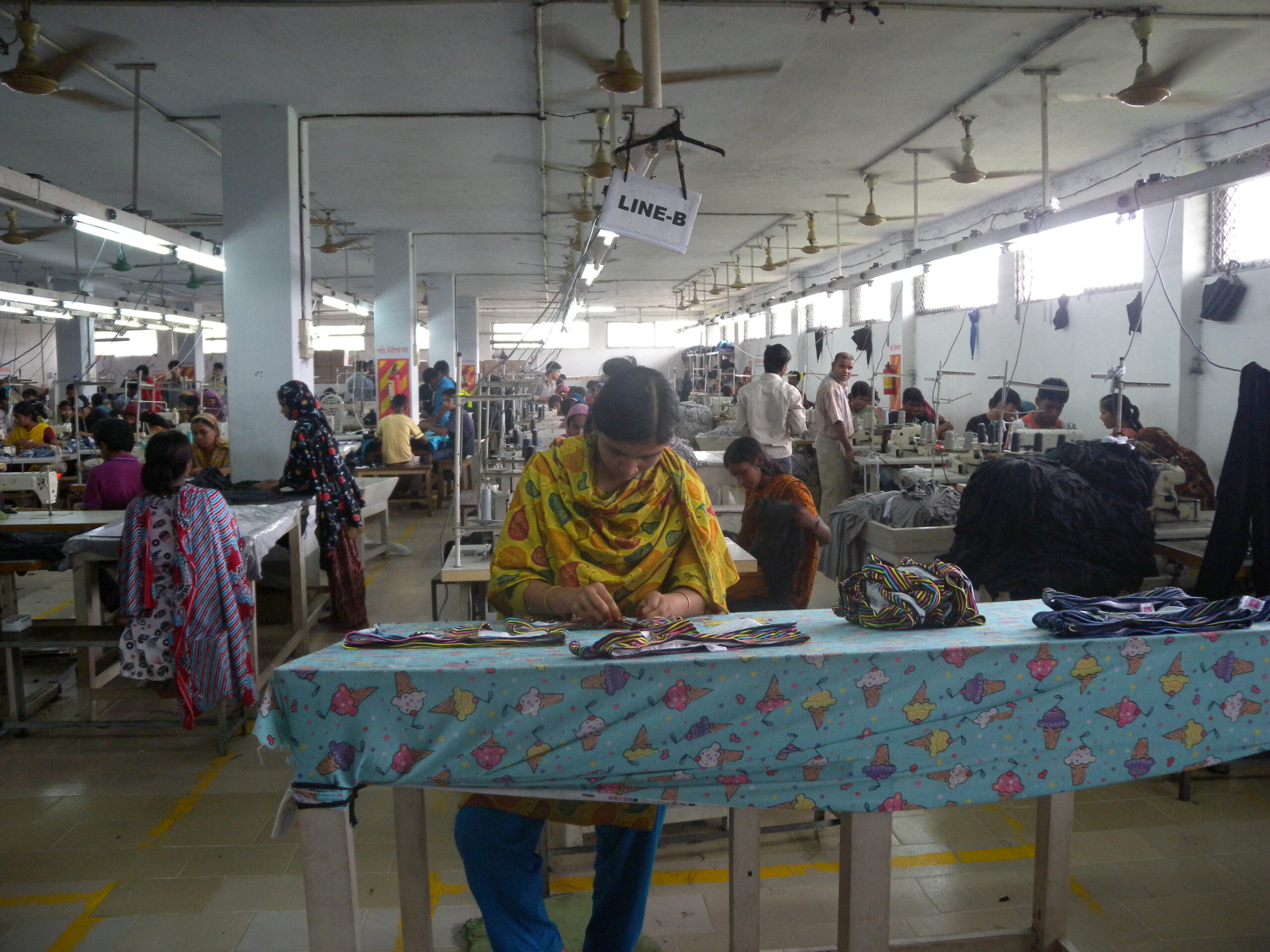
Archival photograph of a garment factory in Bangladesh, taken July 2, 2011. Photo: Tareq Salahuddin, CC BY 2.0. Illustrative image; it does not depict the factories or order transfers discussed in this report.
Global fashion retailers including Zara, H&M, Marks & Spencer and Celio have shifted about $254 million in garment orders away from Bangladesh during the first 18 days of November, as labour unrest, rising production costs and delivery delays put pressure on the country’s position as a leading apparel manufacturing hub.
The order diversions, reported by Reuters on November 27, were described by three factory owners as a significant loss for Bangladesh’s export-oriented garment industry. India received most of the redirected business, while Vietnam, Cambodia and Indonesia are also attracting buyers seeking alternative production capacity.
Unrest and higher costs weigh on manufacturers
Factory owners told Reuters that retailers moved orders as labour unrest disrupted production. The Bangladesh Garment Manufacturers and Exporters Association has estimated that protests have caused more than $400 million in production losses.
The industry is central to Bangladesh’s economy. It accounts for more than 80% of the country’s export earnings and nearly 40% of manufacturing jobs, according to figures cited in the Reuters report. A prolonged disruption could therefore affect factory workers, suppliers, exporters and the country’s foreign-exchange earnings.
India emerges as the main beneficiary
India has received the largest share of the diverted orders, according to factory owners and industry representatives cited by Reuters. Manufacturers in Vietnam, Cambodia and Indonesia are also competing for business as international brands seek more reliable delivery schedules and diversify their supply chains.
Industry representatives said production and delivery can take around 120 days in Bangladesh, compared with 60 to 90 days in some competing manufacturing hubs. Delays have become especially important for retailers working to meet seasonal sales windows and fixed delivery commitments.
Wage increase has not ended tensions
Bangladesh approved a 36% increase in the garment-sector minimum wage on November 25. The increase was the smallest in four decades and fell short of workers’ demands for more than double the existing wage, Reuters reported. Fresh clashes followed the announcement, adding to uncertainty over when production could return to normal.
Manufacturers are also facing higher energy and raw-material costs. Some factory owners said energy shortages have forced them to rely on more expensive alternatives, further reducing the cost advantage that helped Bangladesh become the world’s second-largest apparel exporter after China.
Risk that temporary shifts become permanent
The immediate concern for Bangladesh’s industry is not only the orders already moved, but whether international buyers will place future orders elsewhere. Reuters quoted industry representatives warning that brands may retain alternative suppliers if disruptions continue and confidence in delivery reliability weakens.
The retailers named in the report did not all respond to Reuters’ requests for comment. Inditex, Zara’s parent company, declined to comment. The order-diversion figures were attributed to factory owners, while the estimate of production losses came from the industry association.
Restoring stable production, addressing workers’ concerns and improving delivery reliability will be central to Bangladesh’s efforts to retain international buyers. The coming weeks will show whether the current shift is a short-term response to unrest or the beginning of a longer reallocation of global apparel sourcing.
Sources
- Reuters — Global fashion brands shift orders from Bangladesh to India amid unrest (November 27, 2026), by Ruma Paul.
- Bangladesh Garment Manufacturers and Exporters Association (BGMEA).
Image note: The featured image is an archival photograph of a garment factory in Bangladesh, taken July 2, 2011. Photo by Tareq Salahuddin, licensed CC BY 2.0. It is illustrative and does not show the factories or order transfers discussed in this report.
About the Author