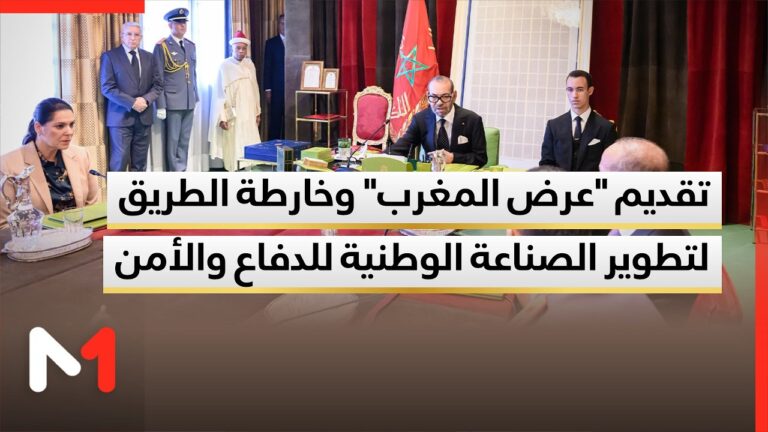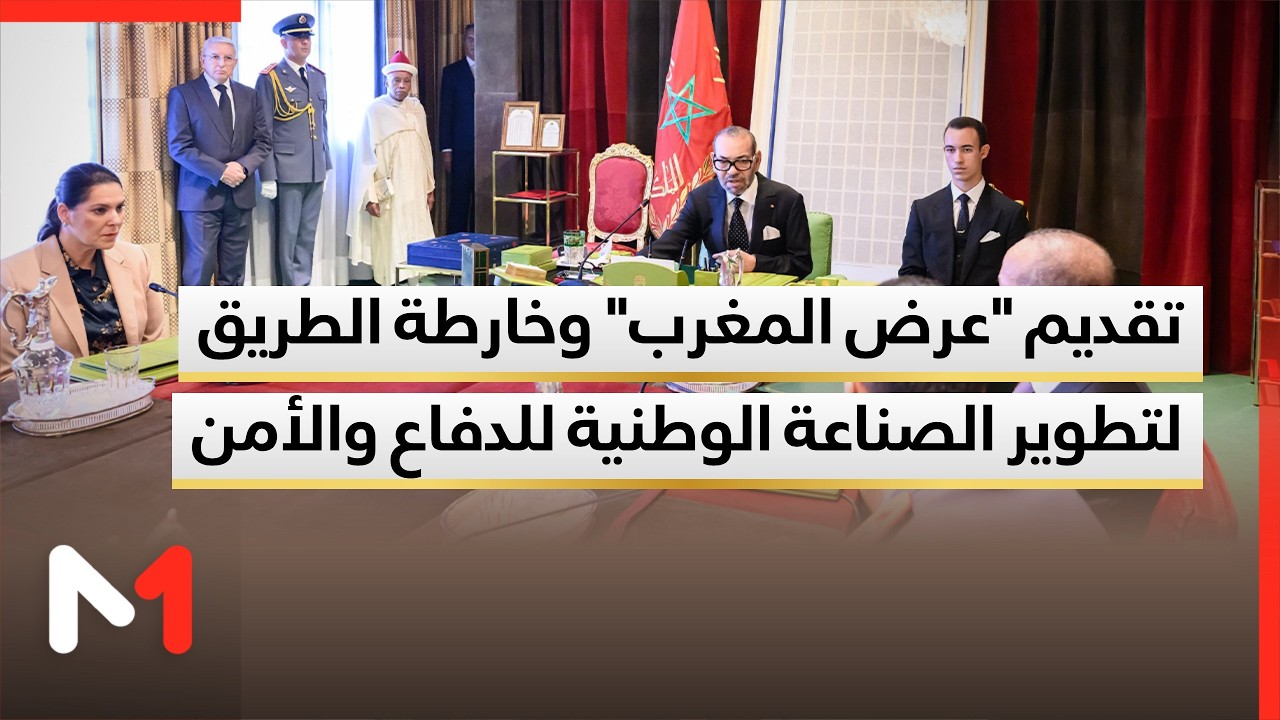
Image: MEDI1 TV. Video still from its November 18, 2026 report on the royal working session; used as an attributed illustrative image.
RABAT, November 28, 2026 — Morocco has mobilized nearly 22 billion dirhams (about $2.2 billion) in public backing for its emerging defence and security industry, as the government moves to attract private capital, expand domestic manufacturing and build export capacity.
The financing effort advanced on November 25, when King Mohammed VI chaired the signing of two framework agreements at the Royal Palace in Rabat. The agreements are designed to finance the national roadmap and bring the private and financial sectors into its implementation, according to the Head of Government.
Ambitious targets for 2035
Ali Seddiki, director-general of the Moroccan Investment and Export Development Agency (AMDIE), said the mobilized support was estimated at nearly 22 billion dirhams. The roadmap aims for manufacturers based in Morocco to meet around 40% of the equipment needs of the Royal Armed Forces and security agencies.
At full development, the sector is projected to generate at least 50 billion dirhams in annual revenue, with more than 65% expected to come from exports. The government also projects approximately 50,000 direct and indirect jobs by 2035. These are policy targets and forecasts, not current production or employment figures.
Drones, electronics and cyberdefence among priority areas
The roadmap identifies drones and autonomous systems, land and naval platforms, defence electronics, cyberdefence and artificial intelligence as priority areas. The strategy is intended to build on Morocco’s existing industrial base in automotive manufacturing, aerospace and electronics.
The King named the future strategic body the Defence Industry Facilitation and Acceleration Agency, known as DIFAA. It is expected to promote investment, coordinate support mechanisms and help structure the national industrial base. Ali Seddiki has been tasked with overseeing the operational preparation of the roadmap while continuing to lead AMDIE, pending the agency’s establishment.
Public funding and private investment
The agreements bring together government ministries, the central bank, public investment institutions, banks, capital-market bodies and business representatives. The stated objective is to combine public support with private financing, industrial partnerships, procurement and workforce development.
The Hassan II Fund for Economic and Social Development was previously directed to contribute 4 billion dirhams to support implementation of the roadmap. The November 25 ceremony formalized a broader financing and partnership framework for the sector.
Building an industrial base will take time
Morocco’s plan reflects a wider effort by governments to strengthen supply-chain resilience and develop domestic technological capabilities. Turning the targets into production will depend on sustained investment, specialized skills, research and development, regulatory capacity and partnerships with established manufacturers.
The export ambition also places emphasis on competitiveness and compliance with international rules governing defence equipment. The government’s figures describe the intended scale of the sector by 2035; they should not be read as a guarantee that the revenue, export or employment targets will be achieved.
Sources
- Head of Government of Morocco — signing ceremony and roadmap details, November 25, 2026
- Reuters — Morocco enlists financial sector in defence industry push, November 25, 2026
- Maroc.ma — Royal Office statement on Ali Seddiki’s mandate, November 25, 2026
World Media Feed Editorial Team
About the Author