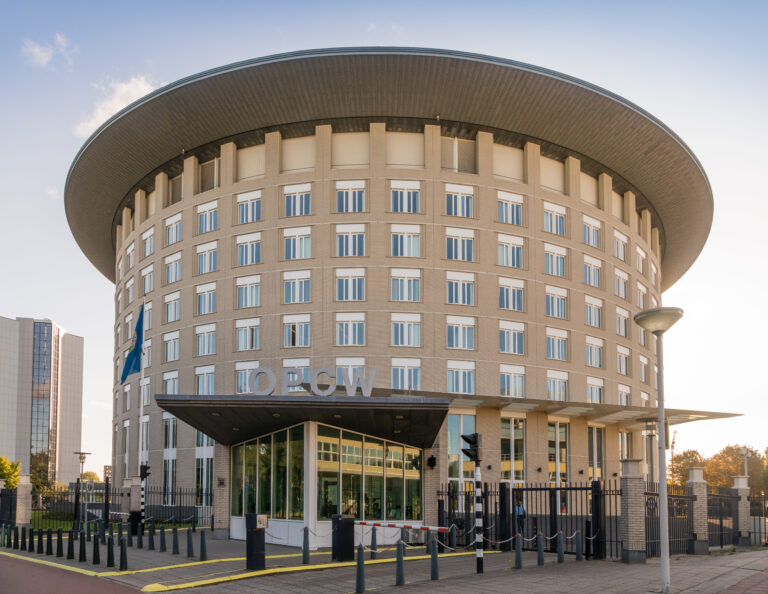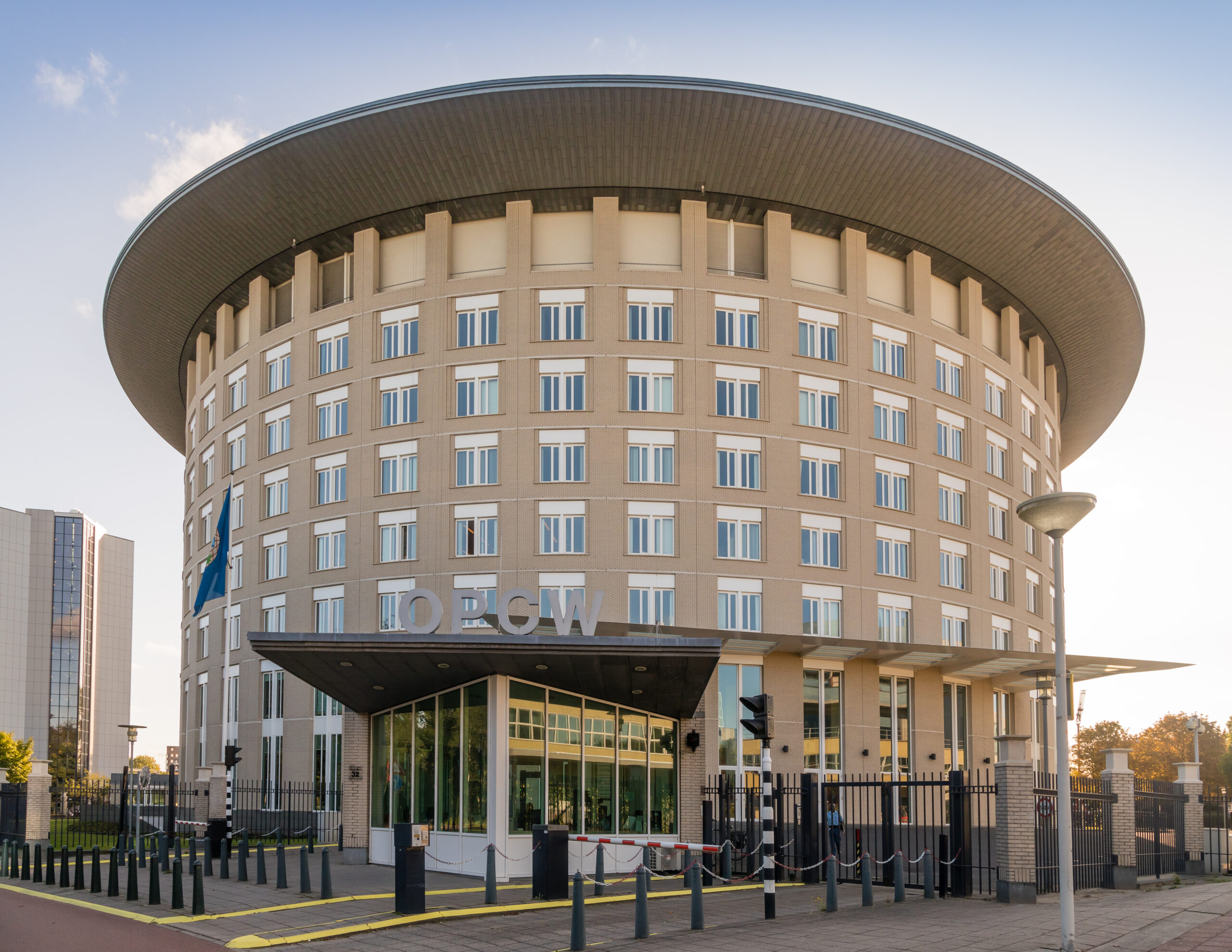
File photograph of the OPCW headquarters in The Hague. Photo: CEphoto, Uwe Aranas / Wikimedia Commons, CC BY-SA 4.0.
The Organisation for the Prohibition of Chemical Weapons (OPCW) is warning that a severe funding shortfall could disrupt international efforts to monitor and eliminate chemical weapons, including work in Syria, after its largest contributor, the United States, failed to pay most of its 2026 assessed contribution.
OPCW Director-General Sabrina Dallafior told member states that approximately €20 million—nearly one-quarter of the organisation’s €83 million budget—remained outstanding. The agency has exhausted its working-capital reserve of more than €8 million and risks entering 2027 with a deficit and no reserve fund.
OPCW warns of operational pauses
In her opening statement to the organisation’s 31st Conference of the States Parties, Dallafior said she had directed Secretariat divisions to pause operational activities from December 1 to review priorities and revise plans for 2027. She warned that, unless outstanding contributions arrived soon, the organisation could have to suspend planned operations from January 1 to avoid defaulting on financial obligations.
The potential disruption extends beyond administrative work. Dallafior identified possible effects on inspections, technical assistance, special missions and capacity-building programmes. Activities partly funded through voluntary contributions, including deployments to Syria, could also be affected.
Why Syria is a critical concern
Since the fall of Bashar al-Assad in December 2024, Syrian authorities and OPCW teams have been working to identify and address previously undeclared chemical weapons and related materials. The organisation says recent cooperation has produced new leads, including documents and equipment that may be relevant to outstanding questions about the former programme.
The OPCW has said that, for the first time since 2014, it verified the destruction of Syrian chemical munitions in 2026. That progress makes sustained inspection, verification and technical support particularly important. A funding disruption would risk slowing a complex process that requires secure access, specialist equipment, trained personnel and reliable evidence handling.
U.S. payment delays draw congressional pressure
Reuters reported that the United States had paid only about 20% of its €17 million 2026 contribution as of October. The OPCW director-general did not name the country in her statement, but described its unpaid assessment as the central factor in the organisation’s immediate financial strain. A U.S. State Department spokesperson told Reuters that Washington supports the OPCW’s mission and expects efficient use of its budget, while declining to discuss specific payments.
On November 24, U.S. Senators Tim Kaine of Virginia and Jeff Merkley of Oregon led colleagues in urging Secretary of State Marco Rubio to pay outstanding U.S. contributions. Their letter said delayed funding could weaken inspections, verification and efforts to address chemical weapons threats in Syria, Ukraine and Sudan. The senators also requested an accounting of amounts obligated, amounts actually disbursed and the reasons for any delay.
A wider test for chemical weapons oversight
The OPCW implements the Chemical Weapons Convention, which prohibits the development, production, stockpiling and use of chemical weapons and provides for international verification. Its work depends on assessed contributions from member states as well as voluntary funding for specific activities.
The organisation’s financial warning comes as it faces requests for assistance and investigations related to several conflicts. A pause would not automatically end its mandate, but it could constrain the practical ability of inspectors and technical teams to carry out planned work at a moment when governments are seeking evidence-based monitoring and accountability.
The immediate question is whether member states will close the funding gap before the start of 2027. For Syria in particular, delays could affect the pace of work to locate, verify and destroy remnants of a chemical weapons programme whose full scope remains unresolved.
Sources
OPCW Director-General’s opening statement, November 2026; Reuters, November 23, 2026; U.S. Senators Tim Kaine and Jeff Merkley, November 24, 2026; OPCW: Chemical Weapons Convention, Article VIII.
By World Media Feed Editorial Team
About the Author