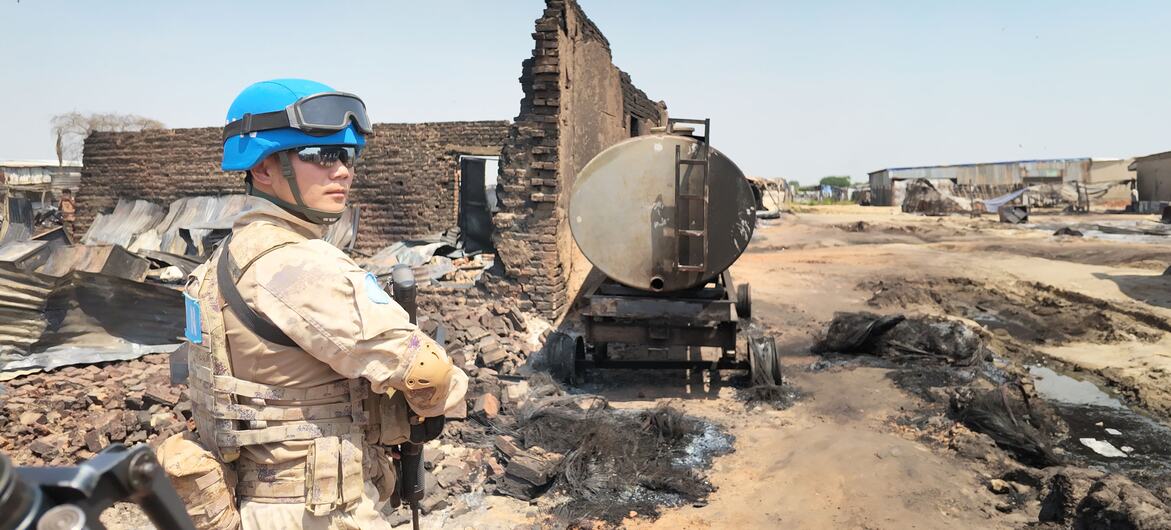
The United Nations Human Rights Office says it has confirmed more than 2,230 civilian deaths in Sudan’s war between January and the end of October 2026, with more than 1,630 of those deaths attributed to drone strikes. The office warned that the real toll is likely higher, as unmapped attacks and restricted access continue to limit verification.
The figures, released on November 17 alongside a new report, underline how unmanned aircraft have become a central feature of the conflict between Sudan’s armed forces and the paramilitary Rapid Support Forces (RSF). The war began in April 2023 and has devastated communities, displaced millions and weakened the infrastructure civilians depend on for food, water, electricity and medical care.
Drone attacks account for most verified civilian deaths
According to the UN Human Rights Office, at least 1,390 civilians were killed between January and June. More than 80 percent of those deaths were caused by drone strikes. A further 840 civilians were killed between July and October, including close to 520 in drone attacks.
That brings the confirmed total for the first ten months of the year to more than 2,230 civilian deaths, including over 1,630 attributed to drones. The UN stressed that these are verified figures, not a complete count of everyone killed.
UN High Commissioner for Human Rights Volker Türk said the report documented serious violations of international humanitarian law. Some of the violations described may amount to war crimes, the office said. That is a legal assessment of the conduct documented in the report, not a court finding against any individual or armed group.
Markets, hospitals and essential services hit
The report describes attacks affecting markets, hospitals, schools, fuel supplies, water sources, displacement sites and civilian vehicles. The consequences extend beyond the immediate loss of life: damage to power and water systems can interrupt hospital treatment, restrict access to clean water and undermine local food production.
During the first half of 2026, the UN documented at least 39 drone strikes on markets, 20 on civilian vehicles, 17 on fuel tankers and depots, and 16 on health facilities. The office said attacks on markets, combined with looting and restrictions on movement, have further weakened access to food.
Kordofan was the most heavily affected region in the report’s January-to-June documentation, accounting for more than two-thirds of recorded civilian casualties. Darfur accounted for most of the remaining casualties, while attacks were also reported in eastern and central parts of the country.
Power and fuel attacks deepen the humanitarian crisis
The UN also raised concern about a wave of attacks on electricity facilities and fuel stations. Between October 20 and November 4, 29 drone strikes attributed by the office to the RSF hit such facilities across 11 states, causing blackouts and fuel shortages that affected millions of people.
The resulting outages disrupted essential services, including dialysis and surgical procedures, as well as access to water and food production. The attribution in this part of the report is the UN office’s assessment; the wider conflict continues to involve competing claims by the parties, which must be evaluated against independently verified evidence.
A conflict increasingly fought beyond front lines
The growing use of drones allows armed forces to strike far beyond areas where they maintain direct territorial control. That expands the geographic reach of the war and places civilian infrastructure at risk even in locations distant from active ground fighting.
The UN report calls for the parties to protect civilians and comply with international humanitarian law. It also urges action to address the continued flow of weapons, including drones, that are intensifying the conflict.
For Sudanese civilians, the latest figures describe more than a battlefield trend. They point to a war in which the systems that sustain everyday life—markets, clinics, electricity, fuel and water—are increasingly exposed to attack. Without stronger protection for civilians and meaningful progress toward a ceasefire, the humanitarian consequences are likely to continue worsening.
Sources and reporting notes
This report is based primarily on the UN Human Rights Office’s statement and report released November 17, 2026, with Reuters’ same-day coverage used for additional context. Civilian death figures are presented as UN-confirmed totals; the UN says the actual number is likely higher. Allegations and attributions are identified as such.
United Nations Human Rights Office: UN report details deadly civilian impact of surge in drone strikes
Reuters: Drones account for nearly three-quarters of Sudan war deaths this year, UN says
About the Author