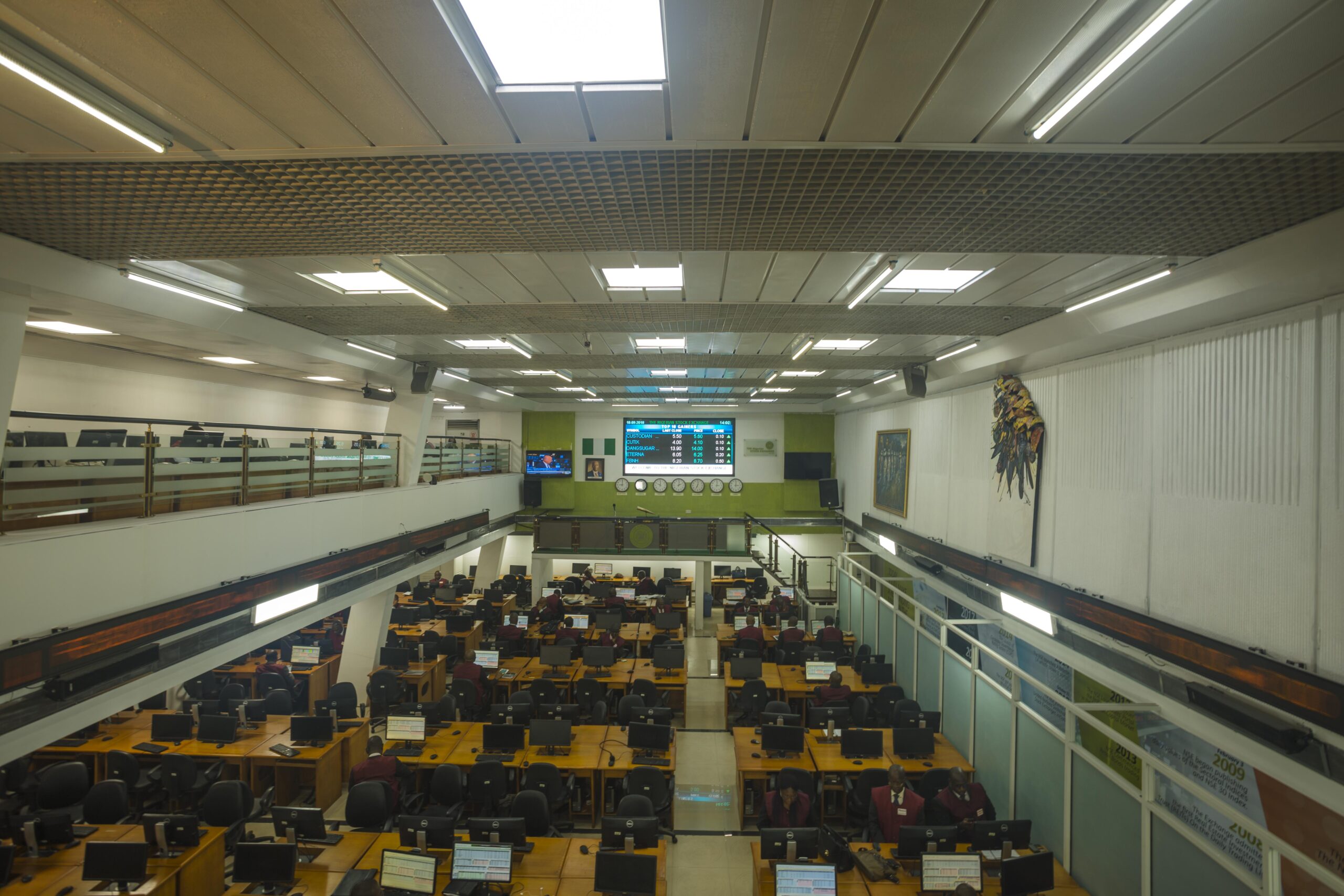
A stock exchange trading floor. Photo by S.aderogba, licensed under CC BY-SA 4.0.
Global fund managers made their sharpest monthly reduction in technology exposure in more than two decades, according to Bank of America’s November survey, as concerns grow that the enormous spending behind artificial intelligence may not continue at its recent pace.
The survey found that investors were a net 12% overweight technology stocks in November, down from 37% in October. Reuters reported that the decline was the largest monthly drop in the survey’s technology allocation measure since June 2006.
The shift reflects growing caution about the scale and returns of spending on data centers and AI infrastructure. Technology shares have weakened in recent weeks as investors reassess whether the largest companies building AI systems will sustain their capital expenditure at current levels.
AI spending moves to the center of investor concerns
Among the 169 investors surveyed, managing a combined $461 billion in assets, a record 38% said companies are investing too much. Another 52% expected at least one major AI hyperscaler to announce a reduction in capital spending within the next six months.
Respondents identified a possible AI bubble as their leading market tail risk, followed by the risk of a credit event involving an AI hyperscaler. These are investor concerns and expectations, not evidence that a bubble or credit event has already occurred.
The results point to a shift in the questions investors are asking. Earlier enthusiasm centered on the speed at which companies could build computing capacity. The latest survey suggests more attention is being paid to how quickly that investment can generate revenue, profits and sustainable returns.
Not a broad call for recession
The survey did not show investors broadly anticipating an economic downturn. Only 3% of respondents expected a global recession, while cash holdings were reported at their lowest level in three months. Investors had also moved somewhat closer to bonds, reaching their least-underweight position in that asset class since November 2025.
That combination matters. The reduction in technology exposure appears to reflect a reassessment of valuations and the pace of AI-related investment rather than a wholesale retreat from risk across every part of the global economy.
International markets attract attention
Looking toward 2027, 36% of respondents expected international equities to perform best, compared with 24% who favored U.S. stocks and 17% who selected gold. The Japanese yen was the currency most frequently identified as a potential top performer.
Survey responses are a snapshot of investor positioning and sentiment, not a forecast that markets must follow. Technology companies may continue investing heavily in AI, and the survey does not establish that spending cuts will take place. But the scale of the change in sentiment suggests that investors are demanding clearer evidence that the AI infrastructure boom can translate into durable earnings.
For markets, the next test will be whether major technology companies maintain their investment plans and demonstrate returns that justify them. Until then, AI spending is likely to remain a central issue for global equity investors.
Source: Reuters, “Investors slashed tech exposure allocations by most since 2006,” November 17, 2026. Survey figures are attributed to Bank of America’s November fund manager survey as reported by Reuters.
World Media Feed Editorial Team
About the Author