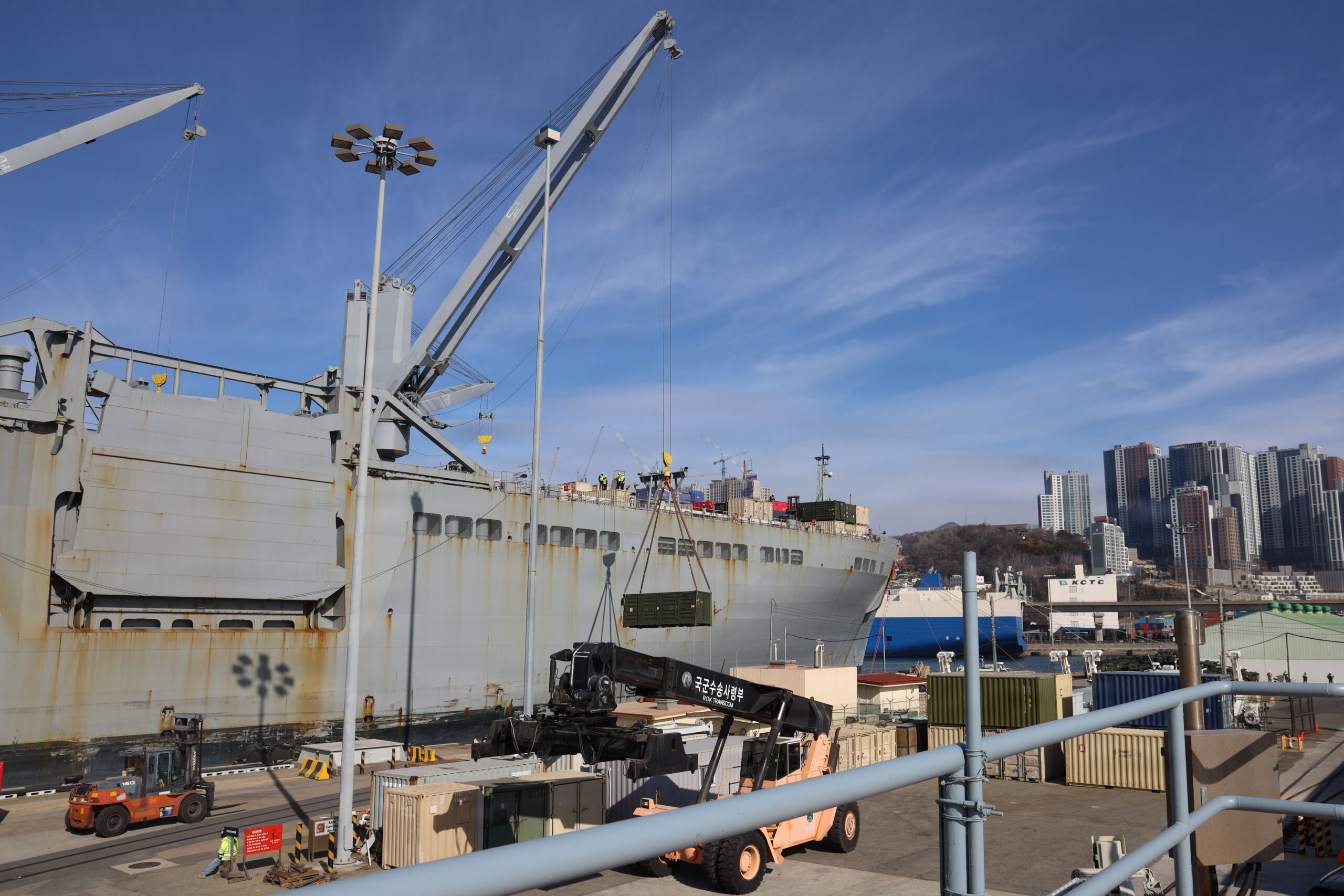
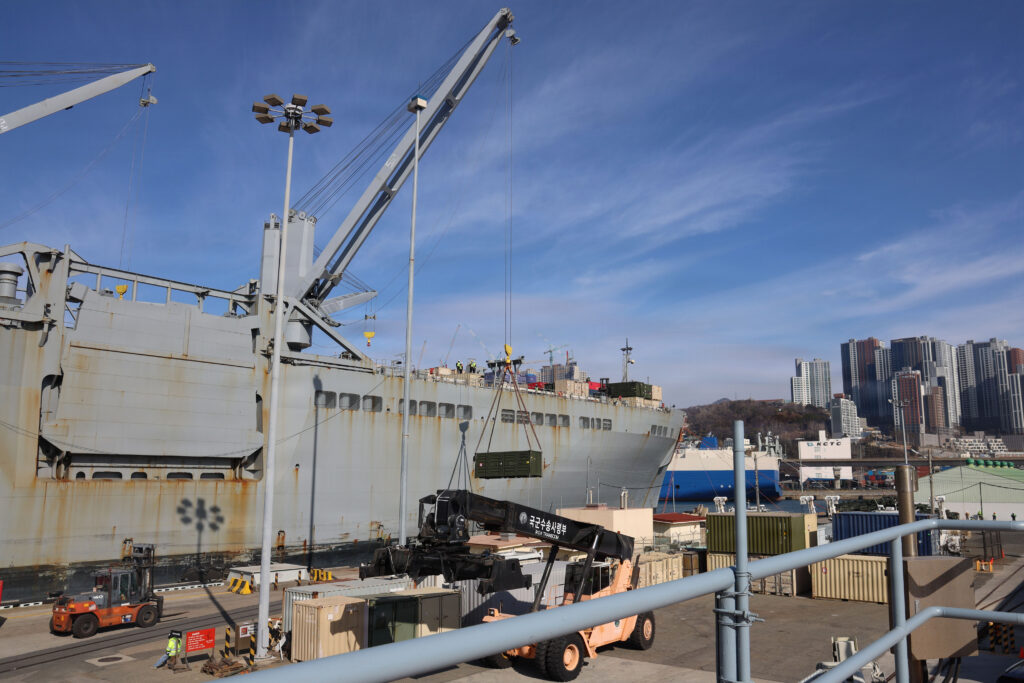
A crane lifts a shipping container from the USNS Watkins at Pier 8 in Busan, South Korea, on February 4, 2026. U.S. Army photo by Sgt. David Edge; public domain.
World Trade Organization data show a sharp rise in new trade restrictions during the first half of 2026, even as governments also introduced measures intended to keep goods moving. The figures point to a more complicated global trade picture: rising barriers are accumulating, but trade facilitation has not stopped.
The WTO said members and observers introduced 1,048 new trade and trade-related measures in the six months from January through June 2026. That compares with 1,229 measures across all of 2025, indicating a faster pace of policy activity this year.
Within the first-half total, 333 measures were classified as restrictive or otherwise non-facilitating. That exceeded the 300 recorded during the whole of 2025. The WTO estimated that new import-related measures covered about $2 trillion in trade, equivalent to 8% of world imports, while export-related measures covered $794 billion, or 3.2% of world exports.
A record stockpile of restrictions
The longer-term accumulation is also significant. As of June 30, 2026, import-related restrictive measures introduced since 2009 and still in force covered an estimated $5.4 trillion in trade, or 21.3% of world imports. The corresponding stockpile of export-related measures covered $1.5 trillion, equal to 6.3% of world exports. The WTO said both were the highest levels recorded since its monitoring exercise began in 2009.
These figures measure the trade covered by measures, not the amount of trade that has necessarily been lost. The WTO’s monitoring report is a transparency exercise; it does not determine whether an individual measure violates WTO agreements or make a legal ruling on members’ policies.
Facilitation measures offer a countertrend
The report also records steps in the opposite direction. Governments introduced 466 trade-facilitating measures in the first half of 2026, more than the 391 recorded during all of 2025. New import-facilitating measures covered an estimated $1.3 trillion in world imports, while export-facilitating measures covered a record $570 billion in world exports.
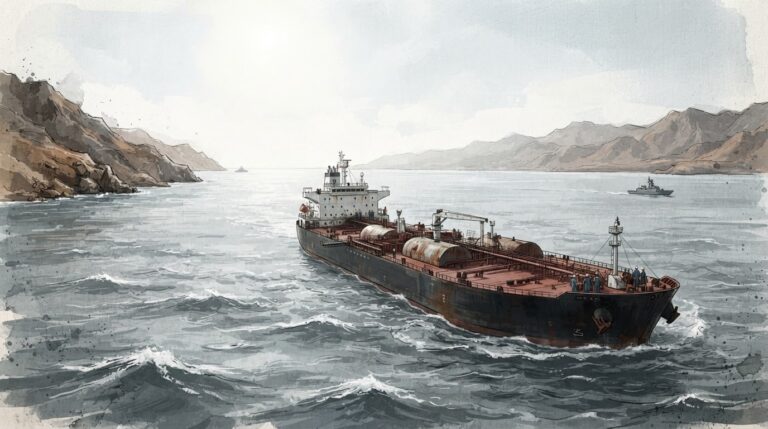
Some of the increase in export facilitation reflected temporary responses to trade disruptions associated with the Strait of Hormuz situation. The figures therefore capture both governments’ efforts to protect or redirect supply and their use of new barriers.
What the figures mean for companies
For manufacturers, exporters and logistics companies, a larger and changing mix of trade measures can complicate decisions about sourcing, pricing, inventory and market access. A tariff or export restriction may affect one stage of a supply chain while a separate facilitation measure eases another. The impact will vary by product, country and the specific rules involved.
The WTO’s latest figures do not establish that global trade is contracting. In October, the organization raised its forecast for 2026 merchandise trade volume growth to 3.9%, from a March baseline of 1.9%, citing stronger-than-expected trade in the first half of the year, including demand for AI-enabling goods. The contrast is important: trade can continue expanding while businesses face a more complex policy environment.
The next reporting period will show whether the first-half surge in policy activity continues. For now, the data underline a global trading system being pulled in two directions—toward more restrictions in some areas and greater facilitation in others.
Sources: World Trade Organization, annual overview of developments in the international trading environment, November 17, 2026; WTO 2026 news and trade outlook.
World Media Feed Editorial Team
About the Author