By World Media Feed Editorial Team
November 16, 2026
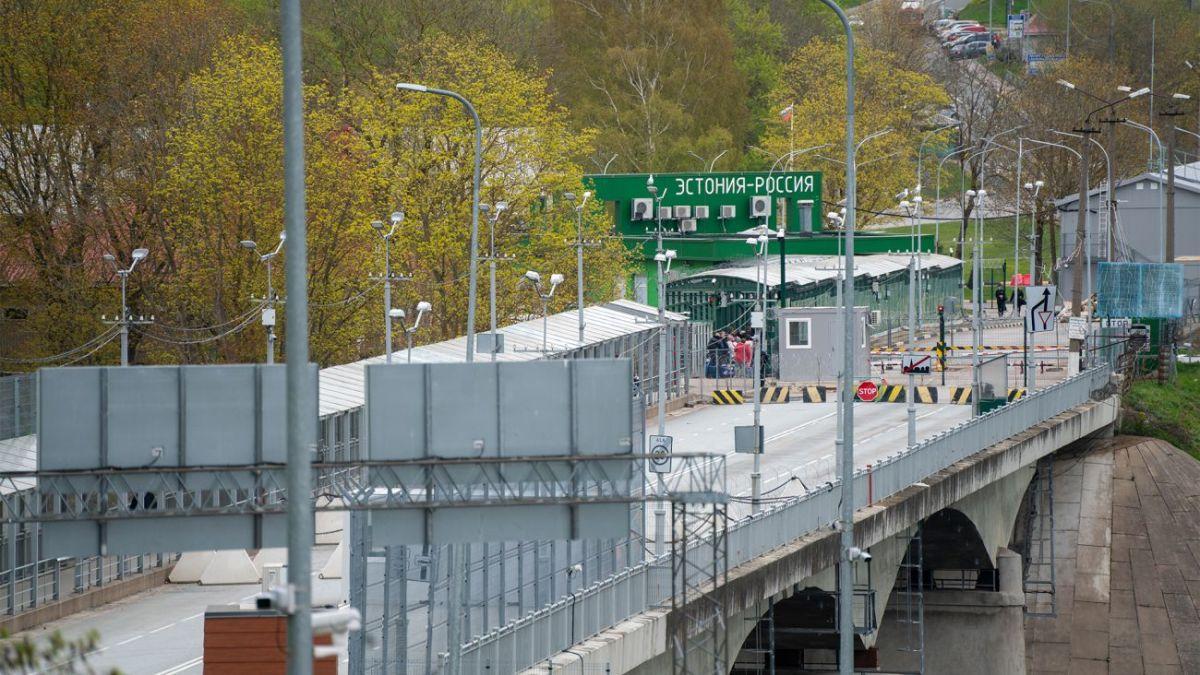
Estonia plans to close its road border crossings with Russia from December 1 following an attempted attack on an Estonian defense technology company that authorities say was organized by Russia’s military intelligence service. Moscow has rejected the accusation, adding another point of tension between the two neighboring countries.
Estonian Foreign Minister Margus Tsahkna announced the decision on November 15, describing the planned closure as a security measure in response to an alleged sabotage operation targeting Threod Systems, a company based in Viimsi that manufactures unmanned aerial systems.
The announcement followed the detention of eight suspects in connection with the attempted attack. Estonian authorities say the operation was intended to cause an explosion and set fire to the company’s premises.
The decision marks a significant tightening of Estonia’s land-border restrictions with Russia, as the Baltic country continues to assess security threats linked to the war in Ukraine and broader tensions with Moscow.
Attempted attack on an Estonian defense company
According to the Estonian government, the incident occurred in the early hours of November 14 at Threod Systems’ facility in Viimsi, near the capital, Tallinn.
The attempted attack involved efforts to damage the company’s building and start a fire. Prime Minister Kristen Michal said the suspects were detained by Estonia’s Internal Security Service and Police and Border Guard Board.
No one was injured, and the company’s production and delivery capabilities were not affected, according to the government.
Estonian authorities detained eight suspects, all residents of Latvia. The Prosecutor’s Office said it had applied to the court to have five of them remanded in custody.
The Estonian Internal Security Service assessed that the operation had been ordered by Russia’s military intelligence agency, commonly known as the GRU. The investigation is being conducted in cooperation with Latvia’s State Security Service and its Prosecutor’s Office.
These are official Estonian security-service assessments and allegations concerning the suspected operation. They should not be confused with a judicial determination of responsibility.
Estonia sets December 1 for road border closures
Foreign Minister Tsahkna said the government plans to close the country’s road border crossings with Russia beginning December 1.
Estonia currently has three operating road crossing points along its eastern border: Narva, Luhamaa and Koidula. These facilities have allowed pedestrian and freight movement between the two countries despite the wider deterioration in relations following Russia’s full-scale invasion of Ukraine in 2022.
Tsahkna said he had contacted counterparts in Lithuania, Latvia and Finland about the decision and informed other European Union partners.
He argued that closing the crossings would limit opportunities for hostile activity and help address risks associated with sanctions circumvention.
The government has not publicly established a reopening date in its announcement. The measure therefore represents a substantial restriction on the remaining road connections between Estonia and Russia, although the precise duration remains unclear.
The announcement specifically concerns road border crossings. It should not automatically be interpreted as confirmation that every rail connection between the two countries will also close.
Kremlin rejects Estonia’s accusations
Moscow has strongly disputed Estonia’s assessment of the attempted attack.
On November 16, Kremlin spokesperson Dmitry Peskov rejected claims that Russian intelligence was responsible, describing the accusations as baseless.
Peskov also criticized Estonia’s planned border closure, comparing it to building a wall and arguing that such measures would not benefit the country imposing them.
The Kremlin’s denial places the incident within a familiar pattern of competing accusations between Russia and European governments over alleged intelligence operations, sabotage and other forms of hostile activity.
Estonia, meanwhile, maintains that its security agencies have evidence linking the attempted operation to the GRU.
The available public statements do not provide a complete account of the underlying intelligence evidence. The investigation and subsequent legal proceedings will be important in establishing the circumstances of the case.
A wider security concern for the Baltic region
Estonia’s response reflects concerns that defense manufacturers and companies connected to military supply chains may face risks beyond conventional military confrontation.
Threod Systems operates in a strategically sensitive sector. Unmanned aerial systems have become increasingly important in modern warfare, surveillance and reconnaissance, particularly during Russia’s war against Ukraine.
The Estonian government has also pointed to an earlier incident involving Milrem Robotics, another Estonian defense-industry company. In September, the Internal Security Service announced that an August arson attack against Milrem had been commissioned by Russian intelligence services.
Taken together, the incidents have reinforced concerns in Tallinn about the security of companies involved in defense production and support for Ukraine.
Prime Minister Michal said cooperation between government institutions and private businesses had helped prevent the latest incident from causing serious damage. He argued that preparedness measures taken by Threod Systems and the rapid response by security personnel had been important in preventing the attack from succeeding.
For Estonia, the issue extends beyond protecting individual facilities. It concerns the security of industrial capabilities, the movement of people and goods across the border, and the country’s ability to respond to suspected activities by foreign intelligence services.
Implications for relations between Estonia and Russia
The planned closure will further restrict an already limited area of cross-border movement between the two countries.
For travelers and businesses that still rely on the remaining road crossings, the December 1 measure could create practical difficulties. It also signals that Estonia is prepared to use border policy as part of its broader national-security response.
The decision comes as Estonia continues to coordinate its security approach with European partners and NATO allies. Foreign Minister Tsahkna’s consultations with neighboring governments suggest that Tallinn wants its response understood within a wider regional security context.
However, the long-term impact will depend on how the closure is implemented, whether additional restrictions follow, and how the investigation into the Threod Systems incident develops.
The central question is no longer only how Estonia protects a defense manufacturer from a suspected attack. It is how far a European country is prepared to restrict cross-border movement in response to alleged intelligence operations—and what consequences such measures may have for an already strained relationship with Russia.
For now, Estonia has set December 1 as the date for closing its road crossings with Russia. Moscow denies involvement in the incident that prompted the decision, while the investigation continues.
Sources and official statements
- Estonian Ministry of Foreign Affairs: Foreign Minister Tsahkna: Estonia to close road border crossings with Russia, November 15, 2026.
- Government of Estonia: Prime Minister Michal: Preparedness and cooperation stopped another sabotage attempt by Russian intelligence services, November 15, 2026.
- Reuters: Estonia to close Russian border crossings after attempted arson attack, November 15, 2026.
- Reuters: Kremlin denies Estonian accusation Russia was behind attempted arson that prompted border closure, November 16, 2026.
About the Author