By World Media Feed Editorial Team
November 16, 2026
Pakistan says it will continue diplomatic efforts to ease tensions between the United States and Iran, even as negotiations remain stalled and the dispute over the strategically important Strait of Hormuz continues to threaten regional stability.
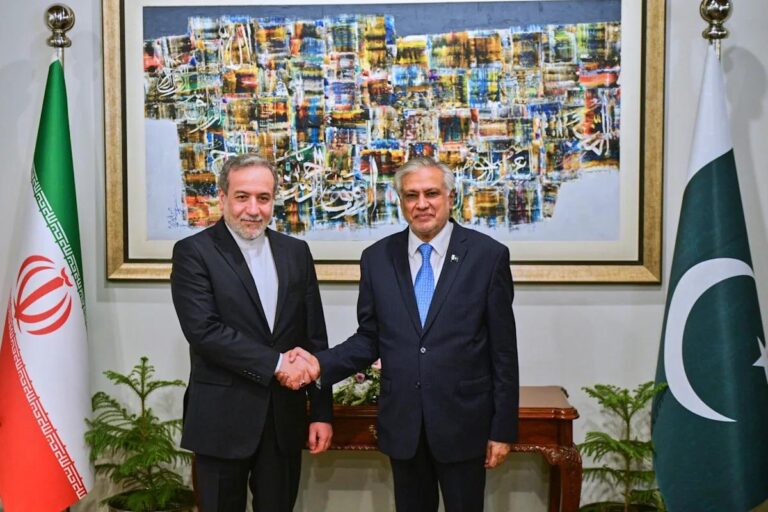
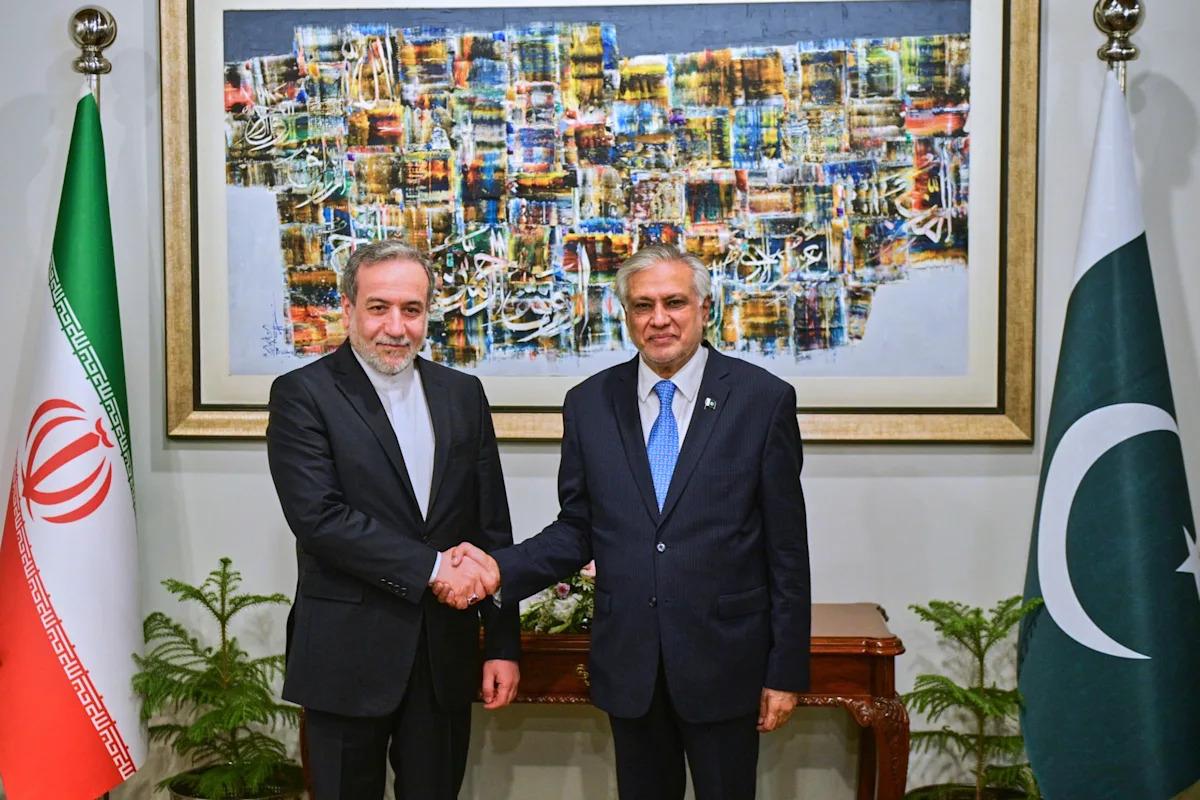
Pakistan’s Deputy Prime Minister and Foreign Minister, Ishaq Dar, reaffirmed Islamabad’s commitment to dialogue on Monday during the 30th Council of Ministers meeting of the Economic Cooperation Organization (ECO), held in Islamabad.
The meeting brought together representatives from the regional organization, including Iranian Foreign Minister Abbas Araghchi, providing an opportunity for discussions at a time when tensions between Washington and Tehran remain unresolved.
Dar said Pakistan had not abandoned its efforts to facilitate a peaceful settlement and was awaiting a response from Washington to Iran’s latest proposals, which he described as being based on the interim agreement reached in June.
“We have not given up hope or efforts. We are still doing our best,” Dar said at the conclusion of the meeting.
His remarks indicate that Pakistan continues to view diplomatic engagement as a viable option, despite the absence of a publicly announced breakthrough.
Pakistan’s mediation effort faces another test
Islamabad has played a central intermediary role in efforts to bring Washington and Tehran into direct negotiations.
Pakistan hosted the first round of direct U.S.–Iran talks in April. The diplomatic process subsequently produced an interim agreement in June, intended to end the conflict and address the competing restrictions affecting the Strait of Hormuz.
However, the agreement has failed to resolve the fundamental disagreements between the two sides.
Washington and Tehran continue to differ over the terms of the arrangement, including the status of the maritime blockade and the conditions required for restoring normal commercial shipping through the strait.
Iran has argued that the United States has undermined the agreement through its continued pressure and restrictions. Washington, meanwhile, has maintained its own position on the conditions necessary for a settlement.
Dar attributed the delay in receiving a U.S. response partly to American officials being occupied with the November midterm elections. That explanation was presented by the Pakistani foreign minister and has not been independently established as the sole reason for the diplomatic delay.
For Pakistan, the challenge is to maintain communication between the two governments while preventing the disagreement from escalating into a wider regional confrontation.
Iran delivers a critical message at the Islamabad meeting
Araghchi’s presence at the ECO meeting added another diplomatic dimension to the gathering.
In his address, the Iranian foreign minister said Tehran remained committed to diplomacy and peaceful solutions but accused Washington of pursuing policies involving military threats, economic pressure and blockades.
He also called for stronger regional cooperation and argued that countries in the region should not allow their territories, airspace or facilities to become platforms for attacks against other states.
His remarks reflected Tehran’s position that regional security arrangements should be developed through dialogue among neighboring countries rather than imposed through external pressure.
The Iranian position, however, differs sharply from Washington’s approach to the conflict and the conditions surrounding the Strait of Hormuz.
The meeting did not produce a publicly announced agreement between the United States and Iran, nor did the participation of Iranian officials constitute confirmation that negotiations were about to resume.
Instead, the statements from both sides illustrated how far apart their positions remain.
Why the Strait of Hormuz matters beyond the region
The dispute has consequences well beyond the immediate relationship between Washington and Tehran.
The Strait of Hormuz is one of the world’s most important maritime energy corridors. Disruptions to shipping through the waterway can affect international oil markets, energy transportation costs and the economic outlook of countries dependent on imported fuel.
Pakistan is particularly exposed to regional instability because of its energy requirements and economic vulnerabilities.
Dar has repeatedly emphasized the connection between regional security and economic development, warning that instability disrupts trade routes, energy supplies, investment and development projects.
The continued disruption of shipping through the strait has already contributed to higher energy costs and economic pressure, according to reporting by the Associated Press.
For countries across Asia, the consequences are especially significant because energy security is closely connected to industrial production, transportation and the cost of essential goods.
This gives Pakistan an economic as well as diplomatic interest in finding a way to reduce tensions.
The ECO meeting provides a wider regional setting
The diplomatic discussions took place during the 30th meeting of the ECO Council of Ministers, which Pakistan is hosting as chair of the organization for 2026–2027.
The organization brings together ten member states: Afghanistan, Azerbaijan, Iran, Kazakhstan, Kyrgyzstan, Pakistan, Tajikistan, Türkiye, Turkmenistan and Uzbekistan.
Pakistan’s chairmanship is being conducted under the theme “Reviving Regionalism for a Resilient ECO.”
According to Pakistan’s Foreign Ministry, its priorities include strengthening regional connectivity, improving trade integration and developing transportation and logistics links between member countries.
The presence of Iran’s foreign minister at the Islamabad gathering provided an opportunity for regional diplomatic engagement, although the ECO meeting itself was primarily a forum for broader economic and regional cooperation.
Dar also addressed relations with Afghanistan, saying that meaningful progress required the Afghan authorities to address neighboring countries’ security concerns, particularly terrorism.
Pakistan has repeatedly accused Afghanistan’s Taliban authorities of allowing militant groups to operate from Afghan territory. Kabul has rejected such accusations.
The issue demonstrates the multiple security challenges confronting Islamabad as it attempts to promote regional cooperation while managing difficult relationships with neighboring governments.
Can Pakistan turn mediation into a diplomatic breakthrough?
Pakistan’s continued involvement gives it an important intermediary role, but the success of its efforts ultimately depends on decisions made in Washington and Tehran.
Islamabad can maintain communication channels, facilitate proposals and encourage dialogue. It cannot independently resolve disagreements over military restrictions, sanctions, maritime security or the broader terms of a lasting settlement.
The next significant development will be whether Washington responds to Iran’s latest proposals and whether both governments demonstrate a willingness to return to structured negotiations.
For now, Pakistan’s message is one of continued diplomatic engagement rather than a claim of progress toward a finalized agreement.
The stakes extend well beyond the two governments. With the Strait of Hormuz remaining at the center of the dispute, the outcome will have implications for energy markets, international trade and security across the wider Middle East and Asia.
Pakistan is keeping the diplomatic channel open. Whether Washington and Tehran are prepared to use it remains the decisive question.
Sources and official documents
- Associated Press — Pakistan’s November 16 statement on continued U.S.–Iran mediation and the ECO meeting.
- Pakistan Ministry of Foreign Affairs — 30th ECO Council of Ministers Meeting, Islamabad, November 15–16, 2026.
- Pakistan Ministry of Foreign Affairs — Ishaq Dar’s remarks at the ECO informal meeting, September 26, 2026.
- Reuters — Reporting on the June U.S.–Iran interim agreement and the negotiations surrounding it.
- Pakistan’s Express Tribune — Reporting on Araghchi’s November 16 address at the ECO meeting.
About the Author