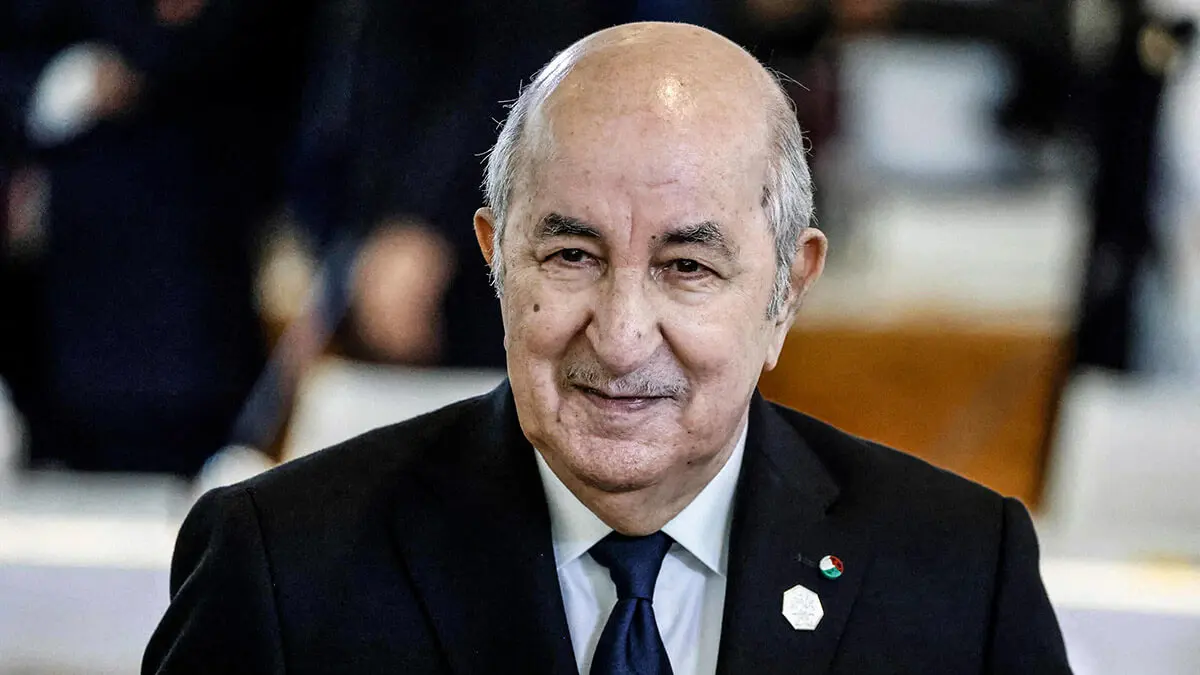
In the ever-shifting landscape of Maghreb diplomacy, few performances are as consistently baffling as that of Algeria’s President Abdelmadjid Tebboune. In recent weeks, his attempts to manipulate the narrative around the Western Sahara conflict have not only failed but exposed a deeper crisis of credibility at the heart of Algeria’s foreign policy machine.
A Pattern of Fabrication
During a joint press conference with Italian Prime Minister Giorgia Meloni, President Tebboune boldly claimed a “shared support” between Algeria and Italy for the “Sahrawi people” and their so-called “inalienable right to self-determination.” The only problem? Italy never said that. In fact, Meloni made it crystal clear that Western Sahara wasn’t even part of the discussions.
Instead, her public remarks focused strictly on issues such as the Sahel, the Middle East, and Libya. The Italian-Algerian joint communiqué released after the meeting mentioned only a “mutually acceptable solution” under the auspices of the United Nations—ironically, the exact phrasing Morocco itself supports. There was no mention of a “Sahrawi people,” nor of any “inalienable right.”
Faced with this glaring contradiction, Algeria’s state news agency APS was forced to walk back its earlier triumphant coverage, replacing it with a far more cautious dispatch hours later. This embarrassing backtrack highlights not only a failed attempt at narrative manipulation but a profound erosion of Algeria’s diplomatic trustworthiness.
Not the First Time
This isn’t a one-off blunder. Back in June 2025, a similar deception unfolded during a visit by the Rwandan president to Algiers. The Algerian regime attempted to portray Rwanda as a supporter of its separatist stance on the Sahara. Kigali responded swiftly and clearly: it denied any such alignment. Algerian state media chose silence rather than correction—hoping perhaps that the lie would quietly linger.
The Mirage of International Support
These repeated fabrications suggest a disturbing strategy: claim fictitious endorsements, hope they’re not challenged, and use them to maintain a domestic illusion of diplomatic strength. But in an era of instant fact-checking and transparent international relations, such tactics are bound to fail—and backfire.
The truth is that Algeria finds itself increasingly isolated on the Sahara issue. The Moroccan Autonomy Plan, presented in 2007 and reaffirmed in subsequent UN resolutions, continues to gain international traction. Dozens of countries, including the US, Spain, Germany, and now Portugal, have openly supported the plan as the only realistic and credible solution. This leaves Algiers clinging to outdated rhetoric and desperate measures to stay relevant.
From “Concerned Party” to “Simple Neighbor”
Algeria’s diplomatic positioning is equally inconsistent. At the UN, its representatives fluctuate between claiming direct interest in the conflict and calling themselves mere observers. As one diplomat put it—rather revealingly—“Call us what you want, the important thing is we have interests.” Such ambiguity would be comical if it weren’t symptomatic of a failing regional policy.
Time for Honesty, Time for Peace
Rather than inventing phantom allies, Algeria would do well to acknowledge its role as a party to the conflict and engage constructively with the UN process. The only viable path forward is compromise, not illusion. The Moroccan Autonomy Plan offers a sustainable, internationally endorsed solution that balances regional stability with development.
It is time for Algeria to stop scripting fictional foreign policies and start acting as a responsible regional actor. Its diplomatic games may have fooled domestic audiences for years—but the world is no longer buying the story.
About the Author