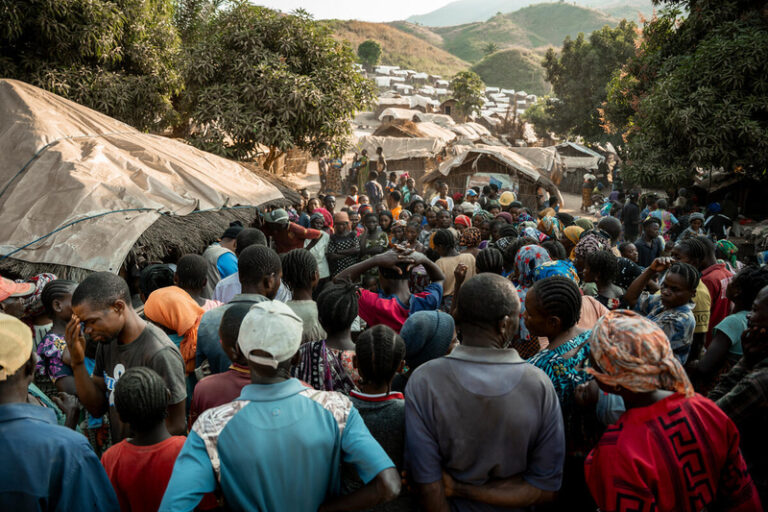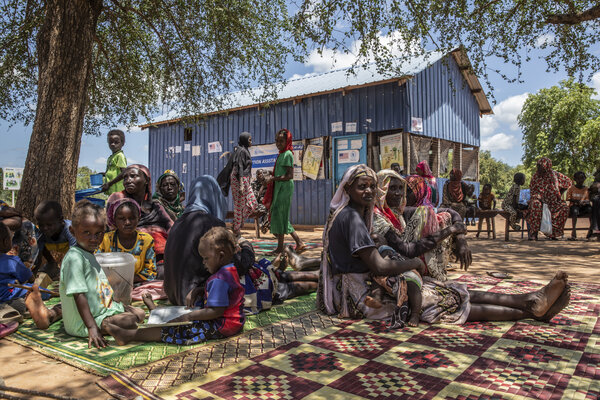
Photo: WFP/Gabriela Vivacqua. Women and children wait for nutritional assistance at Wedweil refugee settlement in South Sudan.
ROME — The United Nations’ food and agriculture agencies warned Friday that acute hunger is likely to worsen across 16 global hotspots over the coming months, with conflict and a strengthening El Niño adding pressure to already fragile food systems.
The latest joint outlook from the Food and Agriculture Organization (FAO) and the World Food Programme (WFP), covering December 2026 through May 2027, identifies Sudan, South Sudan, Somalia, parts of Nigeria and Yemen as the five areas of highest concern. The agencies say famine risks have been identified in parts of Sudan and South Sudan.
The list has grown from 13 hotspots in the previous report. Southern Africa, the Central American Dry Corridor and northeastern Uganda are among the new additions, while Chad was added because of the spillover effects of the war in neighboring Sudan. Lebanon is no longer on the list.
Climate pressure widens the risk
FAO and WFP say a strengthening El Niño could bring hotter and drier conditions to parts of Southern Africa and the Central American Dry Corridor, threatening planting, harvests and household incomes. In Zimbabwe, up to 3 million people are projected to face high levels of acute food insecurity; the corresponding projections are 2.6 million in Malawi and 1.8 million in Mozambique through March 2027.
In Guatemala, the agencies project 3.2 million people could face high levels of acute food insecurity between October 2026 and February 2027. They say crop losses during the 2026 first crop season exceeded 75 percent in many areas of the Central American Dry Corridor.
Conflict remains the main driver in the most severe crises
The agencies say conflict and armed violence are primary drivers of acute food insecurity in 12 of the 16 hotspots. In four of the five highest-concern hotspots, their latest analyses identified or projected people facing Catastrophe-level food insecurity, the most severe household classification in the Integrated Food Security Phase Classification system.
In Sudan, the report warns of a risk of famine in 13 areas of North Darfur and South Kordofan through January 2027 under a reasonable worst-case scenario. In two displacement camps in South Darfur, acute malnutrition levels have already exceeded famine thresholds, according to the agencies.
For South Sudan, the report cites a risk of famine in four counties in Upper Nile and Jonglei under a worst-case scenario in the latest available analysis. The agencies emphasize that these are risk assessments and scenarios, not a declaration that famine is currently occurring across those areas.
Humanitarian funding has fallen
The warning also comes as resources for food security and nutrition assistance in the five highest-concern hotspots have contracted sharply. FAO and WFP say funding fell 62 percent, from $5.1 billion in 2022 to $2 billion in 2025.
The agencies are calling for urgent humanitarian action, safe and unimpeded access to affected communities, and early measures to protect crops, livestock and livelihoods before climate impacts intensify. Their joint anticipatory action plan aims to protect 9 million people in 22 countries.
Why the warning matters
The new outlook connects several pressures that are often treated separately: armed conflict, displacement, reduced aid funding and climate extremes. For communities already struggling to secure food, a failed harvest or interrupted aid delivery can deepen an existing emergency quickly.
FAO and WFP say the worst outcomes are not inevitable, but that early assistance and reliable humanitarian access will be critical during the December-to-May outlook period.
Sources: Food and Agriculture Organization (FAO); World Food Programme (WFP); Reuters.
World Media Feed will continue monitoring humanitarian conditions and the response to the latest food-security warning.
About the Author