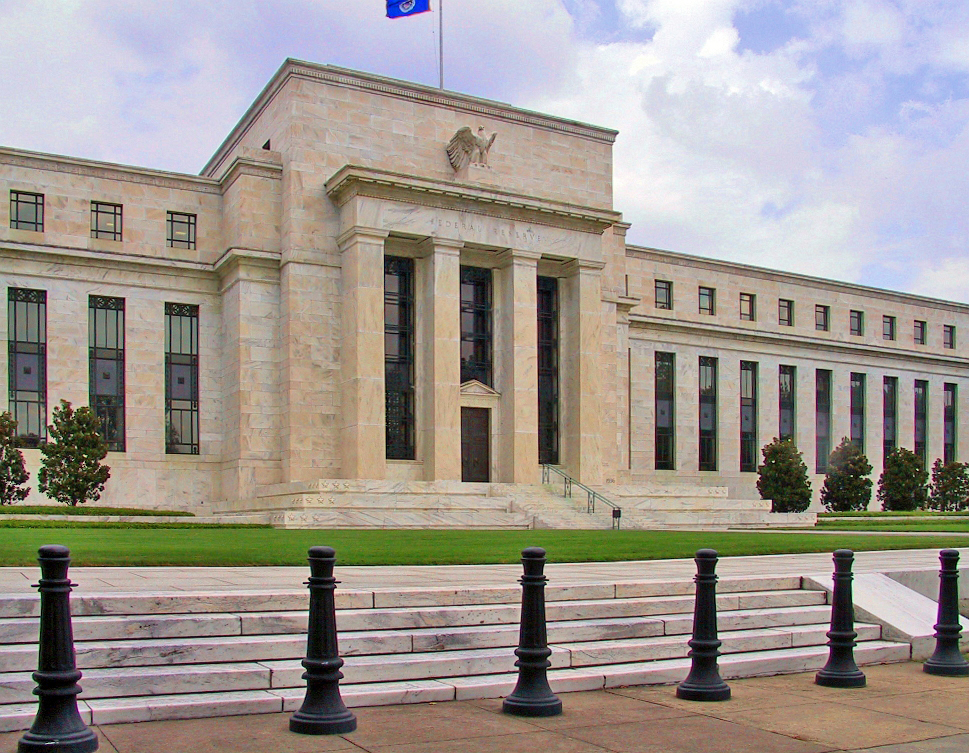
Photo: Dan Smith, Wikimedia Commons (CC BY-SA 2.5). The image shows the Federal Reserve headquarters, not Governor Lisa Cook.
By World Media Feed Editorial Team
The United States is widening its campaign against Iran’s overseas commercial networks, pressing officials in Singapore and Malaysia to scrutinize financial institutions, shipping companies and aviation businesses that Washington says could be used to evade sanctions.
U.S. Treasury officials met with government authorities in both countries during the week of November 16, including regulators and national security bodies. The discussions are part of a broader enforcement effort targeting what Washington describes as Iran-linked front companies and procurement networks operating beyond the Middle East, Reuters reported on November 20.
Why Southeast Asia is in focus
The region has long been important to international maritime trade. Reuters reported that tankers have used waters around Malaysia, Singapore and Indonesia for ship-to-ship transfers involving Iranian oil, a practice that can make the cargo’s origin harder to trace.
Malaysia said last year it would tighten enforcement around such transfers and seized two tankers and their cargoes in February, according to Reuters. The latest U.S. outreach signals that Washington wants regional authorities and private-sector institutions to look beyond vessels themselves and examine the companies, payments and services that can support a shipment.
Shipping, aviation and financial services under scrutiny
A Treasury official told Reuters that Washington was urging additional scrutiny of maritime transport, aviation services and procurement networks. Those sectors can involve complex chains of ship owners, brokers, insurers, ground handlers, suppliers and financial intermediaries.
Reuters also identified a regularly scheduled flight between Tehran and Kuala Lumpur operated by Iran Airtour, which it said had flown as recently as November 14. A scheduled November 17 service did not depart, according to public flight records reviewed by the news agency. The airline did not respond to Reuters’ request for comment sent outside business hours.
The U.S. official did not name the carrier when describing the issue raised with Malaysia. The flight information reported by Reuters should not be read as proof that the airline violated sanctions.
Washington’s sanctions reach beyond U.S. companies
The Treasury Department has increasingly warned that foreign businesses and individuals may face U.S. sanctions exposure if they provide certain support to designated Iranian entities. Its November 4 announcement targeted a network it accused of providing false maritime flags and certifications to vessels involved in transporting Iranian petroleum.
On November 20, Treasury announced another set of designations involving people it described as oil trustees who helped facilitate Iranian oil sales abroad. Those are U.S. government allegations and sanctions determinations; they are not, by themselves, criminal convictions.
For banks and companies with international operations, the practical concern is access to the U.S. financial system and the risk of dealing with parties on U.S. sanctions lists. The precise legal exposure depends on the parties, transactions and applicable rules. Businesses should rely on qualified legal advice and official sanctions guidance rather than treating every commercial connection to Iran as automatically prohibited.
Singapore signals vigilance; Malaysia’s position remains less clear
Singapore told Reuters it was firmly committed to preventing the abuse of corporate structures and said it had strengthened vigilance in the maritime and financial sectors. Malaysia did not respond to Reuters’ requests for comment at the time of publication.
Both countries implement United Nations Security Council sanctions on Iran. The U.S. measures discussed in the Treasury meetings are a separate layer of American sanctions policy, and the distinction matters: Washington’s pressure does not establish that either government has been found in breach of its international obligations.
A test for regional trade hubs
Singapore and Malaysia are deeply connected to global shipping, aviation and financial networks. Stronger screening can help authorities identify sanctions evasion, but it also places additional compliance demands on legitimate businesses that move goods, finance trade or provide services across borders.
The challenge for regional governments is to enforce applicable laws without treating ordinary trade activity as evidence of wrongdoing. For companies, the warning is that ownership structures, vessel histories, counterparties and payment routes may receive closer scrutiny as Washington expands its enforcement campaign.
The latest meetings do not announce new sanctions against Singapore or Malaysia. They do, however, show that the enforcement of Iran-related restrictions is increasingly being pursued through the financial and logistical hubs that connect the global economy.
Sources and editorial note
This report draws on Reuters reporting on the Treasury meetings and official U.S. Treasury announcements dated November 4 and November 20, 2026. Singapore’s response and Malaysia’s lack of response are attributed to Reuters. Allegations made by U.S. authorities are identified as government claims or sanctions determinations; this article does not imply that Singapore, Malaysia or the airline named in Reuters’ flight-record reporting has been found to violate sanctions.
Photo: The Marriner S. Eccles Federal Reserve building in Washington, D.C. The photograph illustrates a U.S. financial institution and is not the U.S. Treasury Department. Photo: Dan Smith, Wikimedia Commons (CC BY-SA 2.5).
About the Author