Japan scrambled fighter jets after two aircraft believed to be Russian entered Japanese airspace off the country's southwestern coast.
November 17, 2026 | By World Media Feed Editorial Team
Tokyo scrambles fighters after suspected Russian incursion
Japan has lodged a strong diplomatic protest with Moscow after two aircraft believed to be Russian military aircraft entered Japanese airspace off the country’s southwestern coast on Tuesday, prompting Japan’s Air Self-Defense Force to scramble fighter jets.
Japan’s Defense Ministry said the first aircraft entered Japanese territorial airspace shortly after 4:07 a.m. local time, followed by a second aircraft minutes later.
The aircraft were detected northwest of Okinoshima, off Fukuoka Prefecture.
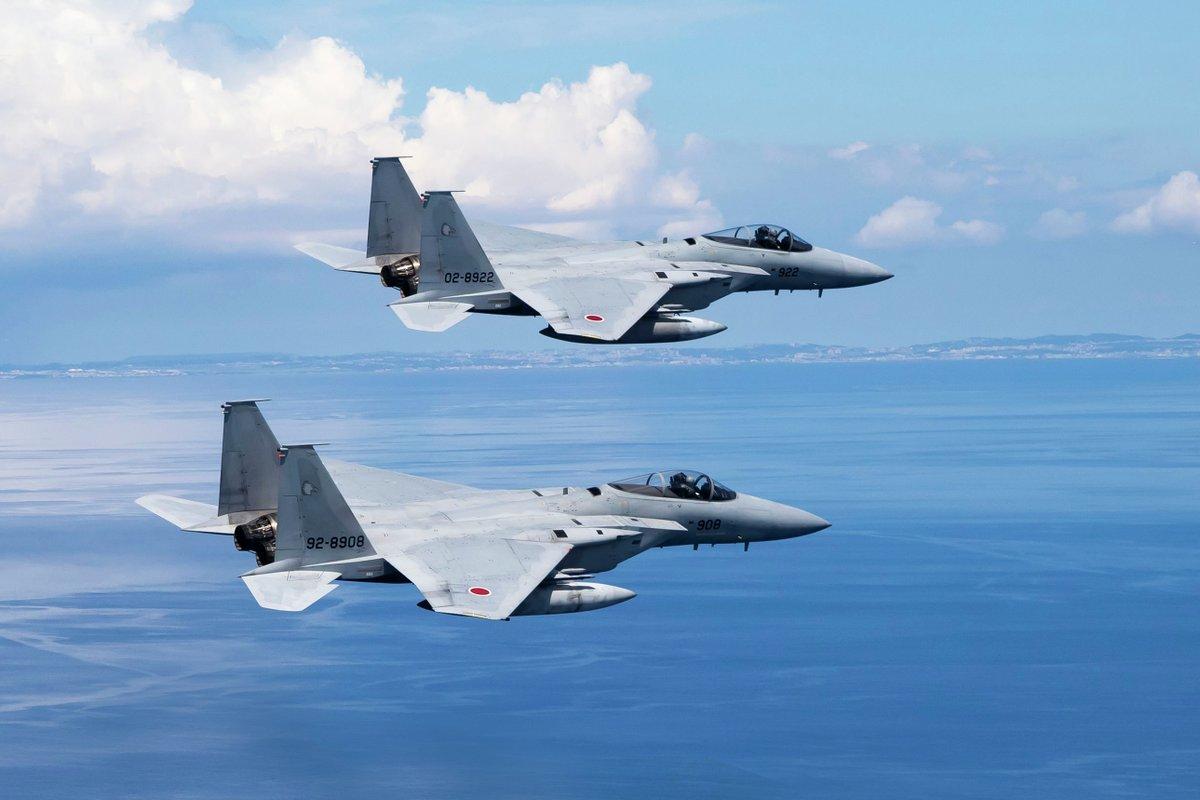
Japanese fighters were immediately scrambled to issue warnings and monitor the aircraft.
According to Japan’s Defense Ministry, the aircraft subsequently passed through the Tsushima Strait, traveled between Yonaguni Island and Taiwan, and continued toward the Pacific Ocean. Ministry of Defense Japan
Tokyo described the incident as a serious violation of Japanese sovereignty and demanded that Russia prevent a recurrence.
Japan says the aircraft entered its territorial airspace
The Japanese government has been careful in its wording, referring to the aircraft as presumed Russian rather than definitively identifying them as Russian military aircraft.
That distinction matters.
Japan’s Defense Ministry confirmed the airspace violation but said it remained difficult to determine the precise purpose or intention of the aircraft’s actions.
Japanese Defense Minister Shinjiro Koizumi said the incident represented a serious infringement on Japan’s sovereignty and posed a threat to national safety.
Tokyo subsequently lodged a formal protest with Russia through diplomatic channels. Ministry of Defense Japan
Russia’s response will be closely watched, particularly because the incident occurred at a time of heightened military activity across the broader Indo-Pacific.
The route through the region raises wider questions
The aircraft did not simply enter Japanese airspace and turn back.
According to Japan’s Defense Ministry, after passing through the Tsushima Strait, the aircraft traveled between Yonaguni Island and Taiwan before entering the Pacific.
That route places the incident within one of the most strategically sensitive areas in East Asia.
Yonaguni is Japan’s westernmost inhabited island and lies close to Taiwan.
The surrounding waters are already heavily monitored because of increasing military activity involving China, Taiwan, Japan and other regional powers.
The route therefore gives the incident significance beyond the immediate violation of Japanese airspace.
Taiwan also detected Russian aircraft
Taiwan separately reported detecting two Russian military aircraft off its eastern coast on Tuesday.
Reuters reported that Taiwan’s authorities monitored the aircraft using its joint intelligence and surveillance capabilities.
Japan and Taiwan’s descriptions suggested that the aircraft observed by both sides may have been the same aircraft.
Taiwan said the aircraft did not enter its territorial airspace. Reuters
The development means that the flight path was monitored by multiple governments as the aircraft moved through the region.
It also illustrates the increasingly complicated air and maritime security environment surrounding Taiwan and Japan.
The timing is significant
The incident occurred just as Russian President Vladimir Putin is preparing to travel to Shenzhen for an APEC-related summit where he is expected to meet Chinese President Xi Jinping and U.S. President Donald Trump.
The planned meeting involving the three leaders is itself unprecedented in its format and comes amid intense competition between Washington and Beijing and Russia’s confrontation with the West.
The suspected Russian aircraft incident adds another layer to an already complicated geopolitical environment.
It would be premature to claim a direct connection between Putin’s upcoming diplomatic meetings and the aircraft’s actions.
Japan’s Defense Ministry has explicitly said that the purpose of the aircraft’s activity cannot yet be determined.
But the timing is likely to attract attention from governments throughout the Indo-Pacific.
Russia and Japan already have a difficult relationship
Relations between Tokyo and Moscow have deteriorated substantially since Russia’s full-scale invasion of Ukraine.
Japan has joined Western sanctions against Russia and has strengthened security cooperation with the United States and other regional partners.
The two countries also remain divided over disputed northern islands, known in Japan as the Northern Territories and in Russia as the Southern Kurils.
Japan has not formally concluded a peace treaty with Russia, partly because of the unresolved territorial dispute.
Military encounters in surrounding airspace and waters therefore carry additional political sensitivity.
Japan’s Defense Ministry said the last confirmed violation of Japanese airspace by Russian aircraft occurred in September 2024 near Rebun Island in northern Japan. Reuters
Japan is strengthening its regional security partnerships
The incident comes as Tokyo is simultaneously expanding defense cooperation with other Indo-Pacific powers.
Japan’s Defense Ministry announced Tuesday that Indian Defense Minister Rajnath Singh is scheduled to visit Japan on November 19 for talks with Japanese Defense Minister Shinjiro Koizumi.
The meeting is expected to address joint training and maritime security cooperation.
Japanese officials described the relationship with India as increasingly important as the regional security environment becomes more complex and uncertain. Ministry of Defense Japan
The timing illustrates a broader Japanese strategy: strengthening partnerships with countries that share an interest in maintaining security and freedom of navigation across the Indo-Pacific.
Russia is not the only military presence Japan is monitoring
The suspected Russian incursion comes amid continuing Japanese monitoring of foreign military aircraft.
Japan’s Joint Staff also reported this week that Japanese fighter aircraft scrambled to monitor Chinese unmanned aircraft detected over the East China Sea and Pacific Ocean on November 12.
The Japanese military identified the aircraft as presumed Chinese unmanned aerial vehicles. Ministry of Defense Japan
Taken together, the incidents point to a more demanding security environment for Japan.
Tokyo increasingly has to monitor military aircraft and drones approaching or operating around its airspace while maintaining relationships with neighboring countries and avoiding unnecessary escalation.
Why this matters beyond Japan
Airspace violations can be brief.
Their political consequences can last much longer.
An aircraft entering another country’s territorial airspace creates an immediate requirement for military interception and diplomatic response.
The greater danger is miscalculation.
A fighter aircraft scrambling to intercept an unidentified or foreign military aircraft creates a situation in which an accident, misunderstanding or aggressive maneuver could escalate rapidly.
That risk becomes particularly important in regions where several militaries operate close to one another.
East Asia already contains some of the world’s most sensitive military flashpoints, including the Taiwan Strait, the Korean Peninsula and the waters surrounding Japan.
The more frequently military aircraft operate in these areas, the greater the importance of communication and clear rules for avoiding dangerous encounters.
Tokyo’s response is firm—but measured
Japan has described the incident as unacceptable and has demanded that Russia prevent a recurrence.
At the same time, Japanese officials have stopped short of publicly attributing a specific strategic objective to the aircraft.
That distinction is important.
There is currently no verified evidence that the aircraft were attempting to provoke Japan, gather intelligence, test Japanese defenses or support another military operation.
Those possibilities may be examined by security analysts, but they remain questions rather than established facts.
For now, what can be established is narrower:
Two aircraft believed to be Russian entered Japanese territorial airspace, Japanese fighters responded, the aircraft continued through a strategically sensitive route, and Tokyo formally protested to Moscow.
A warning from an increasingly crowded security environment
The incident demonstrates how quickly an encounter involving two aircraft can become an international security issue.
Japan is now monitoring Russian and Chinese military activity in surrounding areas while expanding security cooperation with India and other regional partners.
Russia, meanwhile, continues to deepen its strategic relationship with China.
Taiwan remains at the center of competing regional security interests.
And the United States continues to strengthen its military presence and alliances across the Indo-Pacific.
Against that backdrop, even a short airspace violation can carry significance well beyond the aircraft involved.
The immediate incident has ended, but the larger question remains: as military activity increases around Japan, Taiwan and the wider Indo-Pacific, how much room remains for governments to manage encounters before they become crises?
World Media Feed will continue monitoring developments involving Japan, Russia, Taiwan and the wider Indo-Pacific security environment.
Editorial sourcing
The Japanese Ministry of Defense is our primary source for the airspace violation, timing, fighter response and aircraft route. Ministry of Defense Japan
Reuters independently reported Japan’s protest and the aircraft’s connection to the broader regional security environment. Reuters
Editorial judgment: This is a strong WMF piece because we’re not simply reporting “Russian planes entered Japan.” The story connects a verified incident to the larger Indo-Pacific security environment, while being careful not to speculate about Russian intent.
About the Author