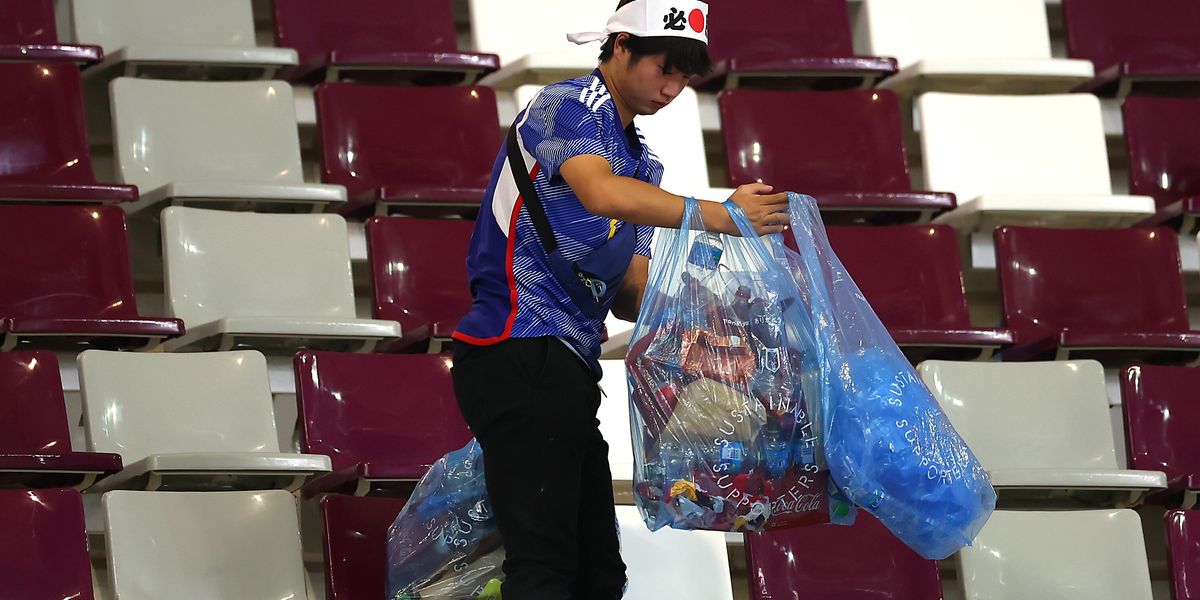
Nobody can accurately predict how all 48 teams will perform at this summer’s FIFA World Cup. Upsets are inevitable, favorites will stumble, and underdogs will emerge. But if there were a wager on which nation would leave the smallest footprint behind, Japan would likely be the overwhelming favorite.
For years, Japanese soccer fans have attracted international attention not only for their passionate support but also for what they do after the final whistle: clean up. Images of supporters collecting litter from stadium stands have become a familiar sight at major tournaments, earning admiration from fans around the world.
The behavior is not part of an organized campaign or public relations effort. Instead, experts say it reflects a deeply ingrained cultural value that many Japanese learn from childhood.
According to intercultural leadership expert Nozomi Morgan, founder and CEO of Michiki Morgan Worldwide, the expectation to leave spaces cleaner than they were found is woven into everyday life from an early age.
Morgan recalls moving from Seattle to Tokyo when she was eight years old and being immediately struck by the differences in school culture.
“One of the first things that really surprised me,” she said, “was that you take off your outside shoes and change into inside shoes. You want to keep the inside as clean as possible.”
But removing shoes was only the beginning.
Each student arrived at school with a “Zokin” — a cleaning cloth made from recycled fabric and sewn together by hand. The cloth wasn’t a symbolic item. It had a practical purpose.
“I remember specifically the first assignment was to clean the classroom,” Morgan explained.
At the end of the school day, students would move desks and chairs, sweep the floors, and then wipe surfaces with their cloths. Rather than viewing the task as punishment or extra work, children participated together as part of their daily routine.
“It kind of felt like a little game that you play cleaning up,” Morgan said. “It wasn’t like a chore. It’s just something that we all did together.”
The cleaning responsibilities extended well beyond classrooms. Throughout elementary and middle school, students helped maintain hallways, staircases, outdoor areas, and even bathrooms. The goal was not merely cleanliness but also cultivating responsibility, respect for shared spaces, and consideration for others.
These lessons often remain with people throughout adulthood.
As Japanese supporters travel the world following their national team, many carry the same habits into stadiums, train stations, and public spaces. Their post-match cleanups have become a symbol of civic pride and collective responsibility, earning praise at World Cups and international sporting events alike.
The practice reflects a broader cultural principle captured by a well-known Japanese saying: “A bird that flies never leaves a trace.”
The phrase emphasizes leaving no unnecessary impact behind — a concept that resonates far beyond housekeeping. It encourages people to think about how their actions affect those around them and to take responsibility for the spaces they share.
As Japan prepares for another World Cup campaign, attention will naturally focus on its performances on the field. Yet regardless of how far the team advances in the tournament, there is one area in which Japanese players and supporters have already built a global reputation.
Win or lose, they are unlikely to leave much evidence that they were ever there at all.
About the Author