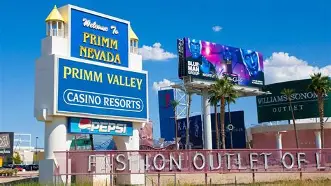
The family that built the once-thriving gambling outpost of Primm is racing to find investors and buyers as the desert casino town teeters on the edge of becoming a full-scale ghost town.
Located along Interstate 15 roughly 40 miles southwest of Las Vegas, Primm was once a bustling stop for millions of Southern California travelers heading to Nevada casinos. The town featured roller coasters, outlet malls, arena concerts and three major casino resorts that lit up the desert border for decades.
Now, nearly all of it is on the verge of shutting down.
Owner Affinity Gaming confirmed that Primm Valley Casino Resorts — the final full-time operating casino property in town — is scheduled to permanently close on July 4, along with associated businesses including the Flying J travel center and Primm Center event venue. More than 340 employees are expected to lose their jobs.
The closures follow the earlier shutdowns of Whiskey Pete’s Hotel & Casino and Buffalo Bill’s Resort & Casino, properties that once defined the quirky state-line destination.
But as the lights begin to go dark, the Primm family — descendants of the town’s founders — are mounting a last-ditch effort to rescue the fading gambling hub from extinction.
According to recent reports, the family is actively seeking buyers and redevelopment partners capable of reviving the aging casino corridor before it collapses entirely into abandonment.
For decades, Primm thrived on one simple business model: capture drivers from Southern California before they reached Las Vegas. Cheap rooms, low-stakes gambling, outlet shopping and roadside novelty attractions turned the tiny desert settlement into a reliable tourism stop beginning in the 1970s.
That formula eventually unraveled.
The rise of tribal casinos across California dramatically reduced the need for gamblers to drive into Nevada, while modern travelers increasingly bypassed Primm altogether in favor of heading directly to Las Vegas. Analysts and longtime visitors say the town never fully recovered from the pandemic-era tourism collapse either.
Visitors in recent years described eerie scenes inside the once-busy resorts: darkened hallways, shuttered gaming floors and nearly empty hotel towers.
Online discussion forums have become filled with nostalgia and disbelief as travelers react to the town’s decline. One Reddit user described Primm as “fucking dead,” while others debated whether any realistic business model still exists for the aging casinos.
Despite the bleak outlook, supporters of a revival point to one possible lifeline: the planned Southern Nevada Supplemental Airport, a proposed major airport project expected to be built south of Las Vegas in the coming years. Some local stakeholders believe future traffic tied to the airport could eventually breathe new life into the area.
Still, many observers remain skeptical.
Primm’s giant but mostly empty outlet mall, now nearly abandoned, has become symbolic of the broader collapse. Once packed with tourists and bargain hunters, the shopping complex reportedly has only a single remaining store.
The town itself has fewer than 1,000 residents, many of whom relied directly on casino employment. With the resorts closing, Primm risks losing not just tourism revenue but its core reason for existing.
For longtime Nevada travelers, the downfall carries emotional weight. The town was famous for roadside oddities including the Bonnie and Clyde death car exhibit, giant neon cowboy signs and the Desperado roller coaster at Buffalo Bill’s — once promoted as one of the fastest roller coasters in the world.
Whether investors step in before the final shutdown remains unclear.
Without a rescue plan, Primm may soon join the long list of abandoned desert boomtowns scattered across the American Southwest — a fading monument to an earlier era of highway gambling culture.
About the Author