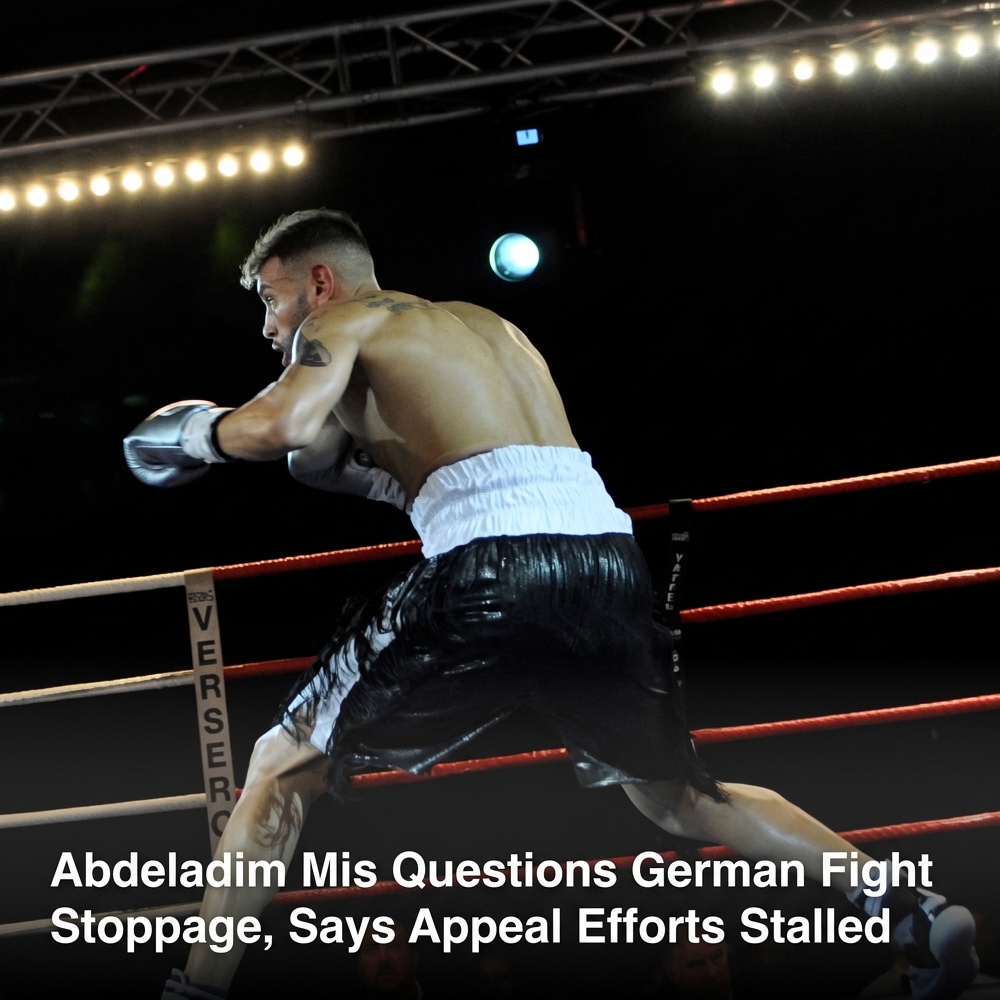
FALKENSEE, GERMANY — Moroccan professional boxer Abdeladim Mis is questioning the handling of his August 29, 2026, fight against Oleksii Atamanchuk in Falkensee, saying an alleged blow to the back of his head affected his ability to continue and that subsequent efforts to challenge the result have not produced a clear answer.
Mis, known in the ring as “Atlas Lion,” discussed the incident directly with World Media Feed and confirmed a public statement in which he says he accepts that the referee may have stopped the contest for his safety, but questions whether the rules were properly applied in determining the result.
Available boxing records list Atamanchuk as the winner by technical knockout in the seventh round. A preview published ahead of the event identified the card as the first LockBox Promotion boxing event in Falkensee, held at Stadthalle Falkensee on August 29.
Mis says an alleged blow changed the course of the fight
Mis says he was struck behind the head during the contest and felt pain afterward. He told World Media Feed that the incident affected his ability to think clearly at the time. He also says he continues to experience pain at the back of his head.
World Media Feed has not independently established the nature or cause of the reported pain, and has not reviewed the complete, original fight recording. The precise sequence of the incident, the referee’s view of it and the medical assessment at ringside remain important questions.
Mis says he and his team questioned the handling of the incident at the event. According to his account, they were told they could raise their concerns afterward because officials did not want to disrupt the event. He says that when they later tried to pursue the matter, they were told they should have complained during the fight.
He says he has since been referred from one person to another without receiving a satisfactory explanation. World Media Feed has not yet independently verified who gave the alleged instruction, when Mis’s complaint was submitted, or which body formally considered it.
What the published BDB rules say
The published sporting rules of the Bund Deutscher Berufsboxer (BDB) prohibit blows to the nape of the neck. Article 25(4) says that, depending on the effect of a prohibited action, the referee may immediately disqualify the boxer responsible or allow the affected boxer a one-minute recovery period. If the affected boxer cannot continue after that period, the rules provide for the other boxer to be disqualified.
Article 25(5) addresses a situation in which the referee did not see the alleged prohibited blow but a boxer complains while still standing: the referee is to stop the contest and ask the judges whether they saw the incident. If a judge confirms seeing the prohibited action, the referee proceeds under the applicable sanction provisions.
The rules also distinguish this procedure from the five-minute recovery period for low blows. Article 25(7)–(8) applies that five-minute provision specifically to low blows, not blows to the back of the head. The applicable response therefore depends on what happened in the ring and how the referee assessed the incident.
Article 25(14) says written protests concerning violations of the sporting rules or irregularities during a fight must be submitted to the BDB within 24 hours after the contest. Article 25(15) says the BDB board decides protests, with its decision subject to review by the BDB appeals committee.
These provisions raise specific questions about whether a protest was submitted, to which body, and whether Mis and his team were given clear information about the required procedure and deadline. World Media Feed has not seen the complaint correspondence or an official decision in this case.
Mis questions whether he was treated fairly
Mis has also questioned whether his Moroccan and North African background played a role in how he was treated. “Is this because I am a North African, meaning Moroccan?” he asked.
He has not provided evidence establishing that discrimination occurred. His concern is being reported as his own perception, not as a proven finding. The event organizer and the relevant boxing authority should have an opportunity to address the concern and explain how the complaint was handled.
“Not every loss is a defeat”
In the statement he confirmed to World Media Feed, Mis said he was not refusing to accept defeat and described his opponent as a worthy fighter.
“I understand the decision to stop the fight for my safety, but what about the result? What about my right to have the incident reviewed according to the rules of boxing?” he wrote.
He added: “I am not looking for excuses, and I do not refuse to accept defeat. My opponent was a worthy fighter, but I believe that every athlete deserves fairness, regardless of their nationality or the country in which they compete.”
He concluded: “I lost the fight, but I will never stop fighting for what is rightfully mine. Not every loss is a defeat.”
Questions still awaiting answers
The central issue is not whether Mis was entitled to win. It is whether the alleged foul was properly assessed, whether the referee followed the applicable procedures, and whether the boxer had a meaningful opportunity to challenge the handling of the incident.
Among the questions that remain are what the complete fight footage shows; whether the referee or judges recorded a foul; what the scorecards showed when the contest ended; whether a written protest was filed within the applicable deadline; and what explanation the responsible officials gave to Mis and his team.
World Media Feed will seek comment from LockBox Promotion and the BDB on the incident, the applicable rules and the handling of Mis’s complaint. Any response received will be reflected in an update.
For Mis, the dispute is about more than one result. It is about whether the rules designed to protect athletes and ensure fair competition were properly applied—and whether a boxer who believes they were not can obtain a meaningful answer.
World Media Feed Editorial Team
About the Author