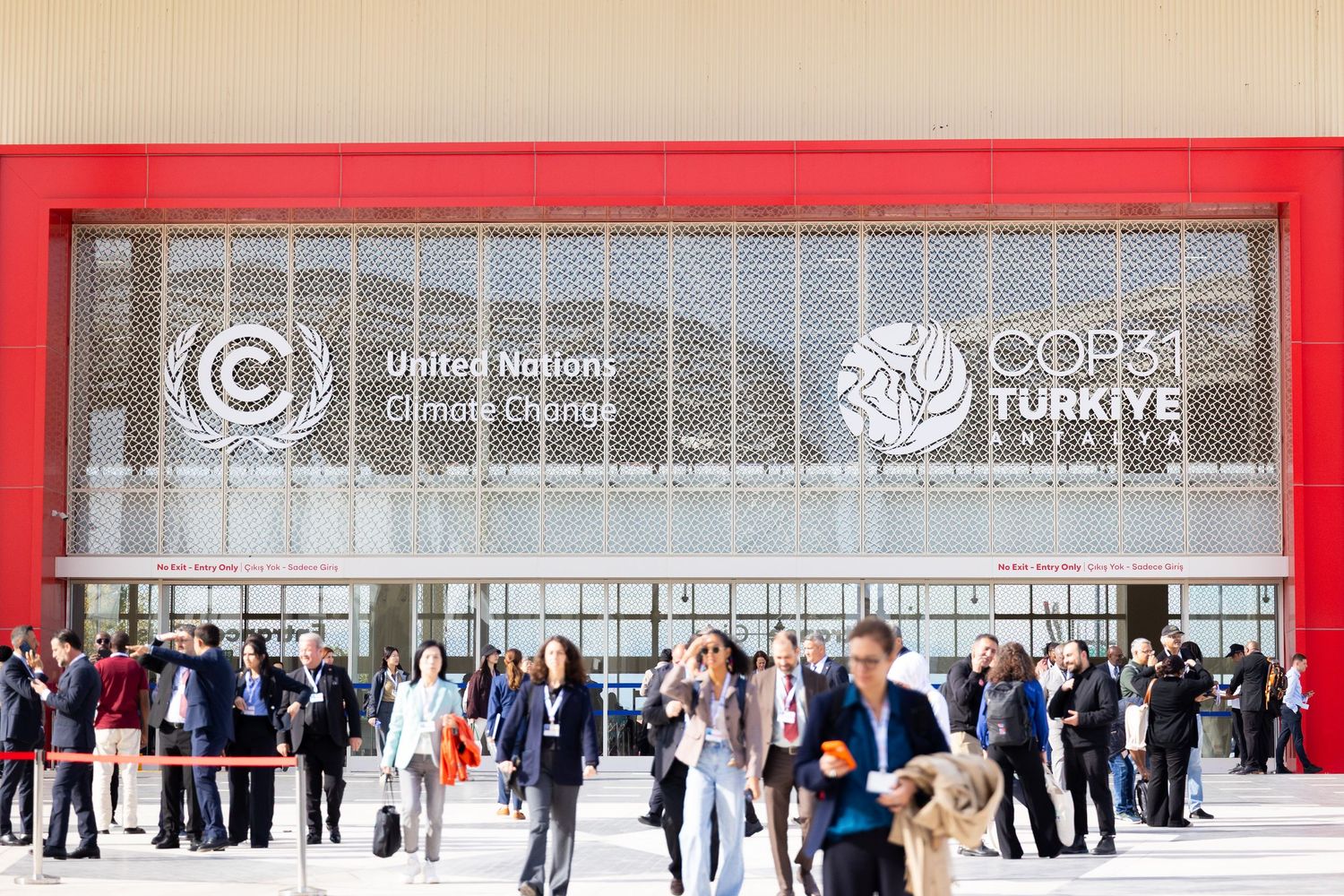
COP31 conference venue in Antalya, Türkiye. Photo: UN Climate Change official COP31 photo gallery. Used as a conference reference image.
By World Media Feed Editorial Team
United Nations climate negotiations in Antalya, Türkiye, entered a second day of overtime as nearly 200 delegations weighed a late compromise intended to rescue a summit marked by sharp divisions over fossil fuels and financial support for vulnerable countries.
COP31 President Murat Kurum presented a revised package early Sunday and said he believed it could win agreement. But the text had not yet been formally approved at the time of publication. Delegations were given until 0300 GMT to raise objections, with a plenary session scheduled for 0600 GMT to begin considering adoption, Reuters reported.
Fossil fuels remain the central dispute
The negotiations became increasingly contentious after a revised draft removed explicit language about transitioning away from fossil fuels. That omission drew criticism from countries seeking a stronger commitment to move beyond coal, oil and gas, as well as from climate campaigners and vulnerable island states.
Panama had warned it could block an agreement that failed to meet its demands, which included stronger transparency and language addressing oil production. The European Union and a broad group of countries have pressed for the fossil-fuel transition to remain part of the final outcome. Saudi Arabia and other oil-producing countries have resisted stronger wording, according to reporting by The Guardian and the Financial Times. Saudi Arabia has rejected accusations that it is obstructing the process.
Developing countries press for adaptation finance
Climate finance is the other major fault line. African ministers called for adaptation funding to rise to $120 billion a year by 2035, roughly three times current levels, according to The National. Such funding is intended to help developing countries prepare for and respond to climate impacts including extreme heat, floods, drought and rising seas.
Developing countries argue that commitments made by wealthier nations have not matched the scale of their needs. The debate is not simply about the size of a future financial target: it also concerns whether money will be predictable, accessible and delivered as grants or affordable finance rather than adding to debt burdens.
A compromise still needs approval
Kurum said the new package addressed concerns over fossil fuels and financing for adaptation. Reuters reported that the proposal followed intensive consultations involving Türkiye, Australia and delegations from across the world. The final wording, however, remained subject to objections and the formal consensus process.
The distinction is important: a presidency proposal is not the same as an adopted decision. Countries can still object, seek changes or refuse consensus. Until the plenary approves the text, the summit cannot be described as having reached a final agreement.
Why the outcome matters
COP31 is taking place amid growing concern that the world is on course to exceed the 1.5°C temperature threshold that governments pledged to pursue under the Paris Agreement. The United Nations climate process depends on consensus among almost 200 parties, which gives each delegation leverage but can also make ambitious agreements difficult to secure.
The final decision will be judged not only by whether countries leave Antalya with an agreement, but by whether it sets out credible action on emissions, the transition away from fossil fuels and support for communities already facing climate damage. A weak compromise could preserve the appearance of consensus while leaving the hardest questions unresolved.
Sources and editorial note
This report draws on Reuters, the Associated Press, The Guardian, The National and official information from the United Nations Framework Convention on Climate Change. The status of the final package is described as pending because the formal approval session had not yet taken place at the time of publication.
Photo: Delegates arrive at the COP31 conference venue in Antalya, Türkiye. Credit: Kubilay Çiftçi / UN Climate Change official COP31 photo gallery. The image shows the venue and is not a photograph of the final negotiations.
About the Author