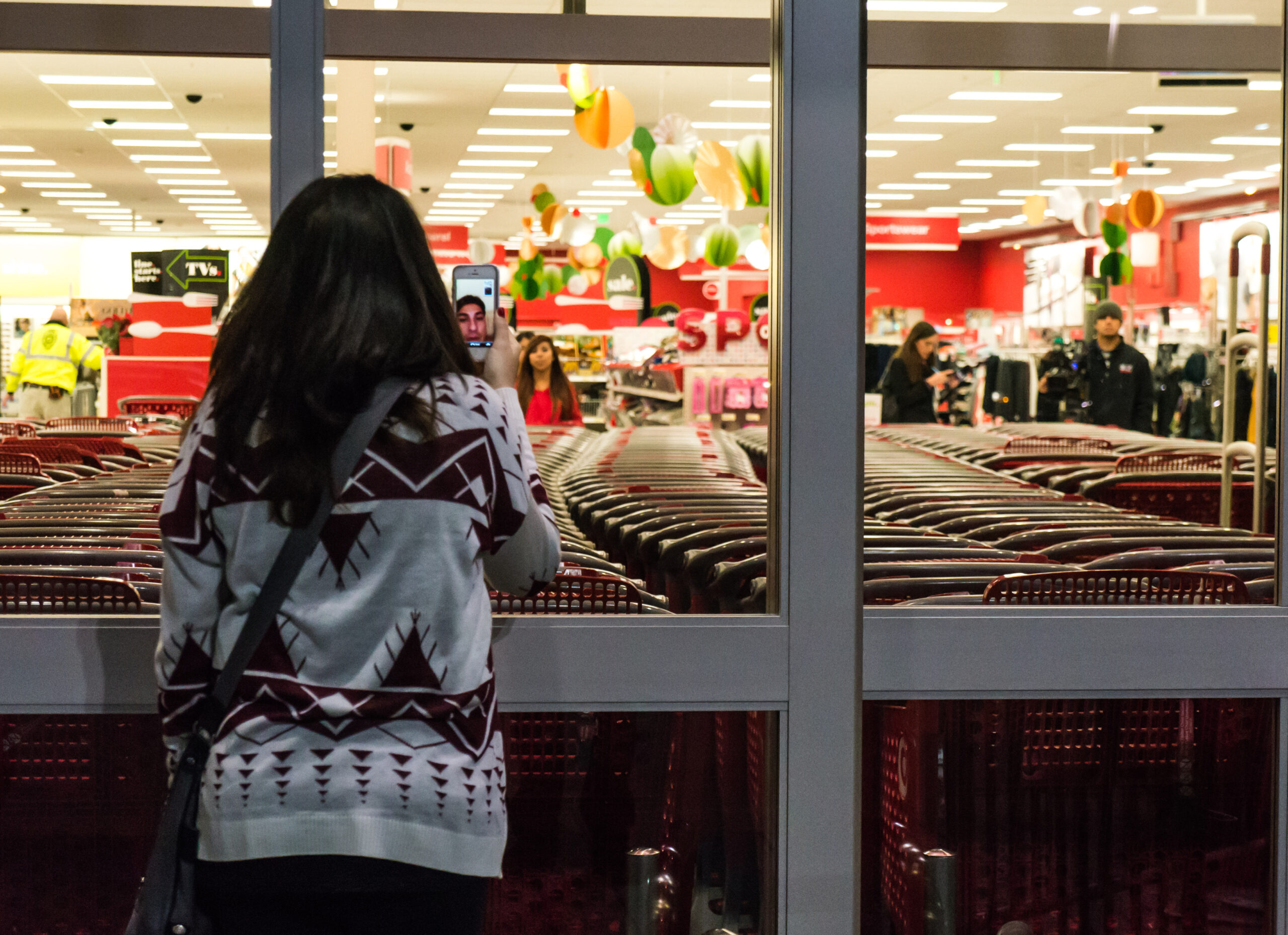
Archive photograph from Black Friday, November 28, 2013. Photo: Powhusku, CC BY-SA 2.0. https://creativecommons.org/licenses/by-sa/2.0/
World Media Feed Editorial Team — Black Friday is taking on added importance for investors this year as retailers enter the critical holiday shopping period while financial markets face their sharpest turbulence in months.
Nearly 183 million Americans are expected to shop during the Thanksgiving weekend through Cyber Monday, according to the National Retail Federation. Black Friday remains the busiest day, with about 126 million consumers expected to shop.
The figures point to continued consumer activity, but investors are looking closely at how much households are actually willing to spend. Inflation, energy costs and borrowing expenses remain concerns, particularly for middle- and lower-income households.
Reuters reported that consumer spending accounts for roughly two-thirds of the U.S. economy, making holiday shopping an important indicator of economic health. Investors are looking for evidence that households can continue supporting corporate revenues even as stock markets have been hit by a major technology and AI selloff.
The National Retail Federation says 82% of holiday shoppers are taking steps to control costs. Some plan to buy less expensive gifts, reduce spending in other areas or purchase for fewer people.
At the same time, online shopping remains strong. The holiday period has increasingly started earlier, with retailers extending promotions well before Thanksgiving. That means Black Friday is no longer a single-day event so much as the center of a much longer discount season.
For investors, the key question is whether shoppers continue spending despite the pressure on household budgets. Strong sales could reassure markets that the broader U.S. economy remains resilient. A weaker-than-expected holiday season, however, could reinforce concerns about slowing growth.
The first major answer will come through retail traffic and sales during Thanksgiving weekend, followed by corporate results that reveal whether discounts translated into healthy revenue and margins.
Source: World Media Feed reporting based on Reuters reporting and National Retail Federation data. The figures reflect estimates available as of November 21, 2026.
About the Author