United Nations delegates meet in Geneva to discuss international rules governing lethal autonomous weapon systems and the future of artificial intelligence in warfare.
By World Media Feed Editorial Team | November 16, 2026
The investigation
As artificial intelligence increasingly influences military operations, governments are confronting a question that could reshape the future of warfare: how much control should humans retain over weapons capable of identifying and attacking targets independently?
The debate moved into a decisive diplomatic phase on November 16, as representatives of 128 countries gathered at the United Nations in Geneva for a five-day conference examining the future regulation of conventional weapons.
At the center of the discussions are lethal autonomous weapon systems, commonly referred to as LAWS. These technologies raise fundamental questions about military responsibility, civilian protection and the application of international humanitarian law when machines can make decisions involving human life.
The conference comes after years of negotiations without an international agreement specifically regulating autonomous weapons.
Despite growing calls for restrictions, the positions of major military powers remain sharply divided.
A new battlefield challenge for international law
Autonomous weapons are not simply conventional weapons operated remotely by soldiers.
They are systems designed to select and engage targets based on their programming and operational parameters, potentially without requiring a human operator to approve every individual attack.
The technology can involve artificial intelligence, sensors, computer vision and automated decision-making.
Potential applications include unmanned aerial vehicles, ground-based robotic platforms and naval systems.
It is important, however, to distinguish fully autonomous weapons from AI-assisted military equipment.
Many weapons currently used in modern conflicts incorporate automated navigation, surveillance, target recognition or decision-support functions while retaining some level of human authorization.
The degree of autonomy varies considerably between systems.
This distinction is central to the international debate because regulating every military application of artificial intelligence would be different from establishing restrictions on weapons that independently select and attack human targets.
The United Nations has identified accountability, predictability and meaningful human control as central questions requiring international attention.
Washington and Moscow resist binding restrictions
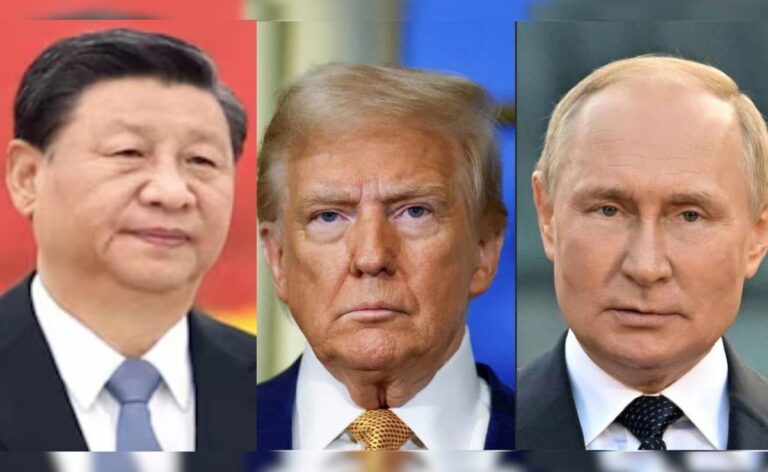
One of the biggest obstacles facing negotiators is the opposition of major military powers to a legally binding agreement.
According to Reuters reporting on November 16, the United States, Russia and Israel oppose efforts to establish a binding international treaty regulating autonomous weapons.
Their position is that existing international humanitarian law already provides a framework for governing the conduct of warfare.
Washington favors non-binding guidelines and has proposed a five-year mandate for discussions toward a non-binding agreement.
Russia has also challenged procedural arrangements at the Geneva conference, including a rule that would allow observers such as the European Union and nongovernmental organizations to address delegates.
These disagreements have complicated the opening of negotiations.
The debate reflects a broader strategic dilemma.
Governments investing heavily in military artificial intelligence may be reluctant to accept restrictions that could limit future technological development or place their armed forces at a disadvantage against competitors.
For countries with significant military-industrial capabilities, the issue is therefore not exclusively humanitarian. It also involves national security, technological competition and the future balance of military power.
The countries pushing for a legally binding agreement
A group of governments is seeking a more ambitious international response.
Austria, Belgium, Brazil, Ireland, Mexico, New Zealand and Panama submitted a proposal calling for negotiations toward a legally binding agreement on autonomous weapons.
Their position reflects growing concern that international law must develop alongside military technology rather than attempting to address its consequences after widespread deployment.
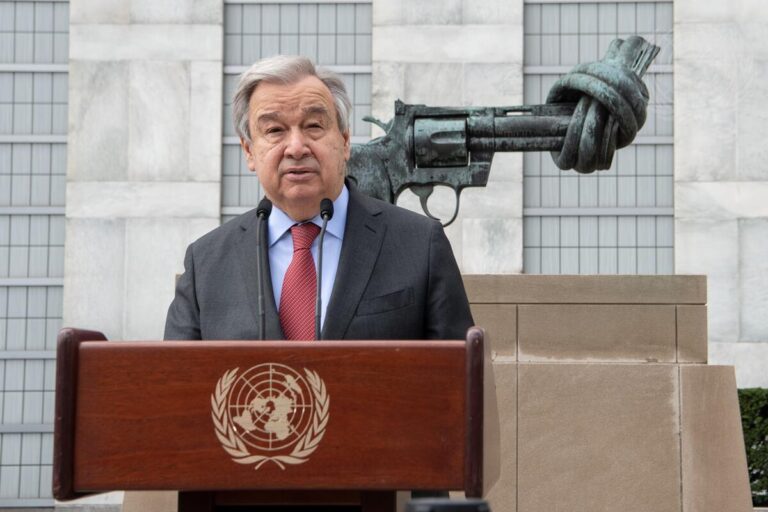
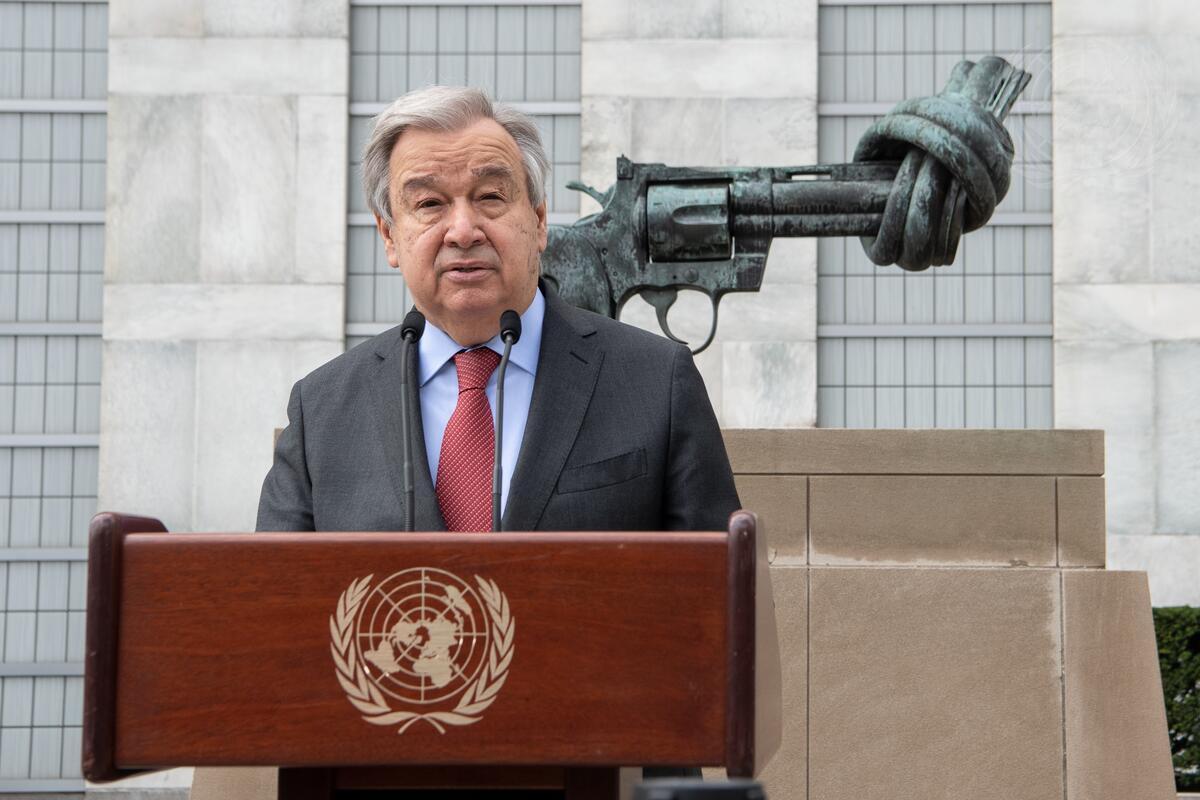
The United Nations Secretary-General, António Guterres, has also called for negotiations on an instrument containing clear prohibitions and restrictions.
The International Committee of the Red Cross has warned that the growing autonomy of weapons systems creates serious humanitarian and legal challenges.
The organization argues that human judgment and responsibility must remain central to decisions involving the use of force.
The positions of European governments also reveal potential room for compromise.
Britain, Germany and France have supported negotiations on an international instrument while leaving open whether the eventual agreement should be legally binding.
The conference chair has proposed a two-year mandate for negotiations toward a binding protocol.
That proposal and the competing approaches will help determine whether governments can reach a common position before the conference concludes on November 20.
Why Ukraine, Sudan and the Middle East matter
The debate is no longer confined to theoretical discussions about future military technology.
Artificial intelligence and automated systems are increasingly influencing how modern conflicts are conducted.
Ukraine has become an important testing ground for unmanned military technology, particularly as both sides seek ways to improve surveillance, targeting and battlefield operations.
Similar developments have attracted attention in conflicts across the Middle East and Africa.
Reuters reported that semi-autonomous and AI-assisted weapons have already been used in Ukraine, Sudan and the Middle East.
However, it is essential to distinguish reported use of AI-assisted military equipment from independently verified deployment of fully autonomous weapons capable of selecting and attacking targets without human intervention.
That distinction is often blurred in public discussions.
The broader concern is that advances in automation could eventually reduce the time available for human operators to assess targets, understand changing battlefield conditions and prevent civilian casualties.
A system that incorrectly identifies a civilian vehicle, misinterprets movement or operates outside its intended parameters could produce devastating consequences.
The question facing international negotiators is whether existing legal principles are sufficient to address these risks before the technology becomes more widely deployed.
Who is responsible when an autonomous weapon makes a mistake?
One of the most difficult questions involves accountability.
Under international humanitarian law, parties to an armed conflict must distinguish between civilians and combatants, avoid indiscriminate attacks and take precautions to minimize civilian harm.
Military commanders and individual personnel also operate within established legal responsibilities.
But what happens when a weapon independently selects a target and carries out an attack?
Responsibility could involve the military commander who authorized deployment, the personnel who configured the system, the manufacturer responsible for its design or the state that introduced it into service.
Determining responsibility in an individual incident could become particularly difficult when the system’s decision-making process is complex, difficult to predict or impossible to reconstruct fully.
An autonomous weapon cannot simply become a substitute for human legal responsibility.
This is why humanitarian organizations are pressing governments to establish clear limits on the circumstances in which machines can be allowed to make decisions involving lethal force.
The issue extends beyond technology. It concerns the fundamental principles governing the protection of human life during armed conflict.
A narrow window for international action
The Geneva conference could become an important turning point.
The United Nations Office at Geneva has identified the meeting as a key opportunity to determine the future direction of international work on lethal autonomous weapons.
The discussions will consider the findings of the Group of Governmental Experts, which adopted a report in September 2026 outlining elements that could form the basis of a future international instrument.
However, reaching agreement will require governments with competing security interests to accept at least some common restrictions.
A legally binding treaty, a non-binding framework or a hybrid arrangement remain possible outcomes.
The difference between these options is significant.
A binding agreement could establish formal international obligations, while non-binding guidelines would provide recommendations without creating the same treaty commitments.
Even a decision to begin negotiations would not immediately create enforceable international restrictions.
It would, however, establish a process through which governments could work toward common standards.
The future of warfare cannot be separated from human responsibility
The development of autonomous weapons raises questions that extend far beyond military innovation.
Artificial intelligence is transforming industries, transportation, healthcare and communications. Its use in military operations, however, carries consequences that can be irreversible.
Governments face a choice between allowing military technology to advance largely through national policies and competing strategic interests, or establishing international rules before increasingly autonomous systems become a normal feature of warfare.
The Geneva conference does not guarantee an agreement.
The opposition of major military powers demonstrates how difficult it will be to establish common restrictions.
But the debate itself reflects an important recognition: the rules governing warfare must address the technologies now changing how conflicts are fought.
The central question is no longer simply how intelligent military machines can become. It is whether the international community can agree on limits before decisions involving human life are increasingly delegated to machines.
World Media Feed will continue following the Geneva negotiations and the international response to the growing role of artificial intelligence in modern warfare.
About the Author