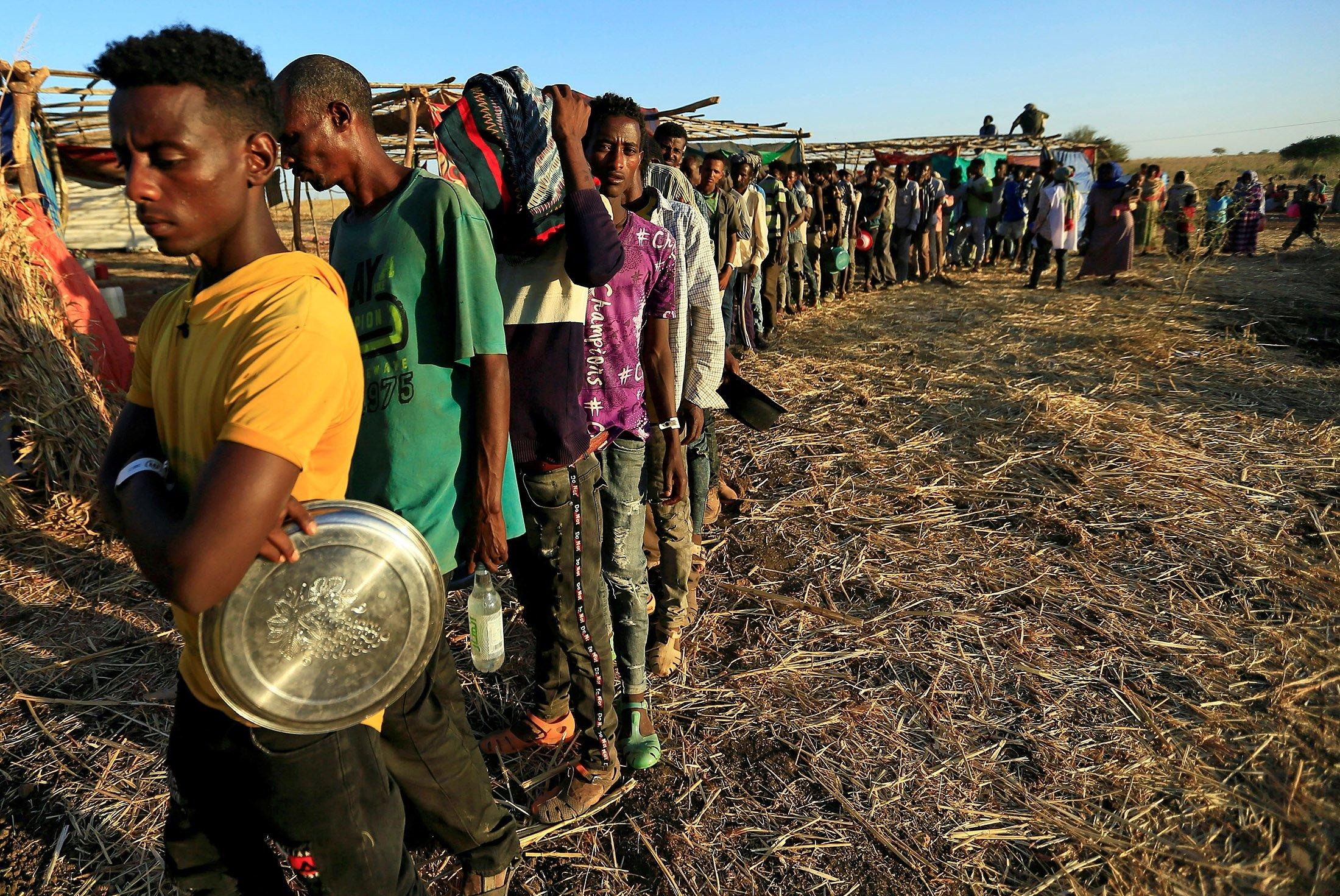
Rising tensions along the Sudan–Ethiopia border have raised concerns about the possibility of wider regional instability.
November 16, 2026 | World Media Feed Editorial Team
The investigation
Two neighboring African countries are facing an increasingly dangerous diplomatic confrontation as Sudan and Ethiopia exchange accusations of supporting armed groups fighting inside each other’s territories.
What began as a series of allegations connected to Sudan’s devastating civil war and renewed fighting in Ethiopia’s Tigray region has developed into a broader security concern for the Horn of Africa.
The two governments have exchanged diplomatic expulsions, closed consular missions and taken their accusations to international and regional institutions.
Behind the diplomatic dispute lies a more complicated question: could the conflicts inside Sudan and Ethiopia become increasingly interconnected, creating a regional confrontation involving neighboring countries and competing international interests?
Recent developments suggest that the risk deserves serious attention.
A diplomatic relationship moving toward confrontation
The latest escalation became particularly visible in early November when Sudan and Ethiopia moved against each other’s diplomatic missions near their shared border.
On November 4, Reuters reported that Ethiopia had ordered six Sudanese consular staff members in the border town of Asosa to leave within 48 hours and closed Sudan’s consulate.
Sudan responded by closing Ethiopia’s consulate in Gedaref and expelling its diplomatic personnel.
The measures followed Sudan’s decision to submit complaints against Ethiopia to the United Nations Security Council and the African Union’s Peace and Security Council.
Khartoum accused Ethiopia of allowing Sudan’s paramilitary Rapid Support Forces (RSF) to use Ethiopian territory to organize military activity and launch drone attacks against Sudanese targets.
Ethiopia rejected the accusations.
Instead, Ethiopian officials accused Sudan, alongside Egypt and Eritrea, of supporting armed opponents of the Ethiopian federal government, including forces associated with the Tigray conflict.
Those countries have denied the allegations.
The diplomatic expulsions represent a significant deterioration in relations because they come at a time when both countries are already dealing with serious internal security challenges.
Reuters reporting, November 4.
Sudan’s allegations and the importance of the Asosa military base
One of the most significant elements of the dispute concerns the Ethiopian border region surrounding Asosa.
Sudan has repeatedly alleged that Ethiopian territory is being used to facilitate military support for the RSF, the paramilitary organization fighting Sudan’s regular armed forces since April 2023.
An important independent research contribution comes from the Humanitarian Research Lab at Yale University’s School of Public Health.
In an August 28 report examining satellite imagery of an Ethiopian National Defense Forces base in Asosa, Yale researchers identified a substantial increase in military vehicles, equipment and logistical infrastructure.
The researchers documented approximately 100 newly present light tactical vehicles between August 23 and August 28, alongside additional transport vehicles, trailers and cargo containers.
Yale assessed that the equipment buildup was associated with RSF activity and could support a force of approximately 750 to 1,000 personnel.
The findings provide significant evidence of military-related activity at the location. However, satellite imagery alone does not establish the full chain of command, the precise nature of government involvement or whether Ethiopian authorities formally authorized RSF operations.
That distinction matters.
The existence of military activity and logistical infrastructure is not, by itself, proof of every allegation made by Sudan’s government.
Nevertheless, the Yale findings add an important independent dimension to an increasingly serious regional dispute.
Source: Yale Humanitarian Research Lab, August 28, 2026.
Ethiopia’s Tigray problem adds another dimension
While Sudan is confronting the RSF, Ethiopia faces renewed instability in its northern Tigray region.
The region experienced a devastating war between Ethiopian federal forces and the Tigray People’s Liberation Front (TPLF) from 2020 to 2022.
The conflict formally entered a new phase following the November 2022 Pretoria peace agreement, which was intended to end the fighting and establish a framework for restoring stability.
However, renewed clashes in September 2026 have raised concerns about the durability of that agreement.
Ethiopian military leadership has accused Sudan, Egypt and Eritrea of supporting armed groups opposed to the federal government.
The allegations have been rejected by the countries concerned.
For Addis Ababa, the possibility of armed opposition groups receiving external assistance represents a serious national security concern.
For Sudan, meanwhile, Ethiopia’s accusations come amid Khartoum’s own claims that its neighbor is allowing the RSF to operate from its territory.
The result is a dangerous situation in which each government views the other’s internal conflict through the lens of national security.
The humanitarian consequences could extend across borders
The greatest potential consequences of an expanded confrontation would fall on civilians.
Sudan is already experiencing one of the world’s most severe humanitarian emergencies.
The war between the Sudanese Armed Forces and the RSF has displaced millions, damaged essential infrastructure and disrupted access to food, healthcare and electricity.
The United Nations and humanitarian organizations have repeatedly warned about the consequences of continued fighting.
The situation is particularly concerning in Blue Nile State, which shares a border with Ethiopia and has become an important area of military activity.
Yale’s August assessment warned that increased military activity around Asosa could raise the risk of further attacks and civilian displacement in Sudan’s border regions.
The renewed fighting in Tigray creates another source of instability.
If armed groups, military supplies or displaced populations move across borders as the situation deteriorates, the humanitarian consequences could become increasingly difficult for neighboring countries to manage.
The challenge is not limited to people fleeing active combat. Border instability can also disrupt trade, agricultural activity, transportation and access to essential services.
The region cannot afford another prolonged displacement emergency.
Regional alliances complicate the dispute
The confrontation between Sudan and Ethiopia cannot be understood exclusively as a bilateral disagreement.
Both countries operate within a wider regional environment involving competing security relationships and unresolved political disputes.
Egypt and Sudan have longstanding concerns about the management of Nile waters, particularly Ethiopia’s Grand Ethiopian Renaissance Dam.
The dam, completed in 2025, has remained a major point of disagreement over water security, reservoir management and the rights of countries sharing the Nile system.
The disputed Al-Fashaga agricultural border area has also contributed to tensions between Sudan and Ethiopia.
In addition, the involvement of outside powers in the wider Sudanese conflict has complicated efforts to establish a diplomatic solution.
The United Arab Emirates has repeatedly denied allegations of supporting the RSF. Regional relationships involving Egypt, Eritrea, Turkey and other governments also influence the diplomatic calculations surrounding the conflict.
These overlapping interests create a difficult environment for de-escalation.
A confrontation between Sudan and Ethiopia would not necessarily remain confined to their shared border if other governments became more directly involved.
However, it would be premature to describe the current situation as an established regional proxy war. The evidence demonstrates serious tensions and competing allegations, not a confirmed military alliance between all the actors involved.
What should the international community watch next?
The immediate priority should be preventing further deterioration in diplomatic relations and reducing the possibility of military escalation.
Several developments will be particularly important:
- Whether Sudan provides independently verifiable evidence supporting its allegations concerning RSF activity in Ethiopia.
- Whether Ethiopia offers a detailed response to the findings concerning the Asosa military base.
- Whether renewed fighting in Tigray expands or becomes more closely connected to neighboring conflicts.
- Whether the African Union and United Nations can establish effective diplomatic channels between Khartoum and Addis Ababa.
- Whether regional governments take steps to prevent their competing interests from contributing to further instability.
The closure of diplomatic missions is not equivalent to the beginning of a war. However, it reduces communication channels at precisely the moment when both governments need them most.
The absence of reliable communication can increase the risk of miscalculation, particularly when military movements and allegations of cross-border attacks are involved.
A regional crisis that should not be ignored
Sudan and Ethiopia are two strategically important African countries whose stability affects a much wider region.
Their geographic position, access to major waterways, agricultural resources and relationships with neighboring states make the consequences of prolonged instability particularly significant.
The Horn of Africa has experienced decades of conflict, political competition and humanitarian emergencies. Another confrontation involving Sudan and Ethiopia could deepen existing instability and create additional challenges for countries already struggling with their own security problems.
For now, both governments deny the accusations directed against them, and important questions remain unanswered.
But the diplomatic expulsions, renewed fighting in Tigray and independent satellite assessments of military activity near Sudan’s border have created a situation that requires sustained international attention.
The greatest danger may not be an immediate declaration of war, but the gradual transformation of two internal conflicts into a regional security crisis that becomes increasingly difficult to contain.
World Media Feed will continue monitoring developments along the Sudan–Ethiopia border and the diplomatic efforts surrounding the escalating tensions.
Source verification and editorial notes
- Associated Press – November 16: Ethiopia and Sudan accuse each other of backing armed fighters. AP News
- Reuters – November 4: Both countries close each other’s consulates. Reuters
- Yale Humanitarian Research Lab – August 28 satellite assessment. Squarespace
- Mixed Migration Centre – Keeping Track: Mixed Migration in Africa 2026. Mixed Migration Centre
About the Author