World Media Feed Editorial Team
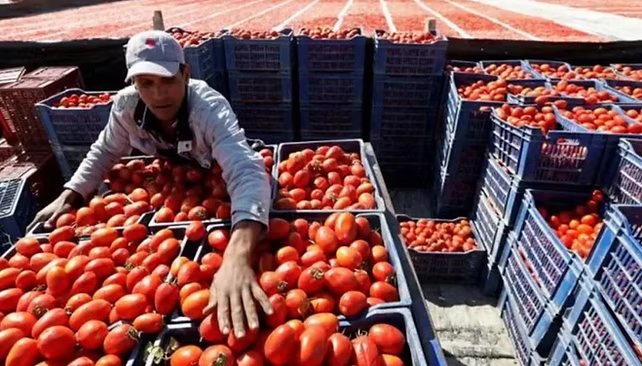
Morocco has temporarily paused tomato exports to African markets as the government seeks to strengthen domestic supplies and ease rising prices for consumers.
The decision was reported Thursday by Reuters, citing Lahoucine Aderdour, head of Morocco’s Federation of Fruit and Vegetable Exporters (FIFEL), and a government source. Exporters serving African destinations were informed of the temporary measure.
The government source said the pause is intended to help organize the domestic market and that exports are expected to resume soon, although no specific date was provided.
European shipments remain exempt
The measure does not apply to more expensive tomato shipments headed to European markets, according to the government source cited by Reuters.
That distinction reflects the importance of Morocco’s European agricultural trade. Morocco is the European Union’s second-largest tomato supplier, while its tomato export market in Africa is comparatively smaller.
The decision therefore places the immediate emphasis on domestic food availability while maintaining Morocco’s higher-value European export flows.
Rising prices put pressure on consumers
Morocco’s domestic tomato prices have risen sharply as production has weakened in Souss-Massa, the country’s main tomato-growing region. Farmers and market officials have also pointed to higher fertilizer and fuel costs as contributing factors.
Earlier this week, Morocco’s national broadcaster SNRT reported that tomatoes had reached as much as 18 dirhams per kilogram in some retail markets, compared with around 7 dirhams only weeks earlier. The Casablanca wholesale market was receiving substantially less produce than its reported daily requirement.
The government has also been pursuing measures aimed at reducing food costs, including transport support and plans to establish regional distribution companies designed to reduce the number of intermediaries between producers and consumers.
A balancing act for Morocco’s agricultural sector
The export pause highlights a broader challenge facing Morocco: maintaining its position as a major agricultural exporter while ensuring that domestic consumers have access to affordable food.
Morocco’s agricultural exports increased 4.3% year-on-year to 33.1 billion dirhams, or about $3.4 billion, during the first nine months of 2026.
For African buyers, however, even a temporary disruption could create additional pressure on supply chains that rely on Moroccan produce.
Morocco has used export restrictions on some agricultural products in previous periods of domestic price pressure. The current tomato measure is described by officials as temporary, with the government expected to reassess the situation as domestic production and prices change.
World Media Feed will continue to follow the impact of the export pause on Moroccan consumers, farmers and African markets.
About the Author