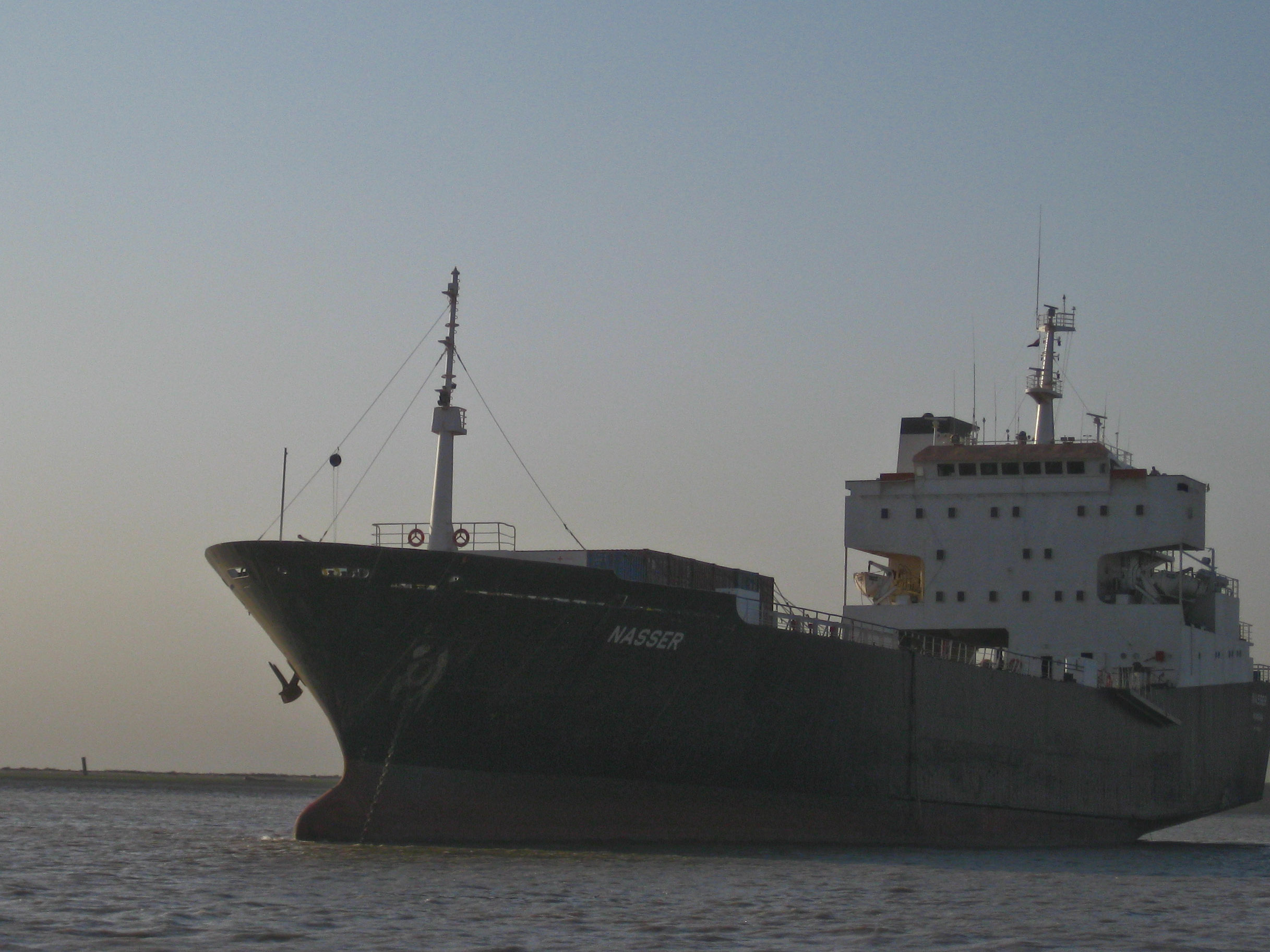
Illustrative image: cargo vessel in the Persian Gulf, photographed by Adam Stone, 10 September 2009. Wikimedia Commons, Creative Commons Attribution 2.0.
The U.S. military says it disabled a commercial vessel in the Gulf of Oman after the ship departed an Iranian port and attempted to pass through a U.S. naval blockade. The incident adds to tensions around one of the world’s most strategically important maritime corridors.
U.S. Central Command (CENTCOM) said a military aircraft struck the stern of the Palau-flagged bulk carrier M/V Pacific Archer on November 26, disabling its propulsion system. The command said the vessel had left Bandar Abbas, Iran, and that its crew had ignored repeated warnings. It reported that the civilian crew was unharmed.
The statement was issued on November 27. CENTCOM said U.S. forces enforcing the blockade had redirected 158 commercial vessels that complied with instructions and disabled six that refused to comply. Those figures are the command’s own account of its operations.
Tehran vows to challenge the blockade
In a separate development, Mohammad Mokhber, an adviser to Iran’s Supreme Leader, said Iran would not accept the blockade and that the Strait of Hormuz would not simply be reopened on terms set by Washington, according to remarks carried by Iranian state media and reported by Reuters. He did not provide details of any specific steps Iran planned to take.
The U.S. action and the Iranian response underline the risk of further confrontation at sea. The Strait of Hormuz connects the Persian Gulf with the Gulf of Oman and the wider Indian Ocean, making it a critical route for energy shipments and international trade. The disabled vessel was reported by the Associated Press to have been bound for Singapore, based on ship-tracking information.
Shipping and energy markets remain exposed
Any prolonged disruption around the Gulf of Oman or the Strait of Hormuz can affect shipping schedules, insurance costs and energy markets. Reuters reported on November 27 that oil prices were on course for their first weekly gain of the month, with attacks on tankers and energy infrastructure renewing concerns about possible supply interruptions.
However, the disabling of the Pacific Archer does not by itself establish that commercial traffic through the Strait has stopped. The available U.S. statement describes the incident as an enforcement action against a vessel that had departed an Iranian port. Broader claims about the status of shipping routes should be assessed against independent maritime tracking and further official information.
What happens next?
The immediate questions are whether the vessel can be safely recovered, whether Iran will take further action against the blockade, and how other commercial operators will respond to the warnings. Any escalation could have consequences well beyond the region, particularly for energy exporters, importers and companies dependent on reliable sea transport.
World Media Feed will continue to follow official statements and independently reported developments as more information becomes available.
Sources
- U.S. Central Command: U.S. Forces Disable Commercial Vessel During Blockade Enforcement Against Iran, November 27, 2026
- Associated Press: U.S. military says it disabled another ship that tried to breach naval blockade on Iranian ports, November 27, 2026
- Reuters: U.S. disables ship trying to leave Iran, as Tehran vows to confront blockade, November 27, 2026
- Reuters: Oil on track for first weekly gain in November on supply fears, November 27, 2026
About the Author