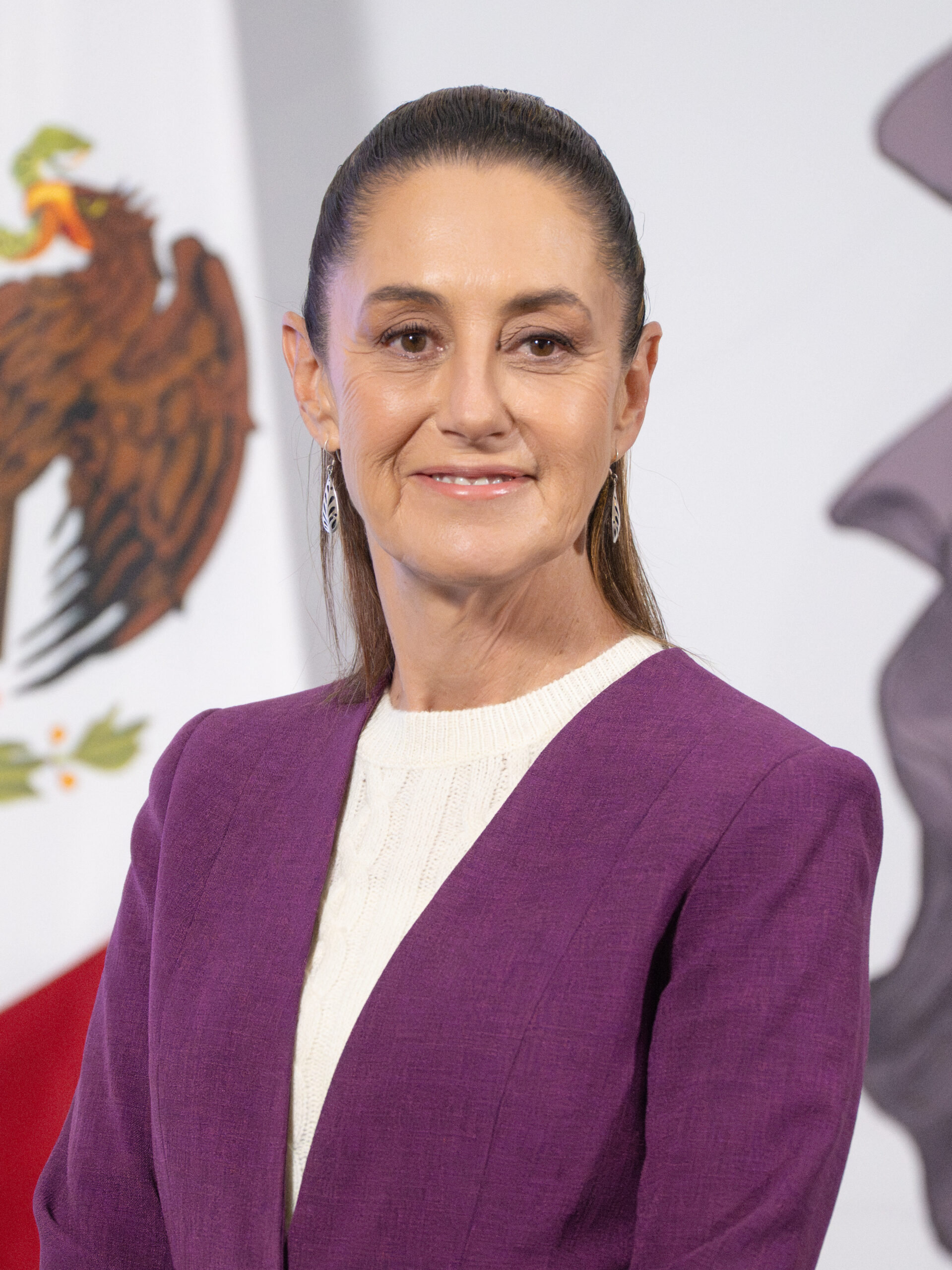
Claudia Sheinbaum during a morning press conference, August 14, 2025. Photo: Eneas De Troya, CC BY 4.0, via Wikimedia Commons. Archival image.
Mexico has filed a formal diplomatic complaint with the United States over a new Drug Enforcement Administration initiative inviting anonymous tips about suspected cartel members, alleged corrupt officials and people accused of helping criminal groups in Mexico.
President Claudia Sheinbaum said Friday that Foreign Minister Juan Ramón de la Fuente raised the issue with U.S. Ambassador Ronald Johnson. The ambassador said he would review the complaint, Sheinbaum told reporters at her regular morning news conference.
The dispute adds a fresh point of tension to security cooperation between the two countries, even as their governments continue working together against drug trafficking and organized crime.
DEA initiative focuses on Sinaloa
DEA Administrator Terry Cole announced this week that the agency had established an anonymous tip line seeking information about members and associates of designated criminal organizations, officials suspected of corruption, criminal networks and people involved in laundering money for narcoterrorism in the Mexican state of Sinaloa.
The agency also said it planned to establish a similar channel for Jalisco, home to the Jalisco New Generation Cartel. The initiative uses direct communication channels that allow people to send information to U.S. authorities.
Washington has designated several Mexican criminal groups as terrorist organizations. The DEA initiative is part of a wider U.S. effort to gather intelligence on cartel operations and alleged official links to organized crime.
Sheinbaum says sovereignty must be respected
Sheinbaum objected to a U.S. agency soliciting information about people and alleged criminal activity inside Mexico without the process being coordinated through Mexican authorities.
She said relations with Washington should be based on coordination rather than subordination. She also argued that the United States must address drug consumption and pursue cartel members operating within its own territory, not place the entire burden on Mexico.
Mexico has repeatedly insisted that security cooperation must respect its sovereignty and territorial integrity. The government has also rejected proposals for U.S. military forces to operate on Mexican soil.
Security cooperation continues despite friction
The complaint comes despite expanded cooperation between the two governments. Mexican officials recently said U.S. intelligence helped Mexican forces locate and capture Fausto Isidro Meza Flores, known as “El Chapo Isidro,” a suspected drug trafficker who was on the FBI’s Ten Most Wanted Fugitives list.
The United States has requested his extradition, but Mexican authorities have said he will face proceedings in Mexico. The case has been presented by both governments as an example of cooperation, even as they disagree over the limits of U.S. activity and influence.
The DEA has not publicly responded to the formal complaint in the reporting available Friday. Reuters reported that the U.S. ambassador said he would look into the issue.
A delicate balance for both governments
The dispute highlights a central challenge in U.S.-Mexico relations: both governments have an interest in disrupting cartel networks, but they differ over how intelligence should be collected and which authorities should control investigations on Mexican territory.
For Sheinbaum, the issue is also politically sensitive at home. Her administration faces pressure to demonstrate that it can confront powerful criminal groups while resisting unilateral U.S. actions. For Washington, the tip line is intended to expand intelligence collection on organizations it considers a threat to U.S. security.
Whether the complaint leads to changes in the DEA initiative remains unclear. For now, the two governments say they will continue security cooperation, while Mexico has made clear that it expects U.S. actions to respect its sovereignty.
Key points:
- Mexico lodged a formal complaint with the U.S. Embassy over the DEA tip-line initiative.
- The DEA announced an anonymous reporting channel focused on criminal groups and alleged corruption in Sinaloa, with a similar channel planned for Jalisco.
- President Claudia Sheinbaum said bilateral relations must be based on coordination, not subordination.
- The dispute comes alongside ongoing U.S.-Mexico cooperation against organized crime.
- The DEA had not publicly responded to the complaint in the reports available Friday.
Sources: Reuters, “Mexico files complaint with US over DEA tip line on alleged drug traffickers, corrupt officials,” November 27, 2026; Associated Press, “Mexico files formal complaint to US over DEA tip line,” November 27, 2026; Mexico News Daily, “Mexico files formal complaint over DEA’s Sinaloa tip lines,” November 27, 2026.
Image note: The featured photograph shows President Claudia Sheinbaum at a morning press conference on August 14, 2025. It is an archival image and does not depict the November 27, 2026 announcement. Photo: Eneas De Troya, CC BY 4.0, via Wikimedia Commons.
About the Author