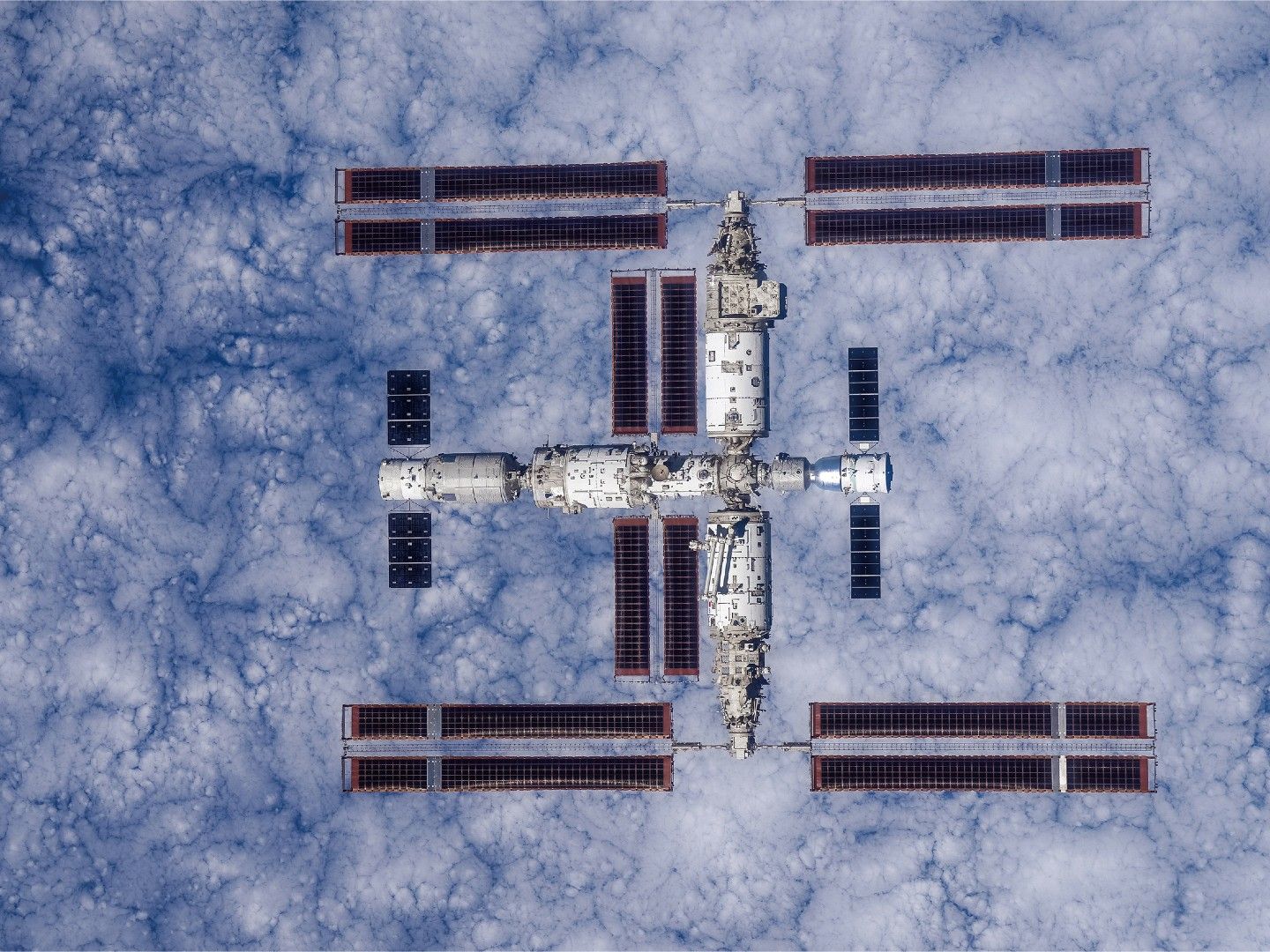
Photo: China Manned Space Agency, via Space.com.
Pakistan’s Muhammad Zeeshan Ali has launched aboard China’s Shenzhou-24 mission, marking a major step toward becoming the first foreign astronaut to visit the country’s Tiangong space station. The spacecraft lifted off successfully from the Jiuquan Satellite Launch Center at 8:18 a.m. Beijing time on Wednesday, November 25.
The China Manned Space Agency announced the three-person crew on Tuesday. Ali, a 40-year-old former military pilot, is flying as a payload specialist alongside Chinese commander Tang Hongbo and flight engineer Wu Yi. The mission is the first crewed flight in China’s space program to include an astronaut from another country. Reuters confirmed that the Long March-2F rocket carrying the crew lifted off successfully at 00:18 GMT on November 25.
A milestone for Pakistan’s space ambitions
Ali’s selection follows a February 2025 cooperation agreement between Pakistan’s Space and Upper Atmosphere Research Commission (SUPARCO) and the China Manned Space Agency. Two Pakistani candidates began training in China, with one to be selected for a short-duration mission aboard Tiangong.
Ali is expected to spend about a week in orbit before returning to Earth aboard the Shenzhou-23 spacecraft. He will work as a payload specialist, supporting scientific experiments rather than serving as the spacecraft’s pilot. Reuters reported that the mission includes research activities in biotechnology and materials science.
At a news conference in Jiuquan, Ali spoke in Mandarin and English about the significance of representing Pakistan. He has undergone months of preparation in China, including language training, as the two countries worked to prepare the first joint crewed mission in China’s human spaceflight program.
China opens Tiangong to an international partner
The mission also marks a new phase for China’s space station program. Tiangong, or “Heavenly Palace,” has been continuously occupied since 2021 and became fully operational in 2022. Until now, its visiting crews have been made up of Chinese astronauts.
China has developed its own crewed space infrastructure after being excluded from the International Space Station partnership. By bringing a Pakistani astronaut aboard, Beijing is demonstrating that its station can host international partners, although the scope and pace of future foreign participation remain to be seen.
The crew will also include Tang Hongbo, who is preparing for his third visit to Tiangong, and Wu Yi, who is set to make his first spaceflight. The mission will overlap with the current Shenzhou-23 crew as China carries out its next orbital rotation and continues research aboard the station.
A wider partnership beyond one flight
Space cooperation between China and Pakistan has developed over several decades, including satellite launches and technical collaboration. The 2025 agreement created a pathway for Pakistani astronaut candidates to train in China and participate in a crewed mission.
For Islamabad, the flight offers an opportunity to gain experience in human spaceflight and scientific research in orbit. For Beijing, it provides a high-profile example of international cooperation as China seeks to expand the role of Tiangong and pursue its longer-term goal of sending astronauts to the Moon by 2030.
The mission also takes place as the United States advances its Artemis lunar program. The two countries are pursuing different approaches to space partnerships and exploration, and the Shenzhou-24 flight illustrates how China is building its own network of international cooperation.
Successful launch, docking next
The Shenzhou-24 spacecraft lifted off successfully at 8:18 a.m. Beijing time on November 25 (00:18 GMT), according to Reuters. The launch confirms the start of Ali’s flight, but it is not the same as arrival at the space station. The next major milestone is the spacecraft’s rendezvous and docking with Tiangong.
Ali is now on his way to becoming the first Pakistani to travel to space and the first foreign national to visit China’s Tiangong station. His arrival at the station remains the next milestone to watch. The mission marks a significant moment for Pakistan’s space program and a notable step in China’s effort to make its orbital station an international destination.
World Media Feed will continue tracking the spacecraft’s docking and the crew’s arrival at Tiangong.
Sources: China State Council Information Office / Xinhua; Reuters; Associated Press; Nature; Dawn.
About the Author
