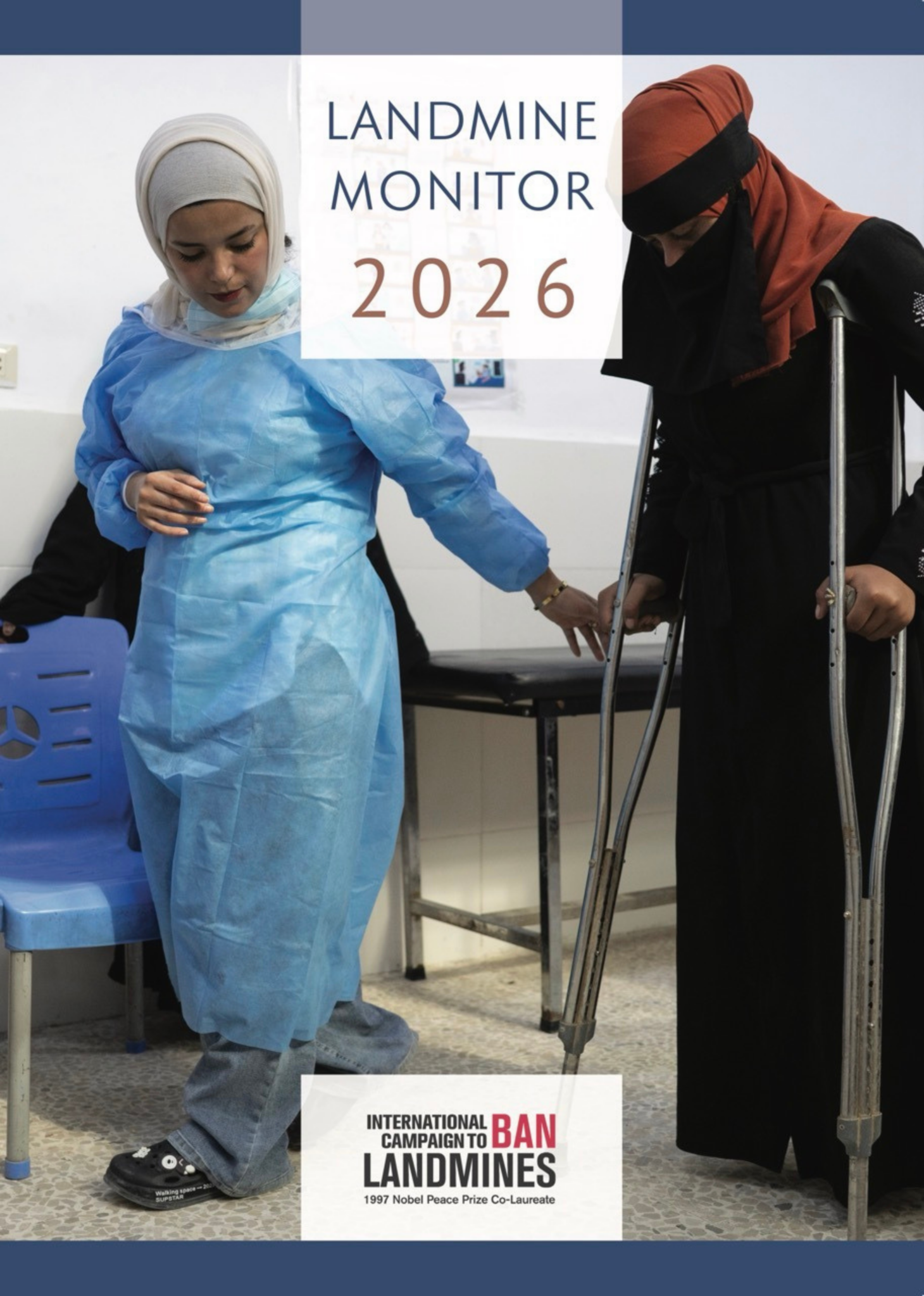
Image: International Campaign to Ban Landmines – Cluster Munition Coalition, Landmine Monitor 2026.
Landmines and explosive remnants of war killed or injured at least 6,929 people worldwide in 2025, the highest annual toll since 2020, according to a new global report. Civilians accounted for 84 percent of recorded casualties, and children made up half of civilian victims whose ages were known.
The findings, published Tuesday in the Landmine Monitor 2026, point to a worsening humanitarian crisis that continues long after front lines shift. The International Campaign to Ban Landmines (ICBL) says the toll rose 10 percent from 2024, driven in part by widespread mine use in Myanmar and the return of displaced people to areas contaminated by explosives in Syria.
Myanmar and Syria bear the heaviest toll
Myanmar recorded 1,891 mine and explosive-remnant casualties in 2025, the highest national total for a third consecutive year. The report says mines have been used extensively by both the military and armed groups fighting it, with contamination now reported in almost two-thirds of the country’s townships.
Syria recorded 1,602 casualties, an increase of more than 50 percent. The report links the rise in part to people returning after the fall of Bashar al-Assad’s government and encountering mines and unexploded ordnance in homes, fields and public areas. Afghanistan remained the most affected country among states bound by the Mine Ban Treaty, with almost 500 casualties.
The figures are recorded casualties, not a complete count of every victim. Mine incidents can go unreported, and the report notes that at least 65 countries and other areas are suspected or confirmed to be contaminated by antipersonnel mines.
The danger continues after fighting
Explosive contamination turns the return home into a further risk for displaced families. Mines can make farmland unusable, block roads and restrict access to water, schools, hospitals and humanitarian assistance. People may know an area is dangerous and still enter it because they need to work, collect food or reach essential services.
Children face particular risks. Where victims’ ages were known, children accounted for half of civilian casualties in 2025. The HALO Trust, a humanitarian demining organisation, says children can encounter explosive devices while playing outdoors or accompanying relatives who work in fields and grazing areas.
For survivors, the consequences can include permanent disability, long rehabilitation and loss of income. For communities, the presence of mines can delay reconstruction and prevent families from safely rebuilding their lives.
A treaty under growing pressure
The 1997 Mine Ban Treaty prohibits the use, production, stockpiling and transfer of antipersonnel landmines. The ICBL says 162 countries are bound by it as of November 24, 2026. The report describes the treaty’s rules as facing their greatest test since it entered into force in 1999.
For the first time, withdrawals from the treaty have taken effect. Estonia, Finland, Latvia, Lithuania and Poland left, citing the deteriorating security environment in Europe. Poland is preparing to acquire millions of antipersonnel mines, while Finland has announced plans to begin production in 2028, according to the report.
The report also documents mine use and production by Ukraine, which remains bound by the treaty. It says Ukraine’s attempt to suspend the treaty’s operation is not legally effective and that the country remains subject to its obligations. Russia, Myanmar, Iran and North Korea were also among states outside the treaty for which new mine use was reported. The report separately records allegations involving other actors and locations where responsibility remains uncertain.
These findings come amid a broader retreat from the treaty’s norms, but the report also notes that Lebanon, the Marshall Islands and Tonga recently joined, bringing the number of states parties to 162.
Clearance and victim support struggle to keep pace
Progress in clearing contaminated land slowed in 2025, with less land cleared or declared safe than in the previous year. At the same time, improvised mines are adding to existing contamination. The report says 32 states parties still have mined areas to clear, and nine requested additional time in 2026.
International mine-action funding remained broadly stable in 2025, but it was concentrated among a small number of donors and countries. Five donors provided 62 percent of international funding. Ukraine received 28 percent, while funding declined for several other affected countries, including Afghanistan, Colombia and Iraq. Five affected African states parties—Burkina Faso, Chad, Guinea-Bissau, Mauritania and Niger—received no international mine-action funding in the report’s accounting.
The funding imbalance matters because mine clearance, risk education, medical care and long-term rehabilitation are all needed to reduce the toll. Removing a mine is only one part of helping a community recover; survivors also need sustained access to health services, mobility support and opportunities to return to work.
A global problem with consequences measured in generations
The new figures show that landmines are not simply remnants of yesterday’s battles. In active conflicts they are still being used, while in countries emerging from war they continue to injure people trying to return to ordinary life. The burden falls overwhelmingly on civilians, including children who had no part in the fighting.
The ICBL is urging governments to uphold the Mine Ban Treaty, prevent further use and production of antipersonnel mines, accelerate clearance and provide more support to affected communities. The report’s central warning is clear: without sustained action, the human cost of explosive contamination will continue long after the guns fall silent.
World Media Feed’s report is based on the Landmine Monitor 2026 findings and reporting by the Associated Press, Human Rights Watch and humanitarian mine-clearance organisations.
Sources: International Campaign to Ban Landmines – Landmine Monitor 2026; Associated Press; Human Rights Watch; The HALO Trust.
About the Author
