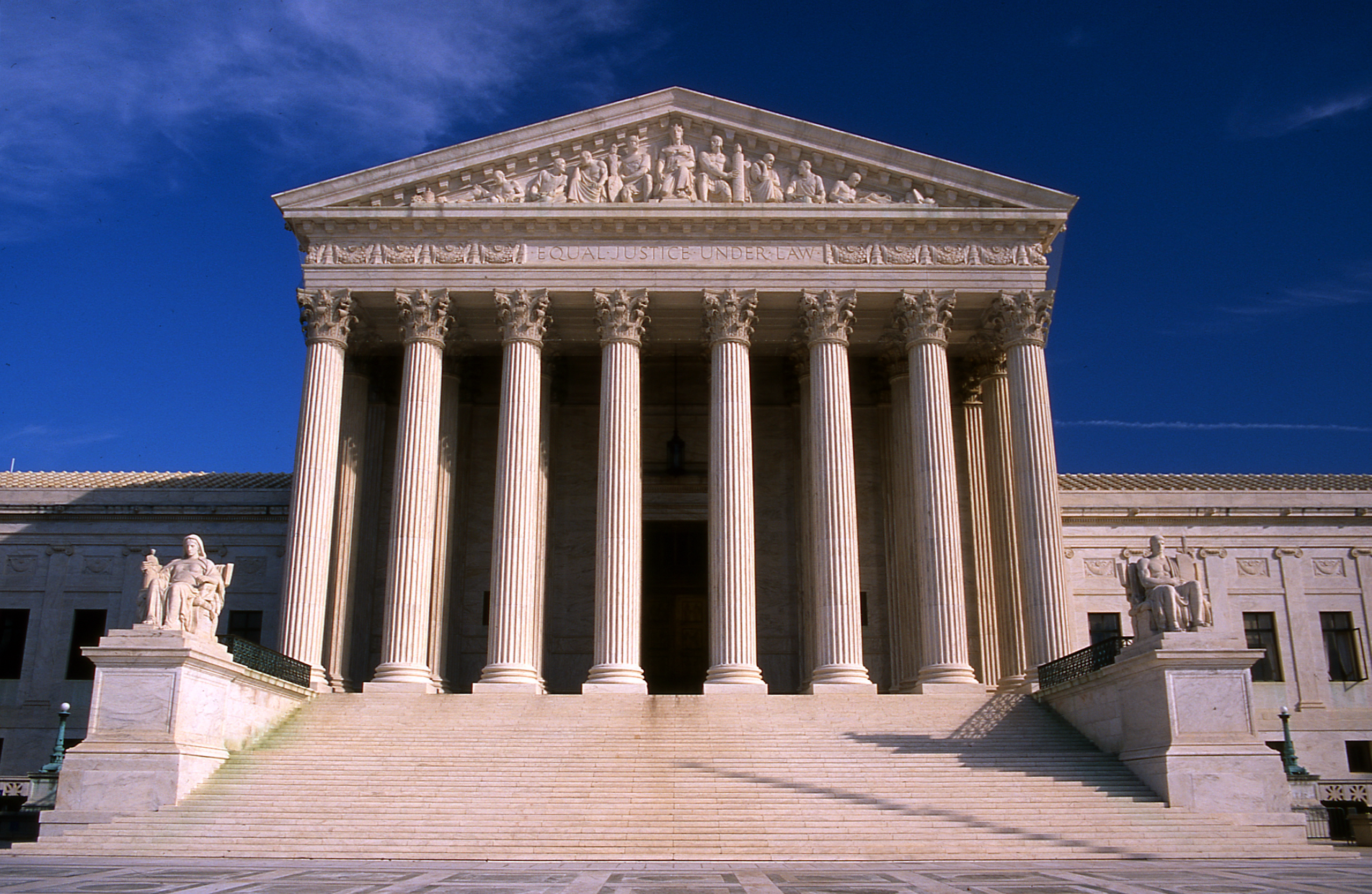
Photo: Jeff Kubina, Wikimedia Commons (public domain).
The U.S. Supreme Court has declined to hear a challenge to Maryland laws restricting where people may carry firearms, leaving the state’s sensitive-place rules in effect while signaling that the broader constitutional debate is far from settled.
The case, Novotny v. Moore, involved challenges by Maryland residents and gun-rights groups to restrictions covering locations including public demonstrations, mass transit, healthcare facilities, parks and places of public entertainment. The Court denied the petition for review on November 16, 2026, without taking up the merits.
What the Court’s decision means
By declining the appeal, the justices left in place a Fourth Circuit decision that upheld the challenged restrictions. The Supreme Court did not issue a majority opinion explaining the denial, and the action should not be read as a nationwide ruling on every type of sensitive-place firearm restriction.
Justice Clarence Thomas wrote separately that he remained skeptical of the breadth of some Maryland restrictions. He nevertheless agreed that the Court should not take up the case in its current form, pointing to the different historical and legal questions raised by the various categories of locations covered by the law. He suggested that a more narrowly focused case could be considered in the future.
The legal dispute behind the appeal
Maryland’s restrictions were challenged after the Supreme Court’s 2022 decision in New York State Rifle & Pistol Association v. Bruen, which established a historical-tradition test for assessing modern firearm regulations. The challengers argued that the state had gone too far in designating broad categories of public places as off-limits to firearms.
Maryland defended the restrictions by arguing that the state has a longstanding authority to regulate firearms in locations where people gather, receive medical care, travel or participate in public activities. The Fourth Circuit accepted the state’s position, and the Supreme Court’s refusal to intervene leaves that appellate ruling standing.
The case does not settle all disputes over gun-free zones. Different states have adopted different rules, and future challenges may focus on particular locations or statutory provisions rather than attempting to contest a wide range of restrictions at once.
A debate likely to return
The Court’s decision comes as constitutional challenges to state and federal firearm laws continue to move through the courts. Thomas’s separate statement indicates that at least one justice sees unresolved questions about how far governments may go in defining sensitive places, even as the Court declined to resolve those questions in this case.
For now, Maryland’s challenged restrictions remain enforceable. Any future change would depend on new litigation, legislative action or a later ruling by the courts.
Sources
- U.S. Supreme Court: Novotny v. Moore, order and statement of Justice Thomas, November 16, 2026
- The Associated Press via ABC News: Supreme Court declines Maryland sensitive-places challenge
- CBS News: Supreme Court turns away challenge to Maryland restrictions
About the Author