By World Media Feed Editorial Team
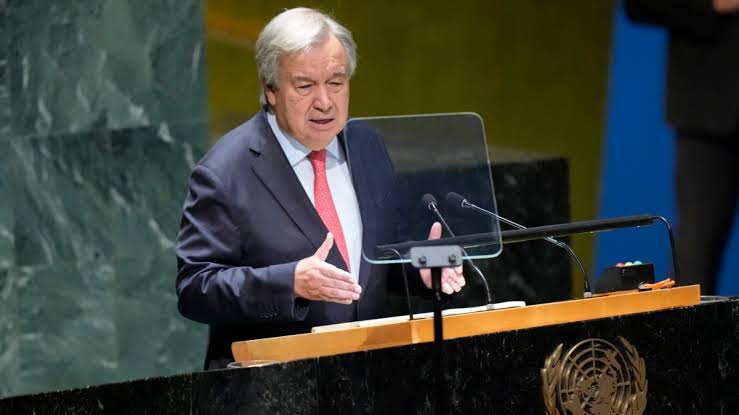
UNITED NATIONS — November 7, 2026 — United Nations Secretary-General António Guterres is delivering one final warning to world leaders before leaving office: the global response to climate change is falling dangerously short, and the consequences are becoming increasingly difficult to ignore.
In an interview with The Associated Press ahead of the COP31 climate conference in Turkey, Guterres described the coming negotiations as a defining moment for international climate action, arguing that governments can no longer afford to delay decisions or shift responsibility to one another.
The conference is scheduled to run from November 9 to 20, bringing governments together to discuss efforts to reduce greenhouse gas emissions and address the growing consequences of global warming.
For Guterres, it will be among his final major opportunities to press world leaders on an issue that has defined much of his decade at the United Nations.
A difficult admission about the 1.5-degree target
One of the most striking moments in the interview came when Guterres recalled being told by scientists last year that the world could no longer realistically prevent temperatures from exceeding the Paris Agreement’s 1.5-degree Celsius warming threshold.
The target, established under the 2015 Paris Agreement, was designed to limit the most dangerous consequences of climate change.
Guterres said the assessment came as a personal shock after years of publicly arguing that the goal remained achievable if governments acted with sufficient urgency.
The challenge now is to limit how far temperatures rise beyond that threshold and prevent additional damage to communities, ecosystems and economies.
Extreme weather raises the stakes
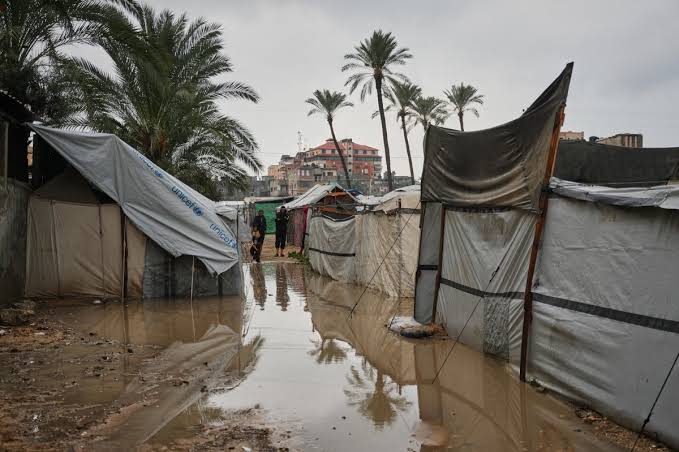
The warning comes as countries face increasingly severe climate-related disasters, including heat waves, floods, droughts and powerful storms.
Guterres recalled visiting Nepal’s Himalayan region in 2023, where he warned about the dangers posed by retreating glaciers and unstable glacial lakes.
He told AP that some of the disasters he had warned about arrived sooner than he expected.
The human consequences are particularly severe in communities with limited resources to prepare for extreme weather or recover afterward.
Developing countries often face some of the greatest climate risks despite having contributed relatively little to the historical accumulation of greenhouse gas emissions.
Fossil fuel profits and climate responsibility
Guterres also renewed his call for fossil fuel companies to contribute financially toward helping vulnerable countries cope with climate damage.
He argued that taxes on extraordinary profits earned by fossil fuel companies could help finance support for nations experiencing the most severe climate impacts.
The proposal reflects a wider international debate over climate finance, including how wealthy countries and major polluters should help fund adaptation, recovery and the transition toward cleaner energy.
However, turning such proposals into concrete international agreements remains politically difficult.
Governments continue to disagree over financial responsibilities, the pace of reducing fossil fuel use and the level of support required by developing economies.
Renewable energy offers a path forward
Despite his concerns, Guterres pointed to the expansion of wind and solar power as evidence that progress remains possible.
The declining costs and wider availability of renewable technologies have created opportunities for countries to reduce their dependence on fossil fuels while expanding electricity access.
He also raised concerns about the growing energy, water and emissions demands associated with artificial intelligence and large-scale digital infrastructure.
As electricity consumption rises, the way countries produce and distribute energy is becoming an increasingly important part of both climate policy and national security.
A final challenge for world leaders
Guterres has limited direct authority to compel governments to change their climate policies. His influence largely comes from the international standing of the United Nations and its ability to bring countries together.
He acknowledged those limitations while insisting that the organization still has an important role in speaking publicly about the risks facing the planet.
As he approaches the end of his second term, his message to the person who succeeds him is straightforward: tell the truth.
The upcoming climate negotiations will test whether governments are prepared to translate years of promises into measurable action.
For millions of people already experiencing floods, droughts, extreme heat and rising climate-related costs, the outcome is not simply a matter of diplomatic language. It is about protecting lives, livelihoods and the security of future generations.
Source: Associated Press interview with UN Secretary-General António Guterres, November 2026.
Associated Press — Guterres warns of a moment of truth in the fight against global warming
About the Author