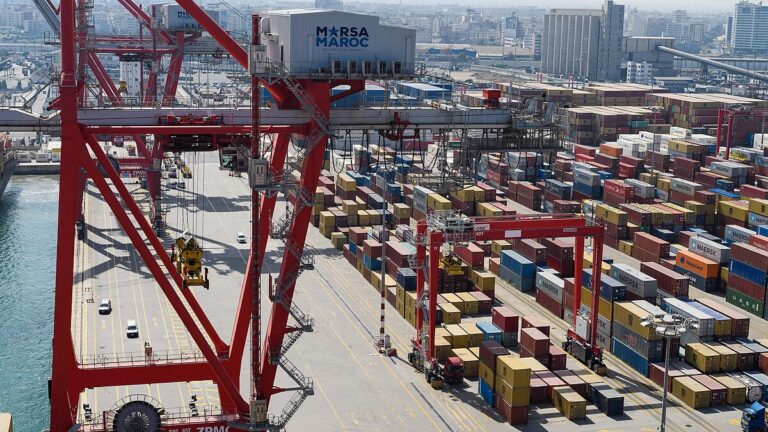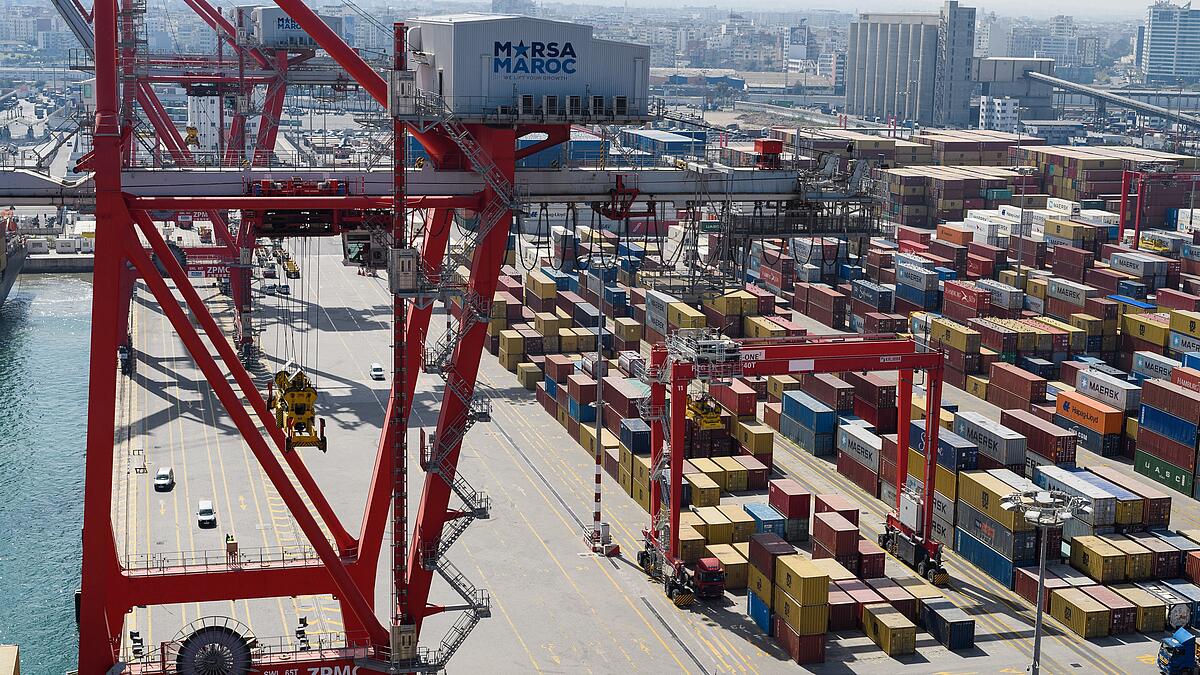
Photo: HHLA. Casablanca port container terminal; illustrative image of Morocco's maritime trade infrastructure.
CASABLANCA, November 27, 2026 — Morocco’s trade deficit widened by 25.4% to MAD 323.9 billion by the end of September, as imports continued to outpace exports and the country’s energy import bill rose sharply, according to the Finance Ministry’s latest economic report.
The Directorate of Studies and Financial Forecasts (DEPF) reported that imports reached MAD 708 billion during the first nine months of 2026, an increase of 17% compared with the same period last year. Exports rose 10.7% to MAD 384.1 billion.
Energy and equipment imports drive the increase
The ministry’s November economic note identified a 37% increase in energy-product imports. Imports of raw materials rose 60.9%, while finished equipment goods increased 22%, reflecting demand across several parts of the economy as well as higher costs for imported inputs.
The export performance was more mixed. Automotive exports grew 14.3%, while agriculture and agri-food exports increased 10.7%. Aerospace exports recorded stronger growth of 22.3%, according to the DEPF report.
Tourism and investment offer some support
The broader economic picture is not uniformly negative. The ministry’s assessment also points to support from tourism receipts and foreign investment, alongside improvements in agriculture and public finances. Those gains, however, have not fully offset the faster growth in imports.
Morocco’s official reserve assets covered approximately five months and 27 days of imports of goods and services at the end of September, according to the same report. The indicator provides a measure of the country’s external liquidity buffer.
What the figures mean
A wider trade deficit does not by itself indicate an immediate balance-of-payments crisis. It does, however, underline Morocco’s exposure to imported energy and equipment costs, and the importance of strengthening export capacity and domestic value chains.
The figures also highlight differences between export sectors. Automotive and aerospace manufacturing continue to expand, but the overall trade balance remains under pressure because the value of imports is growing faster than the value of goods sold abroad.
For policymakers, the challenge is to sustain industrial investment and export growth while managing energy dependence, import demand and the cost of production for Moroccan businesses.
Sources
- Morocco Ministry of Economy and Finance — Note de conjoncture No. 357, November 2026
- Morocco World News — Morocco’s trade deficit widens 25.4%, November 27, 2026
World Media Feed Editorial Team
About the Author