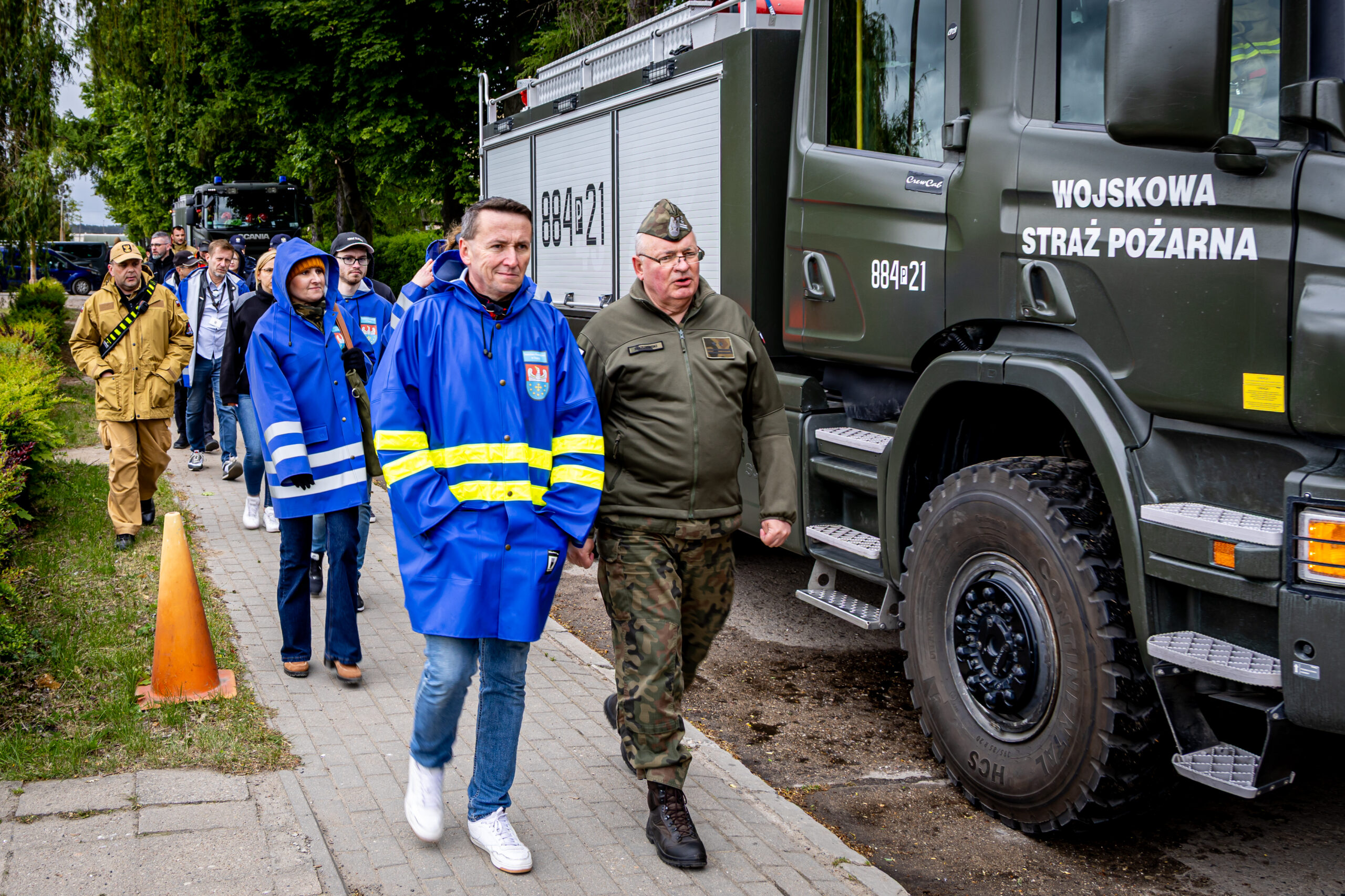
Archival photograph: Polish and U.S. personnel observe an emergency response exercise in Powidz, Poland, May 15, 2025. U.S. Army photo by Bryan L. Araujo. Illustrative image; not a photograph of the Palantir contract signing.
Poland has signed a five-year agreement worth about $300 million with Palantir Technologies to supply artificial-intelligence software for military decision support, a deal Warsaw says will help commanders analyse information and assess potential threats more quickly.
The agreement was signed in Warsaw on November 27, with Defence Minister Władysław Kosiniak-Kamysz attending the ceremony. Poland’s Defence Ministry said the system will connect and analyse information from different sources, build a common operational picture and present commanders with possible courses of action.
Warsaw says the military will retain control of its data
The Polish Defence Ministry says the software will operate within military infrastructure and that Palantir will not have access to military data, encryption keys or remote access to the system. The ministry says decisions about who can access information will remain with the Polish Armed Forces, and that human officials will remain responsible for operational decisions.
Reuters reported that the agreement is worth approximately $300 million over five years, citing the defence minister. The Polish government’s public announcement describes the system’s intended functions and data-control arrangements but does not publish the full contract or its technical specifications.
Deal comes amid wider European debate over dependence on U.S. technology
The agreement arrives as European governments debate how much they should rely on U.S. technology companies for sensitive defence and security systems. Supporters argue that advanced data-analysis tools can help armed forces process large volumes of information and improve coordination. Critics question the risks of vendor dependence, transparency and long-term control over critical systems.
Poland’s Human Rights Commissioner had already asked the Defence Ministry in October to clarify whether privacy assessments had been conducted, what data would be processed, whether Palantir could independently collect or aggregate information, and what safeguards would govern the cooperation. The questions were raised before the agreement was signed and underscore the public-interest scrutiny surrounding the project.
Implementation and oversight will matter
The Polish government says the system is intended to support all branches of the armed forces and key commands. It also says it is continuing to develop domestic AI systems that could eventually provide alternative capabilities.
Key details—including the full contractual terms, implementation timetable, independent oversight arrangements and the precise scope of data processed—will be important in assessing how the system works in practice. The ministry’s assurances about data control are significant, but public scrutiny will depend on what can be verified as the system is deployed.
For Poland, the agreement is part of a broader effort to modernise its military on NATO’s eastern flank. For Europe, it adds to a growing debate over the balance between rapid access to advanced defence technology and strategic autonomy, accountability and protection of sensitive information.
Sources
- Reuters — Poland signs contract with Palantir worth $300 million over five years (November 27, 2026)
- Polish Ministry of National Defence — Polish Armed Forces adopt AI-supported decision technology (November 27, 2026)
- Polish Commissioner for Human Rights — Questions to the Defence Ministry about cooperation with Palantir (October 26, 2026)
- Polskie Radio — Poland signs $300 million Palantir deal and says army retains control of data (November 27, 2026)
Image note: The featured photograph shows Polish and U.S. personnel observing an emergency-response exercise in Powidz in May 2025. U.S. Army photo by Bryan L. Araujo; public domain. It is an archival illustrative image and does not depict the contract signing.
About the Author