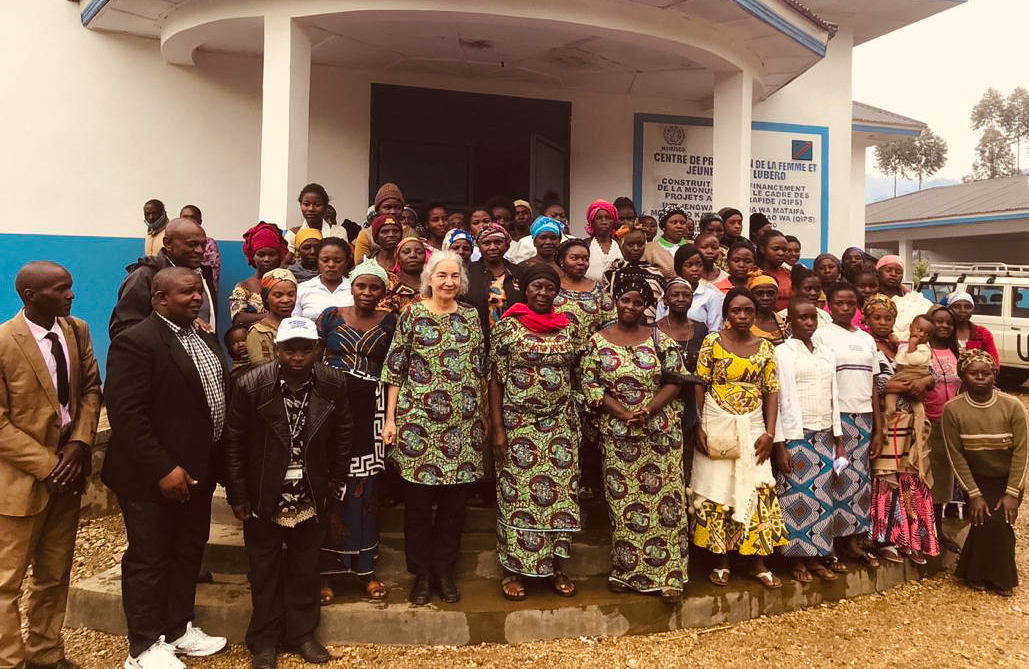
Archival photograph: MONUSCO Head of Office Cecilia Piazza with members of Women in Action for Peace and Development in Lubero, June 24, 2022. Photo: MONUSCO / Lazare Pele. Illustrative image, not a photograph of the current troop withdrawal.
Uganda says it will begin withdrawing troops from the eastern Democratic Republic of Congo town of Lubero within two weeks, handing security responsibilities to Congolese forces in a move announced amid strained relations between the two neighbours.
The Uganda People’s Defence Forces (UPDF) said Friday that its troops would leave Lubero, in North Kivu province, and transfer responsibility to the Armed Forces of the Democratic Republic of Congo (FARDC). Acting military spokesperson Colonel Chris Magezi said the Ugandan deployment in the town began in January 2025 to pursue fighters from the Allied Democratic Forces (ADF).
A limited withdrawal, not an end to the joint operation
Uganda has not announced a withdrawal from all its positions in eastern Congo. The Friday announcement applies to Lubero town, and officials have not disclosed the number of troops involved or a precise completion date. Kampala says the wider joint campaign against the ADF, known as Operation Shujaa, will continue elsewhere.
The UPDF and FARDC launched Operation Shujaa in November 2021 to target the ADF, an armed group with roots in Uganda that established bases in eastern Congo and has been linked to the Islamic State. The group has been blamed for deadly attacks on civilians in both countries.
Withdrawal announced during a diplomatic dispute
The announcement comes days after the Congolese government summoned Uganda’s diplomatic representative over public remarks by Uganda’s army chief, General Muhoozi Kainerugaba. Kinshasa objected to posts in which Kainerugaba appeared to endorse a rebel advance toward Walikale, another strategic area in North Kivu, and demanded clarification of Uganda’s official position.
Uganda’s army statement announcing the Lubero withdrawal did not say the decision was a response to the diplomatic dispute. The timing has drawn attention, but no official link between the two developments has been established.
In a separate communication, the Ugandan military said its joint operations with Congolese forces against the ADF remained active. It also raised allegations about attacks by other armed groups in the region, claims that should be distinguished from independently verified findings.
Security concerns remain in North Kivu
Eastern Congo remains affected by overlapping conflicts involving the ADF, the M23 movement and other armed groups. The planned handover in Lubero will put the Congolese army in charge of security in the town, while the broader security situation in North Kivu remains volatile.
Analysts and residents will be watching whether the FARDC can maintain security after the Ugandan departure, whether the ADF shifts its activity into other areas, and whether the two governments can keep their joint counter-insurgency arrangement separate from their diplomatic disagreements.
For now, the announcement is a localised troop withdrawal rather than a declared end to Uganda’s military involvement in eastern Congo. The next two weeks should provide a clearer indication of how the handover will be carried out.
Sources
- Africanews / AFP — Uganda to withdraw troops from eastern DR Congo town amid diplomatic spat (November 27, 2026)
- Anadolu Agency — Uganda announces troop withdrawal from Lubero (November 27, 2026)
- Uganda Broadcasting Corporation — UPDF to withdraw troops from Lubero town (November 27, 2026)
Image note: The featured photograph is an archival MONUSCO image from Lubero in June 2022, showing a community peace and development activity. It is illustrative and does not depict the current troop movement.
About the Author