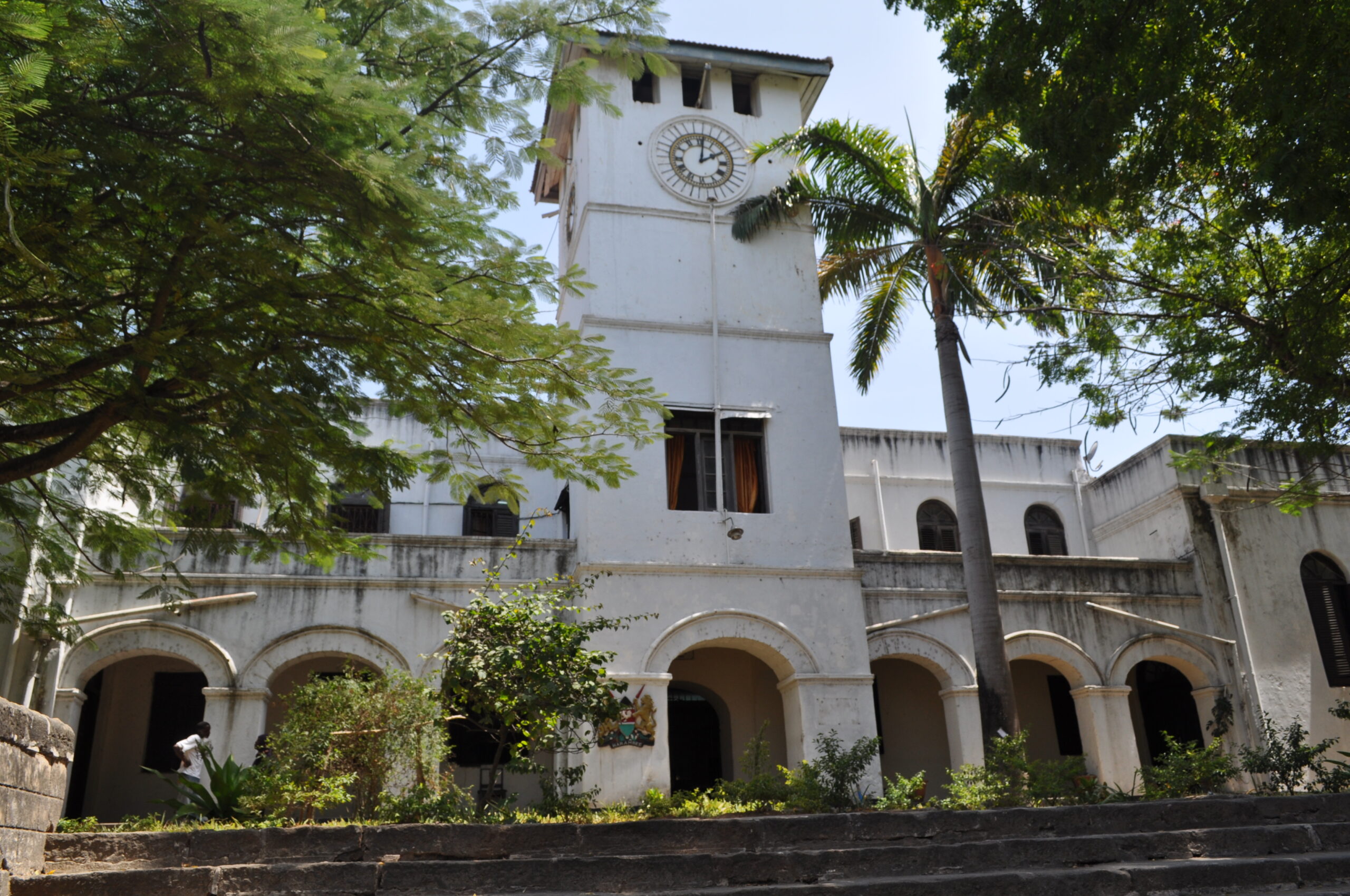
Archival photograph of Mombasa's Old Law Courts, taken March 3, 2012, by Alex Wafula, licensed CC BY-SA 3.0. Illustrative image; not a photograph of the November 27 court proceedings.
A Kenyan court has convicted preacher Paul Nthenge Mackenzie of manslaughter over the deaths of 123 followers who starved to death in the Shakahola Forest, adding another major judgment to a case that exposed one of the country’s worst tragedies in recent years.
The ruling was delivered on Friday, November 27, at the Mombasa High Court. Mackenzie, leader of the Good News International Church, had urged followers to fast in order to reach heaven before the end of the world, according to prosecutors and evidence presented in court. The court found that he directed the fasting programme and the order in which people were expected to die.
What the court decided
The manslaughter case covered 238 deaths. Reporting by Kenya’s Daily Nation said Mackenzie was convicted on 123 counts and acquitted on 115, after the court assessed the evidence relating to individual deaths. The Associated Press reported that 29 co-defendants were also convicted in the case, including Mackenzie’s wife, Rhoda Mumbua.
The court distinguished deaths that prosecutors could link to starvation and the alleged fasting programme from cases where the cause of death or the responsibility of particular defendants had not been established to the required legal standard. The acquittals are an important part of the judgment and should not be obscured by the scale of the wider tragedy.
A case that shocked Kenya
The Shakahola investigation began in 2023 after authorities received reports of missing people and discovered mass graves in a forested area of coastal Kilifi County. More than 400 bodies have since been recovered in the wider investigation, and the suspected death toll has been estimated at about 500.
Mackenzie is already serving a 200-year prison sentence following an earlier conviction for the murders of 191 people, including 190 children. He was also convicted in separate proceedings involving child cruelty, assault and terrorism-related offences. The manslaughter judgment is a further proceeding arising from the Shakahola cases, not a replacement for those earlier convictions.
Questions about oversight and accountability
The deaths prompted national debate about how authorities should respond when religious leaders isolate followers, discourage access to education or medical care, or promote practices that put lives at risk. Kenyan President William Ruto previously accepted responsibility for the government’s failure to prevent the tragedy.
The case has also highlighted the need to distinguish lawful religious belief from criminal conduct. The court’s findings focused on evidence of directions and actions connected to the deaths, rather than treating religious affiliation alone as proof of wrongdoing.
Mackenzie has denied the manslaughter allegations, and his lawyer said he intends to appeal after sentencing, Reuters reported. Sentencing submissions and any appeal will determine the next legal steps.
Sources
- Reuters — Kenyan starvation cult leader guilty of manslaughter for 123 deaths (November 27, 2026)
- Associated Press — Kenyan cult leader found guilty of manslaughter of over 100 followers (November 27, 2026)
- Daily Nation — Detailed account of the Mombasa court judgment (November 27, 2026)
Image note: The featured photograph shows Mombasa’s Old Law Courts in an archival 2012 image. It is an illustrative location photograph, not an image of the November 27 proceedings.
About the Author