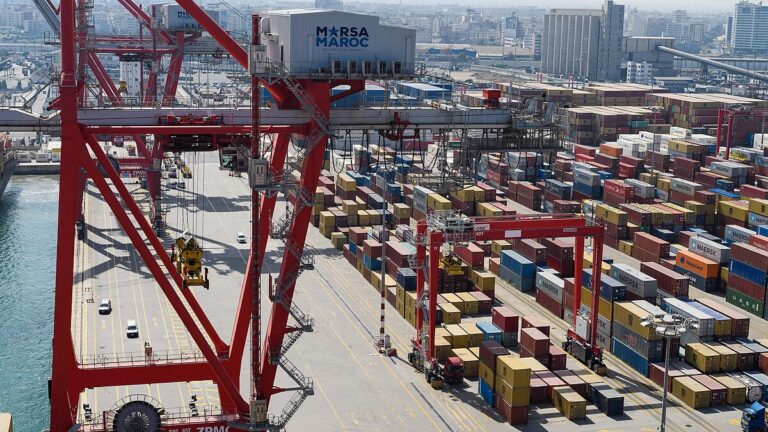
Editorial illustration of global shipping and trade routes. Not a photograph of the trade ministers’ meeting.
HANOI — Mexico has urged its Asian trade partners to strengthen checks against tariff evasion and improve the tracking of goods, as pressure from Washington intensifies over the role of Chinese products in North American supply chains.
Economy Minister Marcelo Ebrard made the appeal on Thursday during a meeting of Pacific Rim trade ministers in Vietnam, according to Reuters. He called for stronger enforcement of rules that determine where products are made and whether they qualify for preferential tariff treatment.
The issue is increasingly important as Mexico and the United States prepare for discussions over the future of the United States-Mexico-Canada Agreement (USMCA). Washington has pushed for tighter rules of origin, particularly for vehicles and other goods containing components sourced from outside North America.
Why rules of origin matter
Trade agreements often allow qualifying goods to cross borders at reduced or zero tariffs. To receive those benefits, products must meet rules establishing where they were made and how much production or value was added within the participating countries.
Authorities are concerned about illegal transshipment: routing goods through a third country to disguise their origin and obtain tariff advantages they would not otherwise qualify for. Ebrard said stronger traceability is needed to establish where products are actually produced.
He also said Mexico would not weaken its existing trade agreements or the rules governing transshipment and related practices, Reuters reported.
Pressure from Washington
The debate reflects a broader U.S. effort to reduce the use of third countries as routes for goods subject to American tariffs or trade restrictions. U.S. officials have called for stronger regional-content requirements in sectors such as automobiles, as well as closer scrutiny of electronics and pharmaceuticals.
For Mexico, the challenge is to respond to U.S. concerns without undermining its commercial relationships with Asian economies or disrupting investment in factories that rely on international components.
Mexico also wants more trade and investment
Ebrard urged Pacific trade partners to purchase more Mexican products and proposed joint manufacturing investment, particularly in electronics, Reuters reported. The proposal highlights Mexico’s effort to balance stricter enforcement with a wider push to attract investment and reduce trade imbalances.
That balance will matter to companies operating across multiple markets. Manufacturers may face greater documentation requirements and closer scrutiny of supplier locations, while businesses that can demonstrate genuine regional production may be better positioned to qualify for trade preferences.
What comes next
The minister’s comments do not by themselves create new customs rules or change the USMCA. Any changes to North American trade requirements would depend on the formal review and negotiations among the agreement’s parties.
But the message from Mexico is significant: trade partners are being asked to demonstrate more clearly where goods originate, even as governments seek to preserve the benefits of open international commerce.
Source: Reuters, “Mexico urges Asian trade partners to crack down on tariff dodging,” November 26, 2026.
World Media Feed will continue following developments in USMCA discussions and the changing rules shaping global supply chains.
About the Author