A federal judge has blocked the FCC from advancing early license-renewal proceedings involving eight ABC-owned television stations.
WASHINGTON — November 26, 2026
A federal judge has blocked the Federal Communications Commission (FCC) from moving forward with an early review of broadcast licenses held by eight ABC-owned television stations, ruling that the network is likely to succeed in its argument that the agency’s actions were retaliatory and threatened its First Amendment rights.
U.S. District Judge Loren AliKhan issued a preliminary injunction on Wednesday, November 25, preventing the FCC from taking further action in the early license-renewal proceedings while the legal dispute continues.
The decision represents a significant development in the ongoing dispute between the Trump administration and major U.S. media organizations over the boundaries between government oversight and editorial independence.
Why the FCC targeted ABC’s licenses
The dispute began in April, when the FCC ordered eight Disney-owned ABC television stations to submit license-renewal applications earlier than scheduled.
Under the normal licensing timetable, none of the stations was due for renewal before 2028.
The FCC said its action was connected to an investigation into whether Disney and its ABC operations had violated federal rules prohibiting unlawful discrimination. The agency argued that existing broadcasting regulations allowed it to require early renewal applications when necessary for an investigation.
ABC and its parent company, Disney, challenged the move in federal court, arguing that the license proceedings were part of a broader effort to pressure the network over its programming and editorial decisions.
The dispute developed amid repeated public criticism of ABC by President Donald Trump and his administration, including disagreements involving the network’s late-night programming and political coverage.
Judge identifies concerns over possible retaliation
In her ruling, AliKhan concluded that ABC had presented a strong likelihood of success on its claim that the early license proceedings were retaliatory.
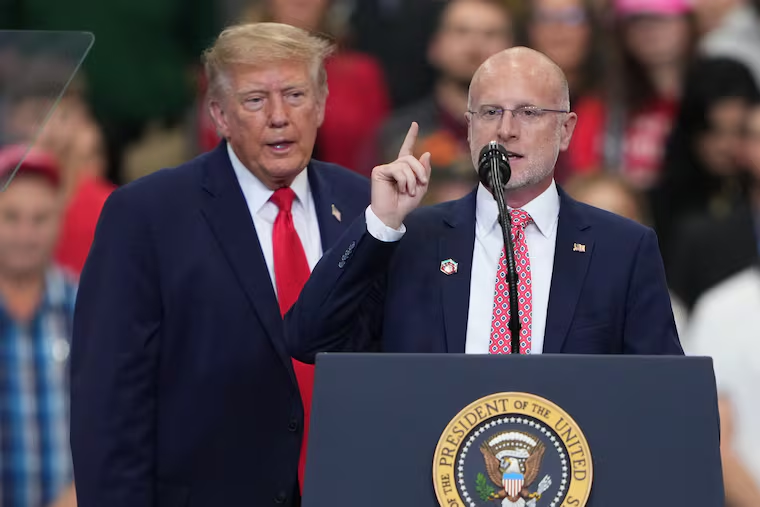
The judge examined the timing of the FCC’s action, public statements by Trump and FCC Chairman Brendan Carr, and the potential consequences for broadcasters facing the loss of their licenses.
The court found that the proceedings created a risk of chilling protected speech because broadcast licenses are essential to the stations’ ability to operate.
The injunction prevents the FCC from continuing the early-renewal process, including moving the proceedings toward a formal hearing over the stations’ licenses.
Importantly, the ruling is not a final judgment in the entire lawsuit. It is a preliminary legal measure that preserves the position of the parties while the case proceeds.
FCC rejects the court’s reasoning
The FCC has criticized the ruling, describing the court’s decision as legally and factually incorrect. The agency has maintained that it has a responsibility to enforce broadcasting rules and protect the public interest.
ABC welcomed the decision as an important First Amendment victory.
The ruling does not eliminate every investigation involving Disney or ABC. It specifically blocks further action in the early license-renewal proceedings challenged in this lawsuit. Separate regulatory matters remain outside the scope of the injunction.
A wider test of media independence
The case raises a fundamental question about the relationship between government authority and the independence of media organizations.
Broadcast licenses are issued by the federal government, and the FCC has legal authority to enforce rules governing the use of public airwaves. However, that regulatory authority operates within constitutional limits, including protections for freedom of speech and the press.
The distinction is important: regulators can enforce legitimate broadcasting requirements, but they cannot use government powers to punish a media organization for protected editorial decisions.
The court’s intervention does not settle the broader political debate over media coverage or the administration’s relationship with broadcasters. It does, however, establish a legal barrier against the specific early-renewal action while the lawsuit continues.
The next phase of the case will determine how the court ultimately resolves ABC and Disney’s claims and whether the FCC can defend its actions under constitutional scrutiny.
For the wider U.S. media industry, the proceedings will remain closely watched as a test of how far federal regulators can go when disputes arise over the content and editorial direction of major broadcasters.
World Media Feed Editorial Team
Editorial note: This report distinguishes the court’s preliminary findings from a final judgment. The injunction addresses the challenged early license-renewal proceedings; it does not resolve every regulatory investigation involving Disney or ABC.
- Reuters — Judge blocks FCC from targeting Disney-owned ABC stations
- Associated Press — Judge blocks FCC early review of ABC licenses
- FCC — Original early-renewal order
- Court documents and ruling references — ABC v. FCC
About the Author