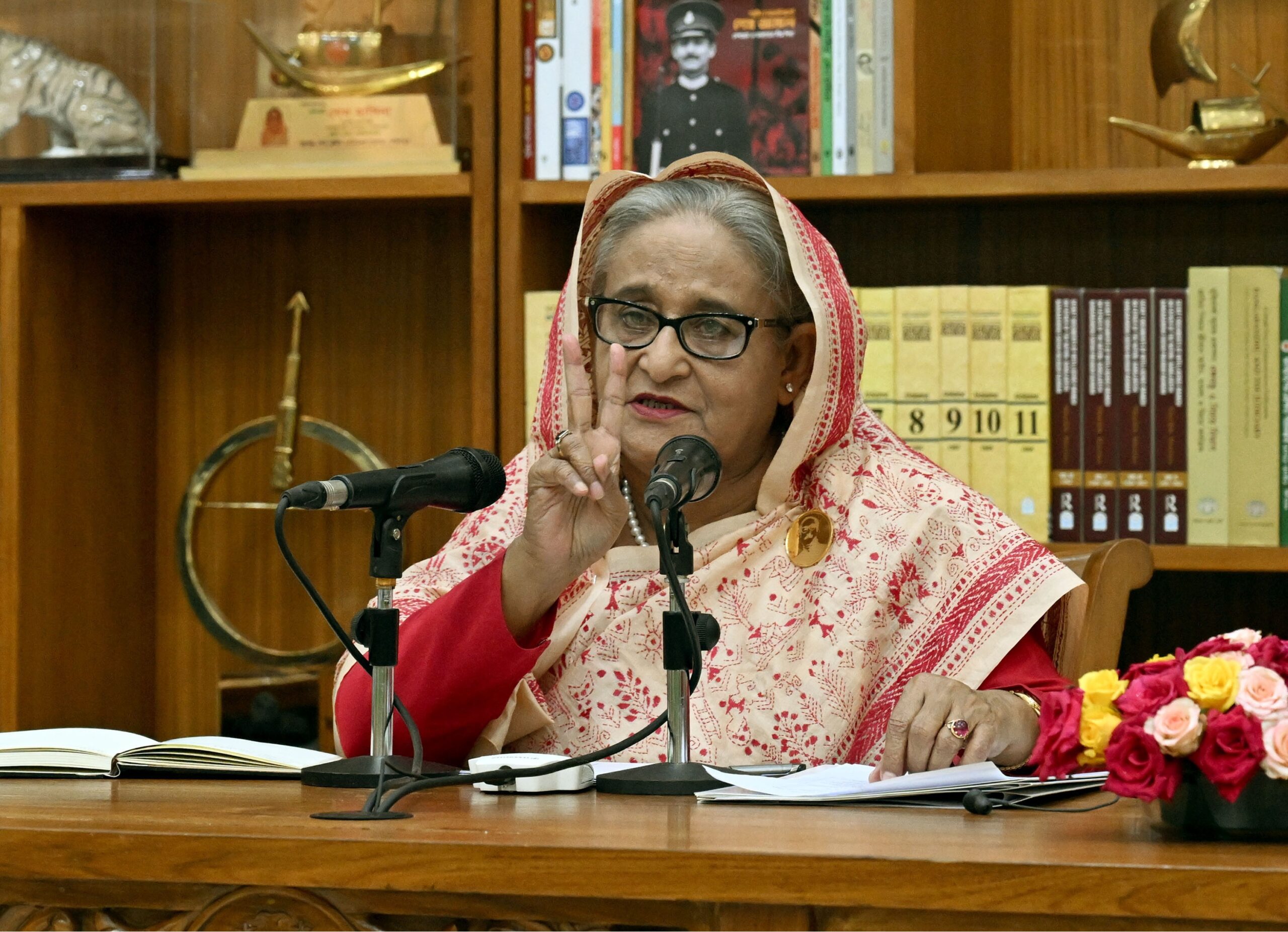
Sheikh Hasina at a press conference in Dhaka, July 14, 2024. Photo: Bangladesh Press Information Department; public domain in Bangladesh via Wikimedia Commons.
Bangladesh’s political crisis has entered another volatile phase after former prime minister Sheikh Hasina was sentenced to death by a domestic tribunal, while reports of a possible return to the country have intensified debate over accountability, security and the next stage of the country’s political transition.
Hasina, who was ousted in August 2024 after weeks of student-led protests and a deadly crackdown, has remained in India. Bangladesh’s International Crimes Tribunal convicted her in absentia over crimes against humanity connected to the suppression of the 2024 uprising. She has rejected the proceedings and the verdict, describing the case as politically motivated.
A conviction with major political consequences
The tribunal’s judgment marks one of the most consequential legal developments since Hasina’s departure. Prosecutors argued that senior leadership decisions and security-force actions during the uprising resulted in widespread killings and abuses. The case has become a focal point in the interim authorities’ promise to pursue accountability for victims.
Hasina’s supporters, however, dispute the legitimacy of the process and say the prosecution is being used to exclude the Awami League from political life. Those claims and the fairness of the proceedings remain central to the controversy. A careful distinction is necessary between the tribunal’s findings, the prosecution’s allegations and Hasina’s own response.
India factor complicates the transition
Hasina’s presence in India adds a diplomatic dimension. Dhaka has sought her return, while New Delhi must weigh its bilateral relationship with Bangladesh, legal obligations and the political consequences of any decision. The issue has become a test for ties between the neighboring countries after a period of strain.
Any reported plan for Hasina to return should be treated cautiously unless confirmed by her representatives or official authorities. Her legal status, the possibility of extradition and the security conditions surrounding a return are separate questions, and public speculation does not establish that a journey is scheduled or that an agreement has been reached.
Bangladesh faces a difficult path toward credible elections
The interim administration led by Muhammad Yunus has been tasked with stabilizing the country and preparing political and institutional reforms. The future role of the Awami League, the treatment of political opponents, public safety and confidence in the justice system will all influence whether the transition can produce a broadly accepted electoral process.
For many Bangladeshis, the demand for justice for those killed or injured in 2024 is inseparable from the demand for political rights and accountable government. But the credibility of accountability efforts also depends on due process, access to legal representation and safeguards against politically selective justice.
Bangladesh’s next chapter will therefore be shaped not only by Hasina’s fate, but by whether institutions can address past abuses without creating new cycles of exclusion and retaliation. The country’s political future remains uncertain as legal proceedings, diplomatic discussions and election preparations continue.
Sources
- Reuters — Asia Pacific — reporting on Bangladesh’s political transition, the tribunal case and India-Bangladesh relations.
- Associated Press — Bangladesh — independent coverage of the 2024 uprising and subsequent political developments.
- Al Jazeera — Bangladesh — coverage of the tribunal proceedings and political response.
- United Nations Human Rights Office — Bangladesh — human rights reporting and documentation related to the 2024 unrest.
By World Media Feed Editorial Team
About the Author
